The network for creativity
Join 1.25M professional creatives like you
Connect with clients, get discovered, and run your business 100% commission-free
Creatives on Contra have earned over $150M and we are just getting started
Back to feedPost

Why We Chose Next.js Over Everything Else for Client Projects
When we started working with clients at scale, I realized we needed to make a decisive choice about our frontend framework. We'd dabbled with Create React App, experimented with Gatsby, and even considered Vue.js with Nuxt. But after shipping dozens of projects across various industries—from e-commerce platforms to SaaS dashboards—Next.js consistently delivered the best developer experience, fastest time-to-market, and most maintainable codebases.
This wasn't a theoretical decision. It came from real production battles, client demands, and the hard truth that framework choices compound over time.
Why Next.js Won (The Real Reasons)
1. Full-Stack Development in One Framework
This is the game-changer. With Next.js API routes, we can build the entire application-frontend and API-in a single repository.
2. File-Based Routing That Actually Makes Sense
Coming from manual route configuration, Next.js's file-based router is refreshingly intuitive. Your folder structure is your routing structure.
3. Image Optimization Built-In
Before Next.js Image component, optimizing images across clients meant dealing with.
4. Static Site Generation + ISR = Performance Win
For content-heavy sites, Next.js's Static Site Generation (SSG) with Incremental Static Regeneration (ISR) is game-changing.
5. Middleware for Complex Logic
Next.js 12+ middleware lets us handle authentication, redirects, and request modification at the edge.
The Business Impact
Since standardizing on Next.js, we've seen measurable improvements:
- 30% faster project delivery: Boilerplate is minimal; developers jump into business logic immediately
- 25% fewer production bugs: Shared types between frontend/API catch issues early
- Lower hosting costs: Static generation and efficient server usage reduces infrastructure expenses
- Easier client handoffs: Monorepo structure makes maintenance straightforward for clients taking projects in-hous
Our Standard Stack
For context on how this fits together, here's what we typically ship:
- Next.js: Framework and API layer
- TypeScript: Type safety across the stack
- Tailwind CSS: Styling without context switching
- Prisma: Type-safe database ORM
- Vercel: Hosting and deployment (optimized for Next.js)
- Testing: Jest + React Testing Library
This combination covers 95% of client requirements without over-engineering.

very well explained based on real word projects. Thanks for sharing value able outcomes you have regarding Nextjs.
The network for creativity
Join 1.25M professional creatives like you
Connect with clients, get discovered, and run your business 100% commission-free
Creatives on Contra have earned over $150M and we are just getting started
Related posts


first look at ascnd - our own design & front-end subscription for startups.
preloader and hero, hand-designed and hand-coded. no template, no page builder. the brief we gave ourselves: make a startup look like it already raised, starting from the very first half-second of load.



Great work on the design. When you were building out the floating presentation did you design it to be interactive on hover or is it purely a scrolling element?

Another product shipped.
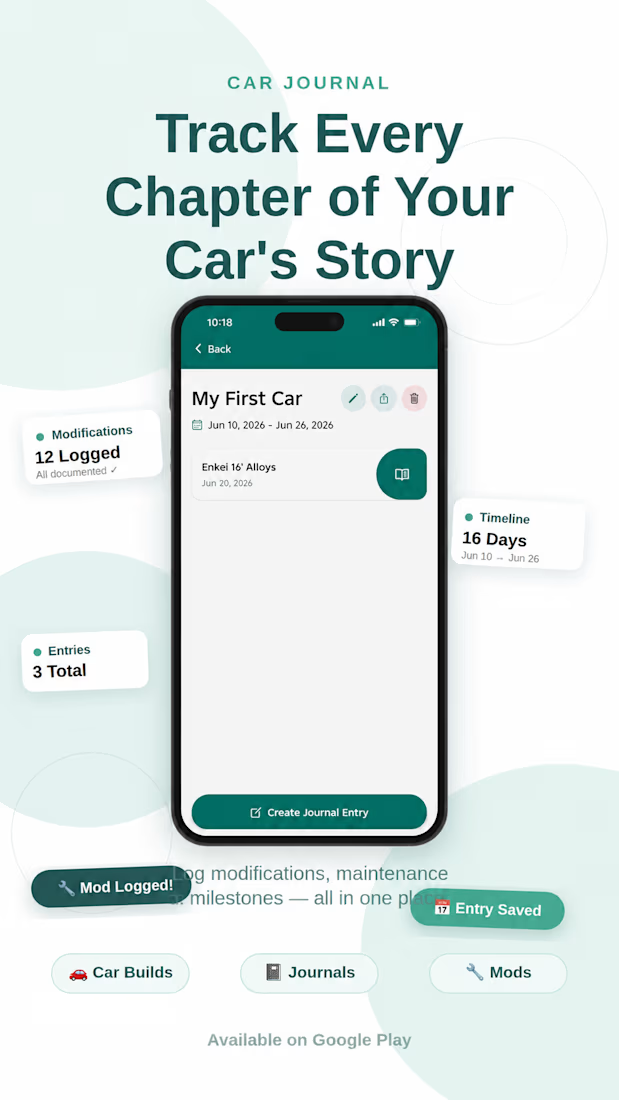
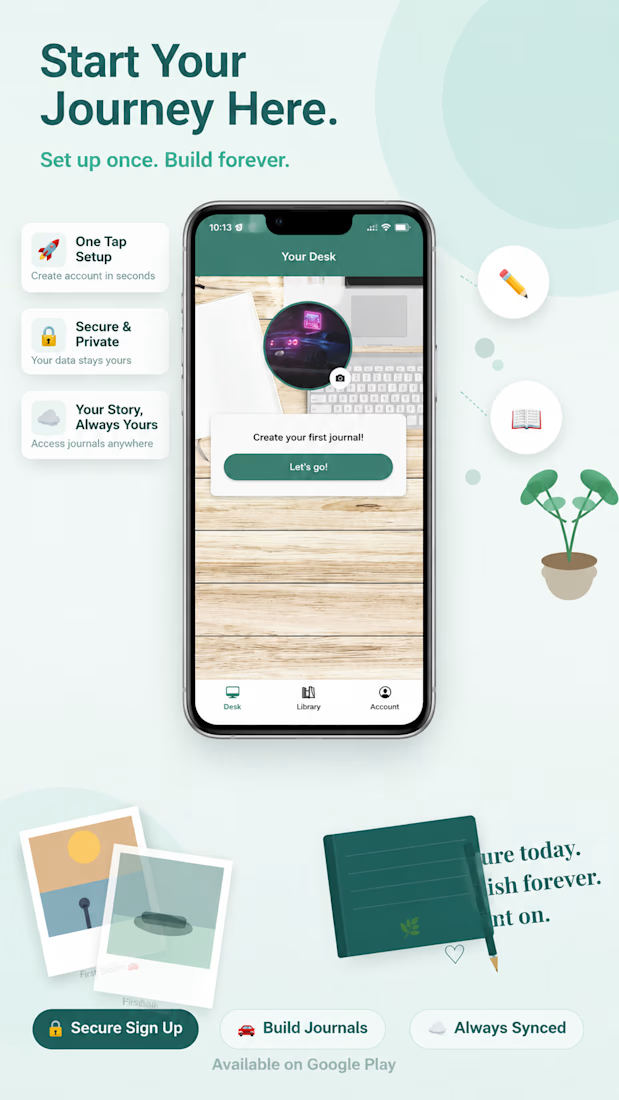
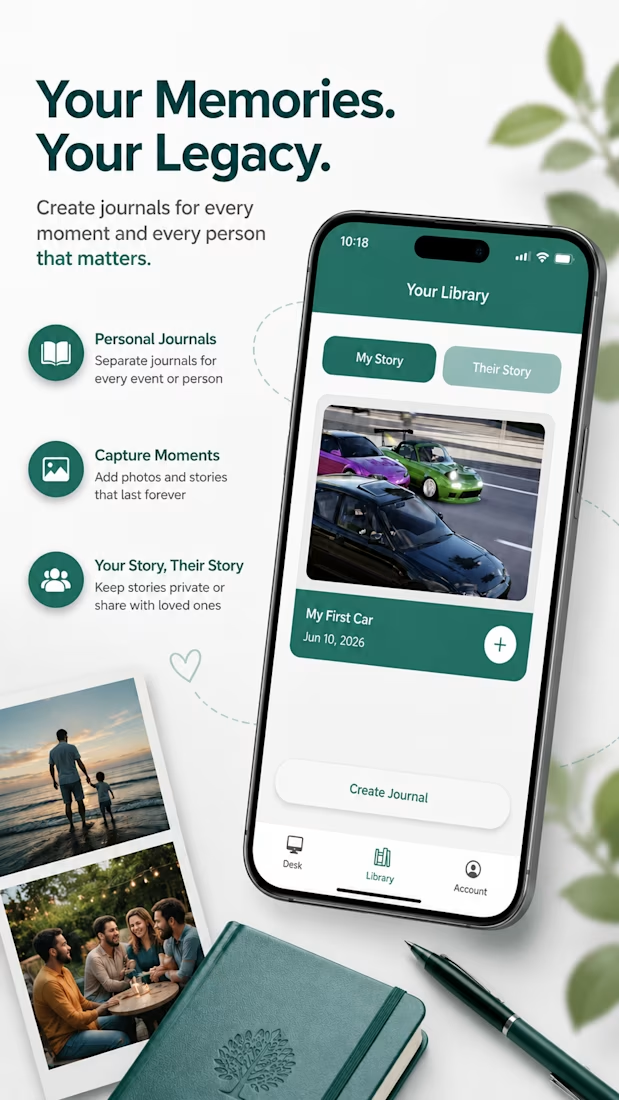
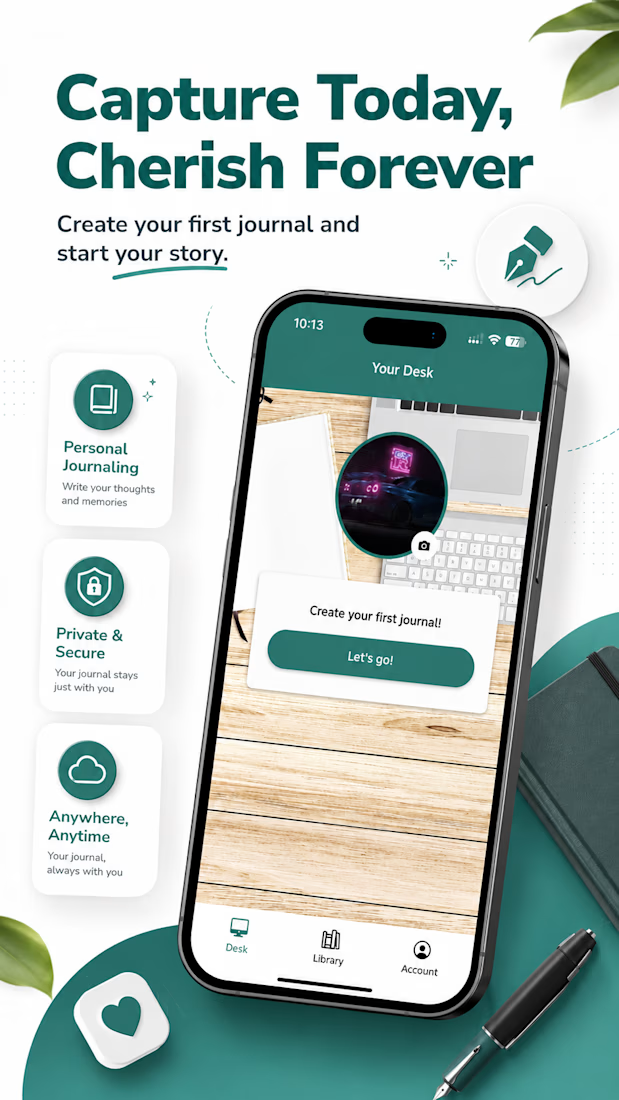
We just launched the iOS app for Legacy Building Journals, a platform built to help people preserve the stories, memories, and moments that matter most.
https://apps.apple.com/pk/app/legacy-building-journals/id6778774585
This wasn't another journaling app. The goal was to create a space where users can capture life experiences through writing, photos, and voice recordings, then preserve them for future generations.
Our team handled everything from product strategy to development, working closely with the client to turn their vision into a polished, production-ready iOS experience.
What we shipped:
1. Full iOS app (React Native)
2. Photo, text, and voice recording capture
3. Stripe + Apple Pay integration
Building products people use daily is always rewarding. Building one that helps families preserve their legacy hits different.
Proud of the team for bringing this to life. On to the next one.



Great Work

Maurice’s Jewelers has served Miami since 1935.
Live Site Launching Early July
Current Live Site(s):
Pieces at Maurices
Get Your Pieces At Maurices
Nearly 90 years of family craftsmanship. Engagement rings, heirlooms, repairs, appraisals, gold buying, and the kind of customer trust that only a real local business can earn across generations.
For the Base44 #GiveItAGlow challenge, I wanted to give that legacy a digital experience worthy of the brand.
Before, too much of the business still depended on analog systems:
Inventory lived in spreadsheets. Appraisals relied on calculators, paper notes, and delayed callbacks. Custom design and heirloom documentation mostly started in person. 3,700+ products were difficult to organize, review, and act on quickly.
So I built Maurice’s Jewelers a complete digital operating system — not just a website.
The platform includes:
A live luxury storefront Three showroom modes A Diamond Room A custom Design Lab A Gemstone Vault Virtual Try-On Heirloom Passports Appointment booking Live gold appraisal intake An admin appraisal workflow And ARIA — an AI inventory advisor that helps review the full catalog and recommend what to restock, archive, or stop tracking.
The real value is in the automation.
A gold appraisal request that used to require a phone call and manual follow-up can now begin instantly online. Customers submit details, receive an estimate, and the lead lands directly in the owner’s review queue.
Inventory review also becomes faster. Instead of manually sorting through spreadsheet exports, ARIA turns thousands of products into clear business actions with explainable recommendations.
The project also supports Maurice’s branded retail presence through:
GET YOUR PIECES AT MAURICE’S™ PIECES AT MAURICE’S™
With live branded destinations:
That gives the business more than a storefront. It gives Maurice’s a modern customer experience, stronger digital brand infrastructure, better lead capture, and a platform the business can keep building on.
This is what small businesses need.
Not just a prettier homepage.
Leverage.
A way to save time. A way to serve customers better. A way to turn legacy trust into modern advantage.
Ninety years of craft. One digital renaissance.
Built on Base44 for Maurice’s Jewelers · Est. 1935.
#GiveItAGlow @Base44









Trending

Claude
Claude has entered the design space. How are you using Claude Design?

Contra University
Learn from expert creatives how to earn more using next-gen AI tools.
fifaworldcup2026
The World Cup is here and the whole world's watching. How are you designing for the world stage?
creativeaiflow
Creative AI workflows are evolving. What tools do you use, and what are their strengths and weaknesses?
freelancerlife
Freelancer life is wins, pivots, and everything in between. What’s yours right now?