The network for creativity
Join 1.25M professional creatives like you
Connect with clients, get discovered, and run your business 100% commission-free
Creatives on Contra have earned over $150M and we are just getting started
Back to feedPost

AI doesn’t replace recruiters. It exposes weak recruiting judgment faster.
A lot of recruiting teams are trying to “add AI” before fixing the basics.
But AI won't save a broken search.
It won't clarify a vague role.
It won't repair weak calibration.
It won't make generic outreach compelling.
It won't tell a founder which tradeoffs actually matter.
What AI can do is accelerate the work around strong judgment.
It can help map markets faster, generate better search angles, pressure-test outreach, summarize candidate patterns, and turn messy hiring conversations into usable signal.
But the recruiter still has to know what good looks like.
That means understanding the role, the business problem, the talent market, the hiring manager’s real concerns, and the difference between “nice to have” and “must have.”
The future of recruiting is not AI vs. recruiters.
It is high-judgment recruiters using AI to move faster, think sharper, and make better hiring decisions.
That's the lane I am building in.
The network for creativity
Join 1.25M professional creatives like you
Connect with clients, get discovered, and run your business 100% commission-free
Creatives on Contra have earned over $150M and we are just getting started





Related posts

My client told me: "I feel invisible. I apply and hear nothing because I'm not in the US."
That’s exactly why I do reverse recruitment.
For the last month, I was his job search team. I found the companies, wrote the applications, pitched him to managers.
Yesterday he sent me: "I have 2 final interviews."
That message is why I do this.
If you’re applying from outside US/EU and getting ignored, it’s not your experience. It’s your distribution.
let’s talk.
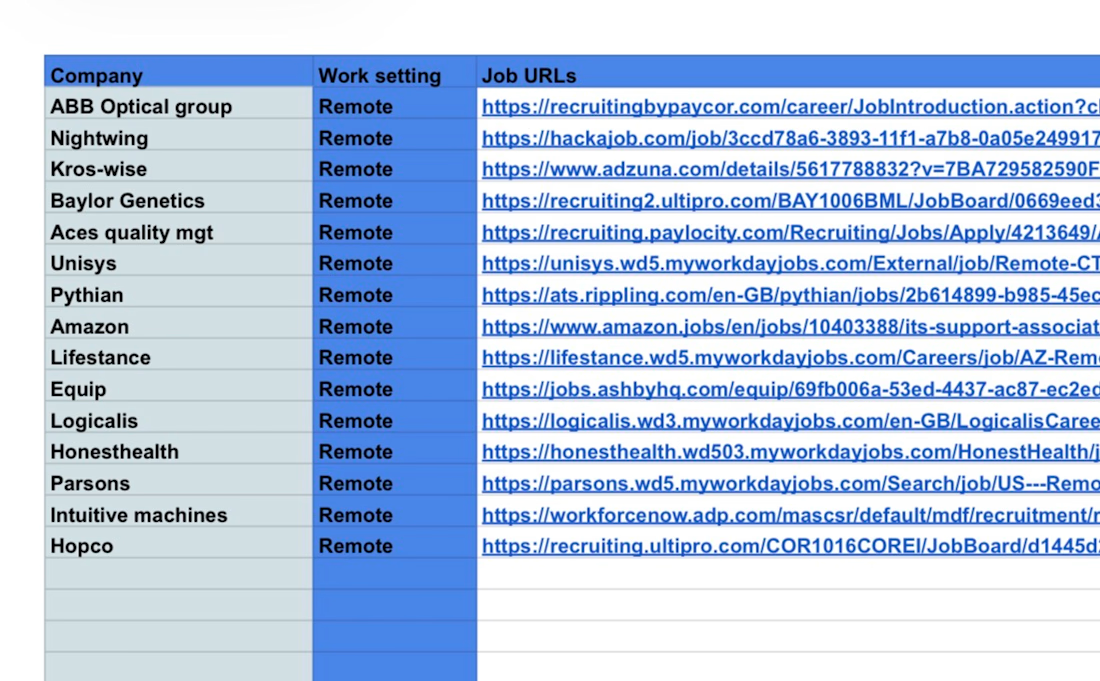
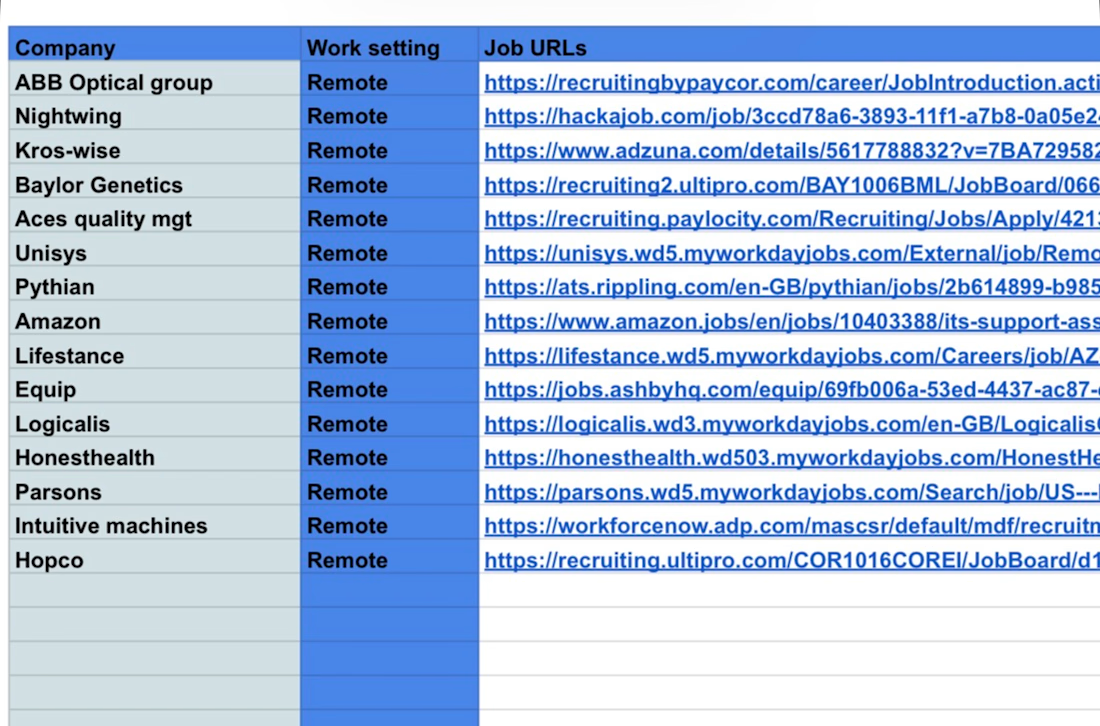
I searched for jobs and applied for my client who needed remote jobs and I landed him interviews.



This one is for teams that hand everyday work to AI agents. In one view you can see what got automated, how much time it saved, how each agent is doing, and you can ask the AI assistant anything.
In the video, I ask "Who might churn this week?" and Lyra replies with three at risk accounts and check in emails ready to send.
My goal was calm and minimal, with lots of white space, while the screen still feels alive.
What would you add or remove? I'd love your feedback.


