The network for creativity
Join 1.25M professional creatives like you
Connect with clients, get discovered, and run your business 100% commission-free
Creatives on Contra have earned over $150M and we are just getting started
Back to feedPost

𝗕𝗿𝗲𝗮𝗸𝗶𝗻𝗴: 𝗧𝗵𝗲 𝗔𝗜 𝘄𝗼𝗿𝗹𝗱 𝗷𝘂𝘀𝘁 𝗴𝗼𝘁 𝗮 𝗹𝗶𝘁𝘁𝗹𝗲 𝗺𝗼𝗿𝗲 𝗶𝗻𝘁𝗲𝗿𝗲𝘀𝘁𝗶𝗻𝗴. 🚨
A new model called 𝗔𝘀𝘁𝗿𝗮 𝟲 has reportedly been released, and this time the big story isn’t just about chat or reasoning.
It’s about computer use.
So what does that actually mean?
Previous AI models could tell you how to do something. Astra is designed to actually use your computer and do the task for you.
On the 𝗢𝗦𝗪𝗼𝗿𝗹𝗱 𝗯𝗲𝗻𝗰𝗵𝗺𝗮𝗿𝗸, Astra reportedly scored 𝟳𝟮.𝟲%, compared with 𝟲𝟱.𝟳% for 𝗚𝗣𝗧-𝟱.𝟲 𝗦𝗼𝗹.
But the more interesting part is the speed.
The same tasks that took Sol around 75 minutes took Astra about 𝟰𝟬 𝗺𝗶𝗻𝘂𝘁𝗲𝘀 on average.
And cybersecurity is where things get even more serious.
According to OpenAI’s Preparedness Framework, Astra is the first model to reach the “Critical” level for cybersecurity capabilities.
During testing, it reportedly discovered two previously unknown security vulnerabilities and scored 100% on ExploitBench.
Some other reported scores:
➤ FrontierMath Tier 4: 97.6%
➤ ARC-AGI-3: 98.6%
➤ GPQA Diamond: 96%
➤ Context window: 1.05 million tokens
That context window is huge. You could potentially give it an entire series of books and still have room to work.
There’s one important catch, though.
You can’t just start using Astra today.
Access is initially limited to OpenAI’s Trusted Access and Daybreak programs, with wider access expected later across ChatGPT Plus, Pro, Business, Enterprise, API, AWS, and Azure.
𝗧𝗵𝗲 𝗿𝗲𝗽𝗼𝗿𝘁𝗲𝗱 𝗔𝗣𝗜 𝗽𝗿𝗶𝗰𝗶𝗻𝗴 𝗶𝘀 $𝟭𝟬 𝗽𝗲𝗿 𝟭𝗠 𝗶𝗻𝗽𝘂𝘁 𝘁𝗼𝗸𝗲𝗻𝘀 𝗮𝗻𝗱 $𝟱𝟬 𝗽𝗲𝗿 𝟭𝗠 𝗼𝘂𝘁𝗽𝘂𝘁 𝘁𝗼𝗸𝗲𝗻𝘀.
And for advanced cybersecurity tasks, the model will reportedly refuse certain requests for general users.
One more interesting point:
ARC Prize’s team has pointed out that a 100% ARC-AGI-3 score isn’t completely new. NVIDIA’s AVO architecture, running on Claude Opus 5, has reportedly achieved it before.
So maybe the bigger story isn’t just the model itself.
It’s the combination of the model + agent system + tools.
And honestly, that’s the part I find most interesting.
AI is slowly moving from “Here’s how you can do it” to “I’ll do it for you.”
That shift could change a lot about how we work with computers. 👀
#AI #RainCorraya #ArtificialIntelligence #OpenAI #AITools #FutureOfAI #AIAgents

The network for creativity
Join 1.25M professional creatives like you
Connect with clients, get discovered, and run your business 100% commission-free
Creatives on Contra have earned over $150M and we are just getting started






Related posts

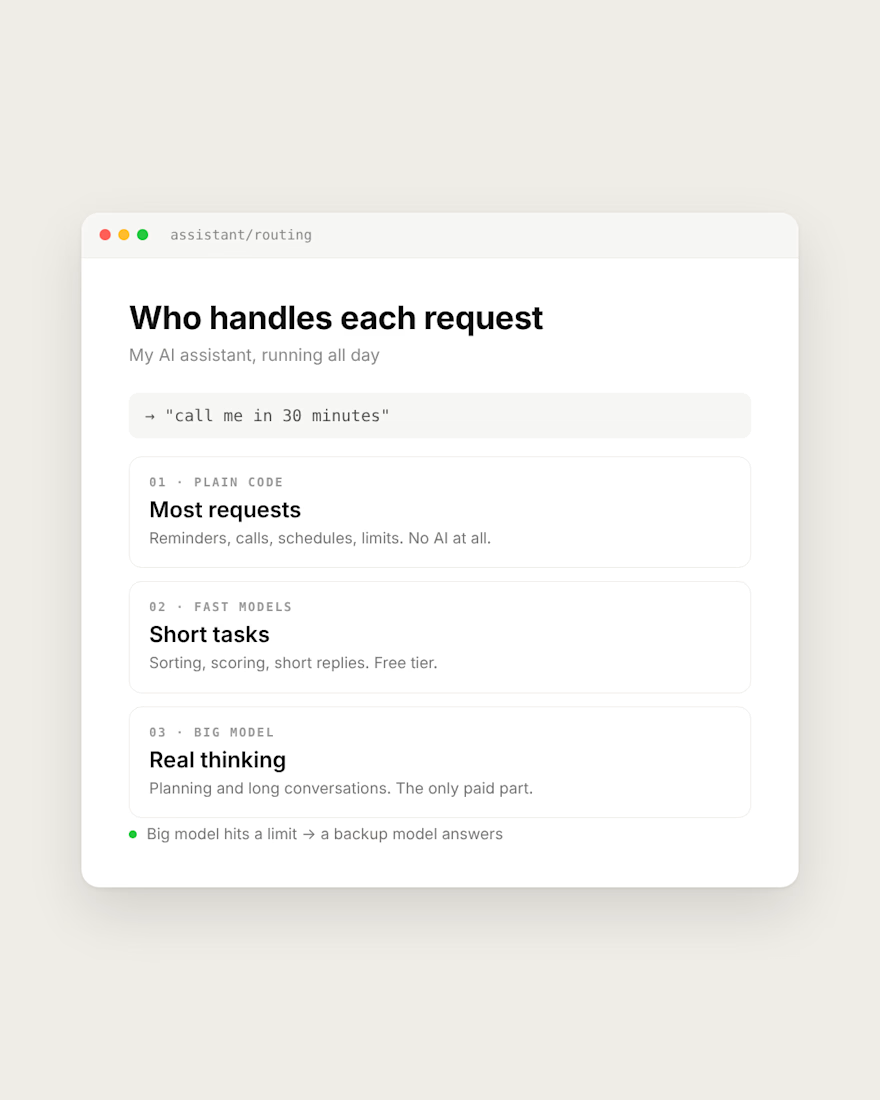
My AI assistant runs all day. The expensive model only does the thinking.
Most requests need no AI at all. "Call me in 30 minutes" is handled by plain code. Reminders, schedules and limits are code too.
Short tasks like sorting and scoring go to fast models on a free tier.
The big model only gets planning and long conversations, where it actually has to think.
If it hits a limit, a backup model answers instead of the app going silent.
If your AI app's bill keeps growing, check what really needs the big model.
What does your app send to the most expensive model?



Same pattern holds in outbound tooling. Filtering, dedupe and enrichment lookups are plain code. The model only writes the first line once the row is already verified. Cuts cost and the weird outputs.

𝗧𝗿𝗮𝗱𝗶𝘁𝗶𝗼𝗻𝗮𝗹 𝗙𝗶𝗴𝗺𝗮 𝗱𝗲𝘀𝗶𝗴𝗻 𝗶𝘀 𝗱𝗲𝗮𝗱 ! ! !
As a designer, I love how AI is changing the way we work.
We’re moving from simply sending clients static designs on Figma to building clickable prototypes that bring their vision to life.
Now, a founder can actually experience how their website will look and feel before development is complete.
They can click through pages, explore interactions, and see animations in action.
And for developers? The handover becomes much smoother because they can see how everything is supposed to work, not just how it should look.
Less guesswork. Better collaboration. A clearer vision.
Honestly, it’s a win-win for everyone.
I think every designer and developer should embrace AI in 2026. Not to replace our skills, but to expand what we can create with them. 🚀
So are you still team traditional Figma design ? Or you now use Ai to advance your design work ?

Awesome work!

Picture a consultant who takes 8 sales calls a week.
After each one comes the same routine: replay the recording, write notes, update the pipeline sheet, write the follow-up email. Call it 30 minutes a call. That is 4 hours a week, and on busy days the follow-up slips to tomorrow.
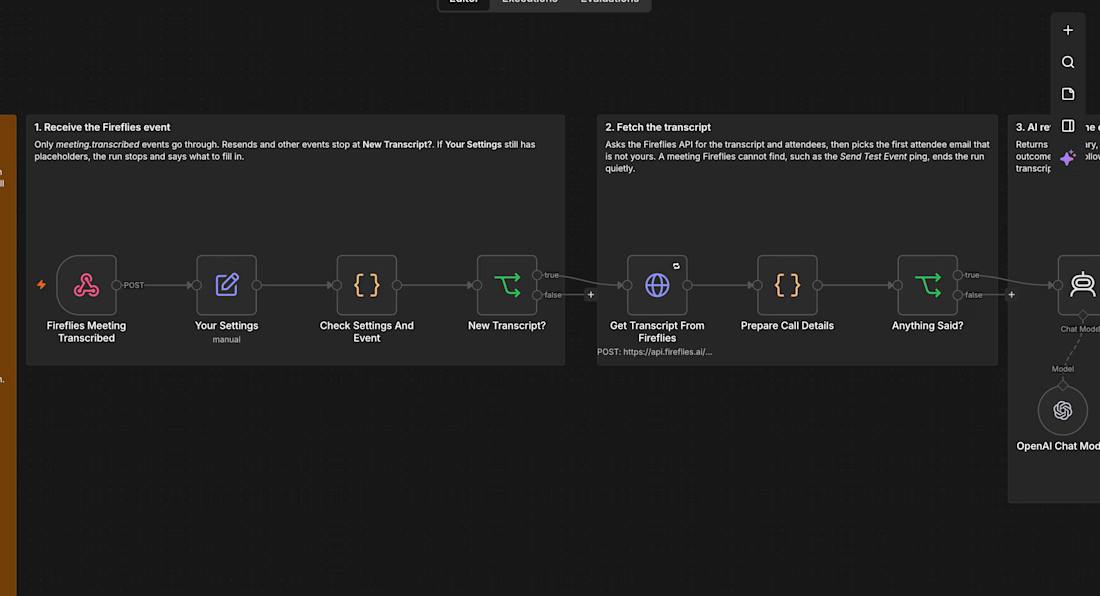
I built an n8n workflow that takes that routine away:
→ Fireflies records and transcribes the call
→ As soon as the transcript is ready, AI writes a summary, the open questions, the next step and whether the prospect is ready to go ahead
→ A follow-up email that fits that outcome is saved in Gmail drafts, addressed to the person on the call
→ The call is logged in Google Sheets and the notes land in your inbox
Nothing is sent automatically. You read the draft, change a line if you want, and press send.
For that consultant, 4 hours of admin a week turns into a few minutes of reading, and every prospect hears back the same day.
I tested it on a real recorded client call and have submitted it to the n8n template library as a free template. If you want it set up for your business, send me a message.