The network for creativity
Join 1.25M professional creatives like you
Connect with clients, get discovered, and run your business 100% commission-free
Creatives on Contra have earned over $150M and we are just getting started



The network for creativity
Join 1.25M professional creatives like you
Connect with clients, get discovered, and run your business 100% commission-free
Creatives on Contra have earned over $150M and we are just getting started









Related posts


This UI was really great nice job Piotr🔥🔥🔥

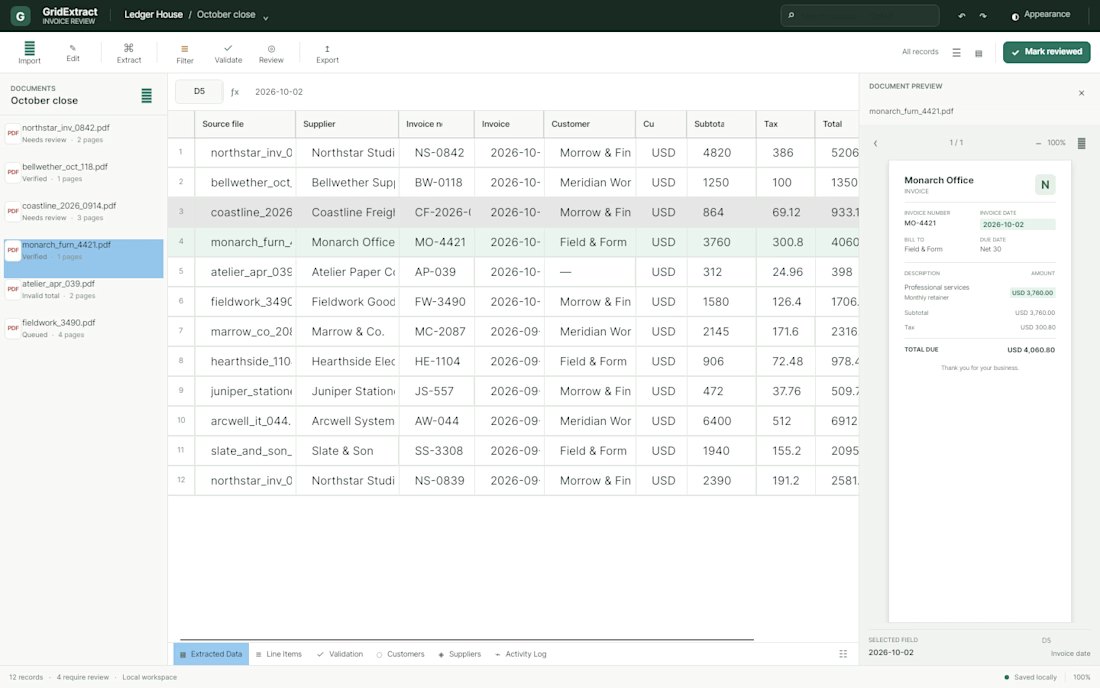
I'm currently building a PDF data extraction application for road freight and logistics companies.
I'm focusing on flexible field selection, local document processing, and handling different PDF layouts.




Built a Conversion-Focused Shopify Store for True Fresh 🧼
Just completed a Shopify store for True Fresh, a brand specializing in washing machine and appliance cleaning products.
The goal was to create a clean, trustworthy storefront that makes it easy for customers to understand the product, see the results, and make a purchase.
What I built:
→ Figma to pixel-perfect Shopify development
→ Mobile-first responsive design
→ Conversion-focused product pages
→ Washing machine cleaning product showcases
→ Before & after cleaning comparisons
→ Product bundles & upsells
→ Customer reviews & social proof
→ FAQ sections to reduce purchase friction
→ Blog integration for SEO
→ Clean, modern UI/UX
→ Performance-focused development
Tech stack:
Shopify • Liquid • HTML/CSS • JavaScript
The store is designed around the product's key selling points: removing buildup and odors, easy monthly maintenance, compatibility with different washer types, and building trust through reviews and product education.
🔗 Live store: https://true-fresh.com/
Looking to build or improve a Shopify store for your brand? Let’s connect.
#Shopify #ShopifyDeveloper #ShopifyStore #Ecommerce #DTC #WebDevelopment #ConversionRateOptimization #Freelance


