The network for creativity
Join 1.25M professional creatives like you
Connect with clients, get discovered, and run your business 100% commission-free
Creatives on Contra have earned over $150M and we are just getting started
Back to feedPost

Imagine finishing a project, sending the files, and closing your laptop.
Later, someone asks you a simple question over dinner. You ask them to repeat it because you were still thinking about a revision the client might request.
Tomorrow, you tell yourself, you’ll switch off properly.
That’s a useful moment to pause and ask: what have my workdays been like lately?
Our Burnout Early Warning System gives you a place to explore that question. The seven-day workbook helps you record changes in your energy, emotions, thinking, and everyday habits. The companion worksheets let you keep tracking what you notice.
You can use those notes to decide what needs attention and choose a practical next step.
The workbook and worksheets are available together as a digital PDF bundle on my Contra profile.
The network for creativity
Join 1.25M professional creatives like you
Connect with clients, get discovered, and run your business 100% commission-free
Creatives on Contra have earned over $150M and we are just getting started



Related posts

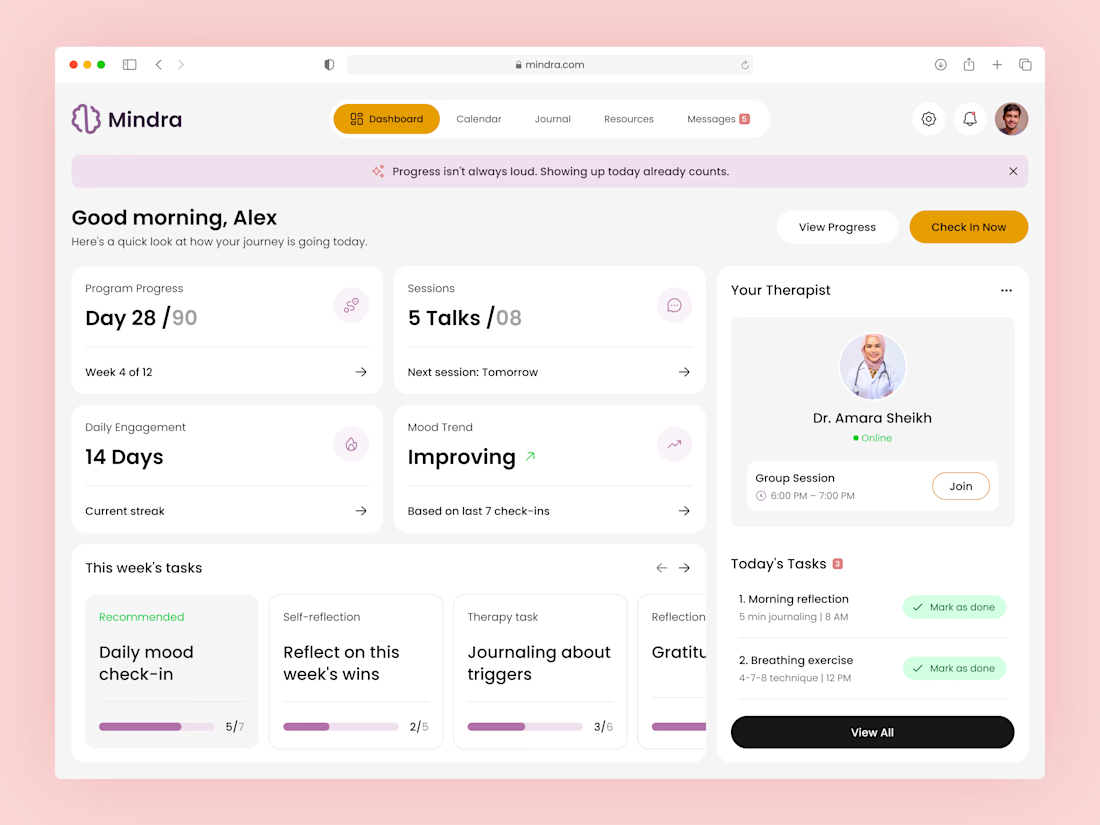
Designing for mental health requires a subtle balance between clarity and comfort. 🧠✨
For the Mindra web app dashboard, my main focus was crafting a clean, low-stress UI that seamlessly integrates therapist connections, mood trends, and daily reflections.
Check out the full showcase on my Contra profile! 👇


So true - clarity + comfort is the hardest balance in mental health design. Love that you focused on low-stress UI for Mindra.
Integrating therapist connections, mood trends, and daily reflections without feeling overwhelming is a real challenge. Would love to see how you handled the dashboard hierarchy. Important work!

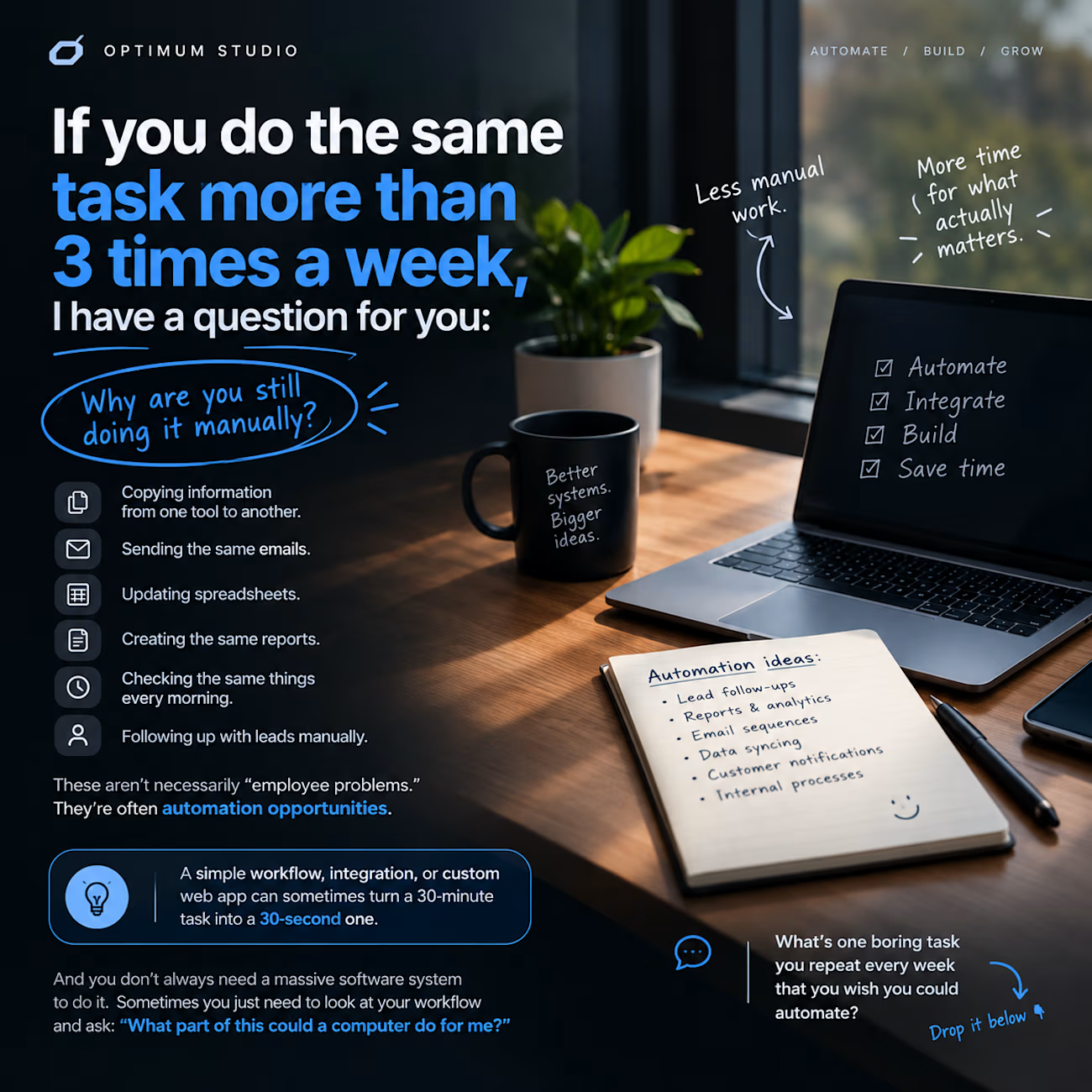
If you do the same task more than 3 times a week, I have a question for you:
Why are you still doing it manually? 👀
Copying information from one tool to another.
Sending the same emails.
Updating spreadsheets.
Creating the same reports.
Checking the same things every morning.
Following up with leads manually.
These aren't necessarily “employee problems.”
They're often automation opportunities.
A simple workflow, integration, or custom web app can sometimes turn a 30-minute task into a 30-second one.
And you don't always need a massive software system to do it.
Sometimes you just need to look at your workflow and ask:
“What part of this could a computer do for me?”
What's one boring task you repeat every week that you wish you could automate? 👇

What my SEO process actually looks like:
6:00 AM: Coffee. Reviewing analytics from overnight.
7:00 AM: Keyword research for a client's new video.
10:00 AM: Rewriting titles and descriptions.
2:00 PM: Tracking CTR and adjusting tags.
6:00 PM: Writing LinkedIn posts (like this one).
It's not glamorous. It's just consistent.
Every "overnight success" is 6 months of showing up.
What does your typical workday look like?
#FreelanceLife #YouTubeSEO #DailyRoutine #BehindTheScenes #Consistency #MaimunurSEO