The network for creativity
Join 1.25M professional creatives like you
Connect with clients, get discovered, and run your business 100% commission-free
Creatives on Contra have earned over $150M and we are just getting started
Back to feedPost


Framer just leveled up! 🚀 Introducing Video Shaders.
Now you can apply high-fidelity, real-time effects like glass-like curvature & dispersion to your videos AND images. Edit properties live, publish web-ready in seconds. Time to get creative! ✨
Watch the full breakdown 👇 https://framer.com/updates/video-shaders
Explore and use Framer 👉
https://framer.link/moataz35
to elevate your designs. Build more, spend less. Live now!
#Framer #VideoShaders #Design
The network for creativity
Join 1.25M professional creatives like you
Connect with clients, get discovered, and run your business 100% commission-free
Creatives on Contra have earned over $150M and we are just getting started







Related posts


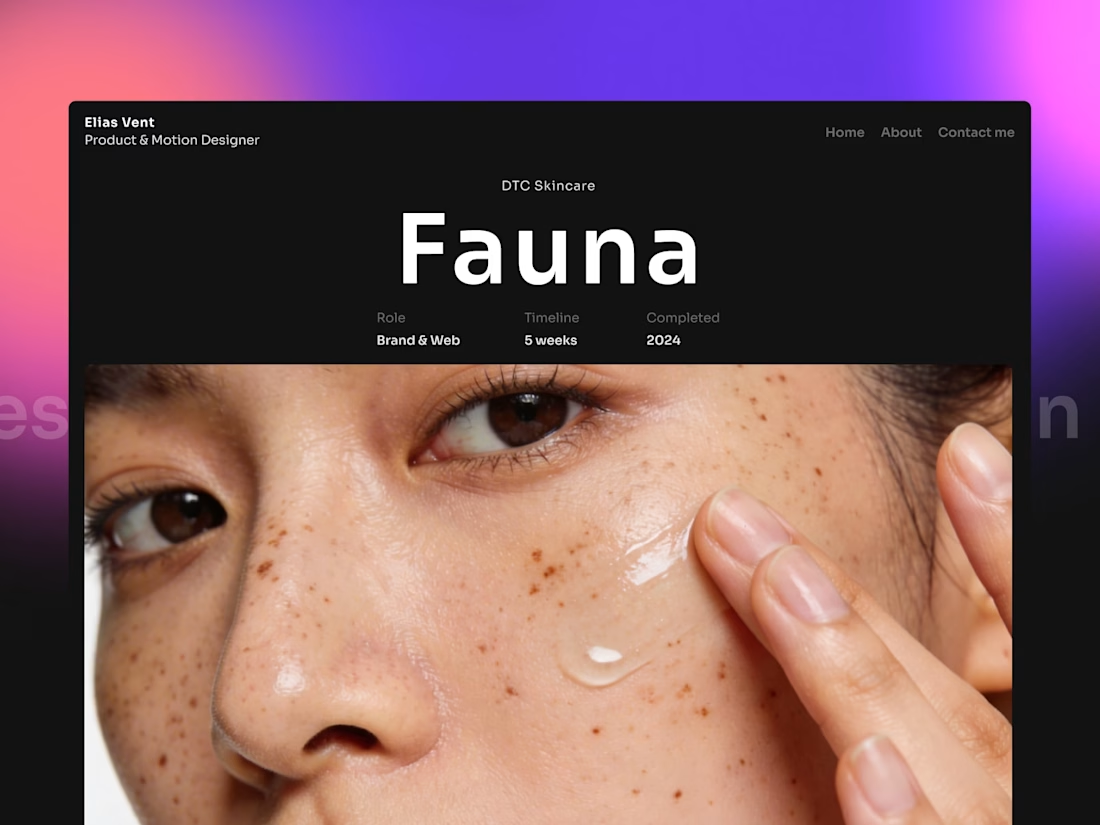
The Fauna project page in Elias Vent puts oversized type above a close portrait crop. The project details sit between them.
Framer template: https://startfrom.co/templates/elias-vent

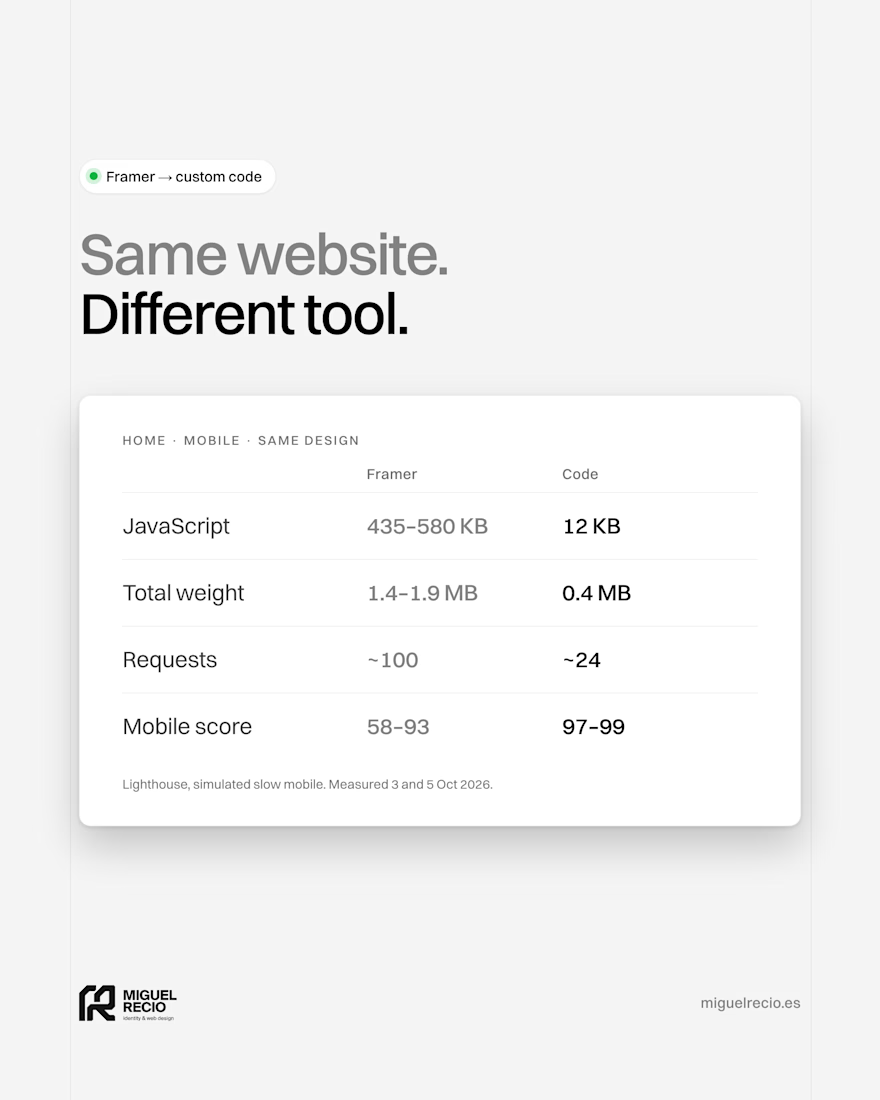
When I recommend Framer, and when I don't.
Framer is still my default for client sites: a few pages, one language, a team that edits often and needs to ship fast.
My own site went the other way. Three CMS collections and two languages meant a higher plan plus a paid locale every year, so I rebuilt it in code with the same design. On mobile, the home page went from 435–580 KB of JavaScript to 12 KB, and the speed score from 58–93 to 97–99.
If you're an agency choosing a stack for a client, the question isn't which tool is better. It's how much the site will grow.

A few years ago I had the chance to take a course where one of the modules was taught by a designer I really admire, Joseph Berry.
The goal was to create a website for a product, in this case, a speaker. We went through the entire process, from receiving the brief to the very last detail, even modeling the product ourselves in 3D using Spline.
I learned so much, and also got to meet great designers. It’s amazing to see how each one has a different process, and having the chance to observe that and take a bit from each way of doing things to make it your own and develop a unique result really helps you grow a lot as a professional.
I’m sharing some frames from the project, hope you like them!

Great website design visuals I like the color palette ❤️❤️
Great job Ivan🎉🎉