The network for creativity
Join 1.25M professional creatives like you
Connect with clients, get discovered, and run your business 100% commission-free
Creatives on Contra have earned over $150M and we are just getting started
Back to feedPost

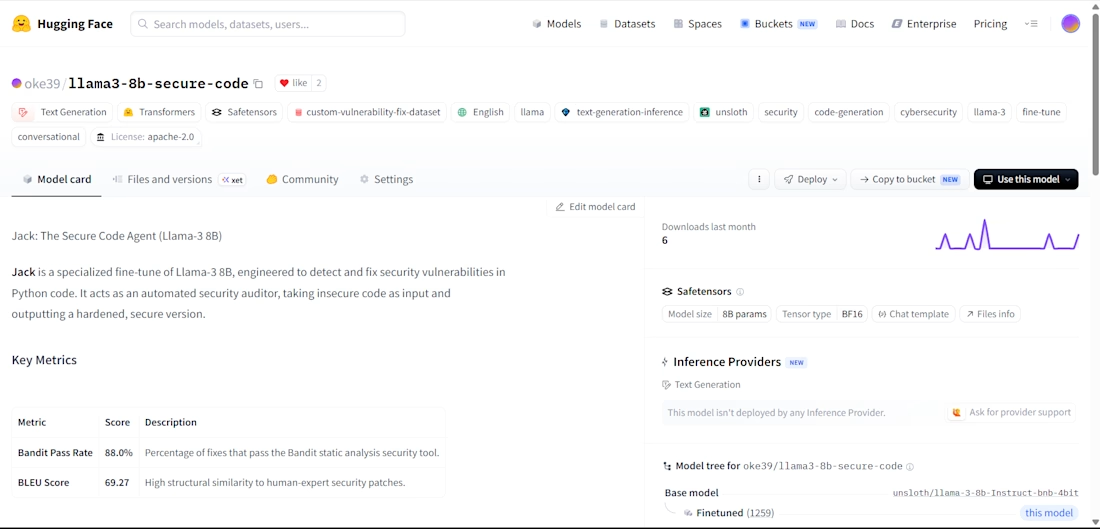
A fine-tuned Llama-3 8B model specialized in detecting and patching security vulnerabilities in Python code, trained using Unsloth and PEFT/LoRA, converted to GGUF, and deployed on Hugging Face.


The network for creativity
Join 1.25M professional creatives like you
Connect with clients, get discovered, and run your business 100% commission-free
Creatives on Contra have earned over $150M and we are just getting started

Challenges
View all


Related posts


I’ve been razzmatazzing and flibbertigibbeting with Claude Code and somehow ended up with a new yels.dev.
It finally feels like me: simple on the surface, slightly complicated underneath, and very much alive.
You can see who I am, what I do, the work behind Herodot, RaptorLabs, CyberLink Security and Solmint, plus a selection of projects I’ve built across AI, cybersecurity, Web3, product systems, education, archives, and experimental digital spaces.
Built to be explored


The simple-on-the-surface, layered-underneath idea comes through so clearly in the presentation. I especially like how the project archive turns the site into something to explore rather than just a résumé of links.

I built ReviewIQ because technical interviews don't always test whether you can actually review code.
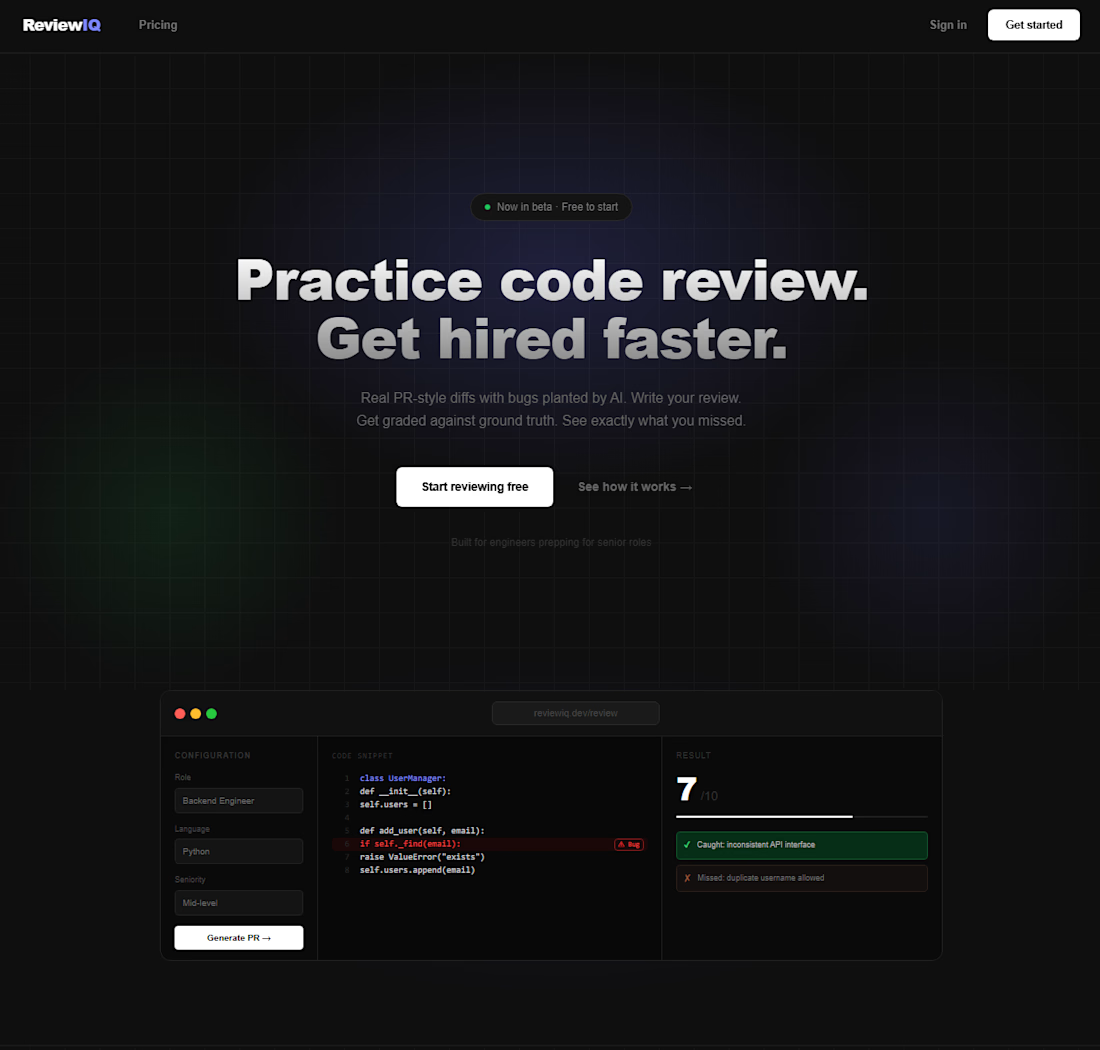
ReviewIQ is an AI-powered code review interview trainer built for software engineers.
You pick a role, language, and seniority, then get a realistic PR diff with bugs intentionally planted in it.
You write your review.
Then the system grades it against the actual bugs, shows what you caught, what you missed, and gives you feedback on how a stronger reviewer would approach it.
The interesting part was building the grading system so it isn't just "AI thinks your answer is good." The bugs have a known ground truth, so the review can be evaluated against something concrete.
Built with Next.js, Supabase, PostgreSQL, OpenAI, and Lemon Squeezy.
I'm interested in building more products where AI isn't just a chat box, but an actual part of the product experience.
The known-ground-truth approach is a great product decision—it makes the feedback feel earned rather than like an opaque AI verdict. I also like that the flow tests the actual review skill instead of rewarding pattern-matching in interviews.

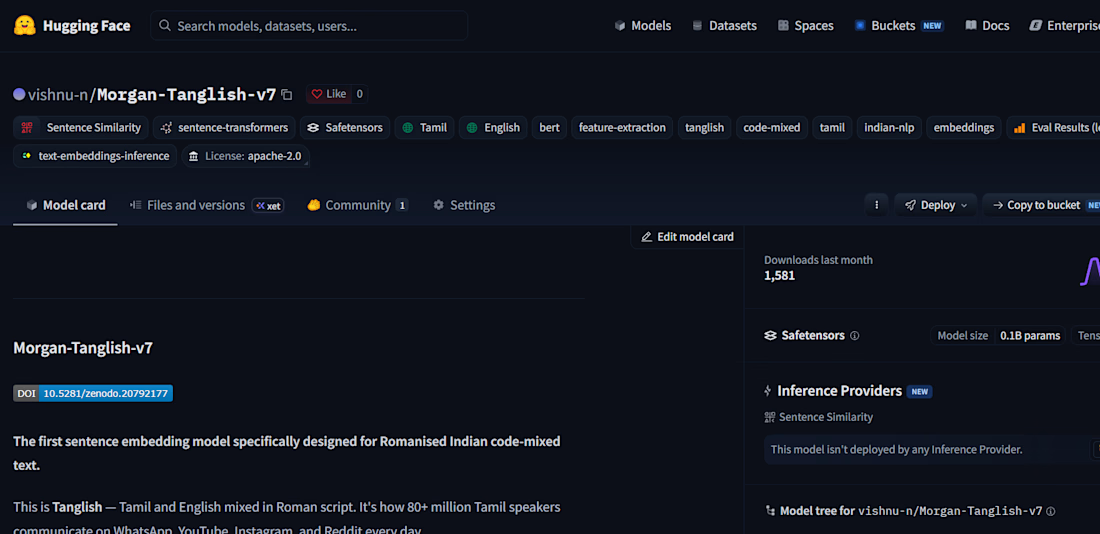
I built the first sentence embedding model for Tanglish — 1,581 downloads, beats BAAI/bge-m3 at 4x fewer parameters. I build NLP systems for low-resource and code-mixed languages.