The network for creativity
Join 1.25M professional creatives like you
Connect with clients, get discovered, and run your business 100% commission-free
Creatives on Contra have earned over $150M and we are just getting started
Back to feedPost

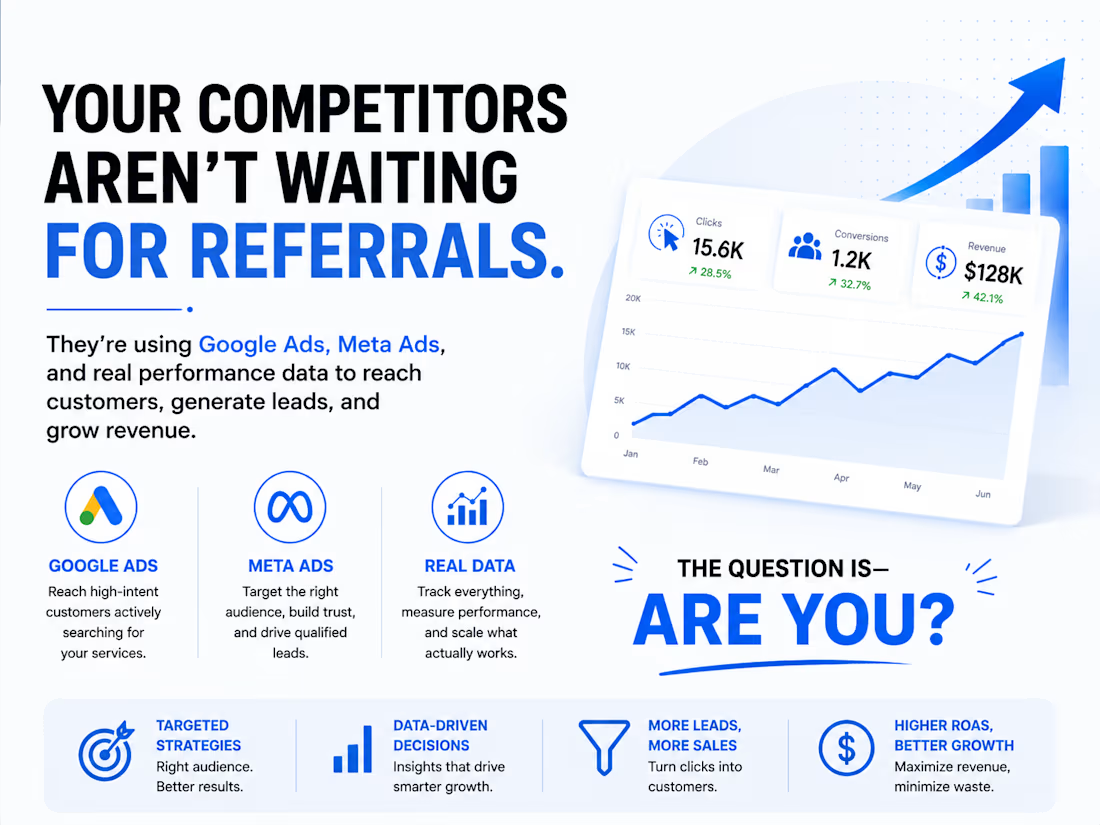
Your Competitors Aren't Waiting for Referrals
In today's competitive market, relying solely on referrals can limit business growth. While referrals remain valuable, they're often unpredictable and difficult to scale.
Successful businesses combine referrals with data-driven digital marketing to generate a consistent flow of qualified leads and new customers.
Platforms like Google Ads and Meta Ads allow businesses to reach high-intent audiences, measure campaign performance, optimize marketing spend, and make decisions based on real data—not guesswork.
This concept highlights a simple reality: businesses that track performance, optimize campaigns, and invest in measurable marketing are better positioned to grow consistently.
Key Takeaways
Reach customers actively looking for your services.
Make decisions using real performance data.
Reduce wasted ad spend through optimization.
Build a predictable lead generation system.
Scale growth with measurable marketing strategies.


The network for creativity
Join 1.25M professional creatives like you
Connect with clients, get discovered, and run your business 100% commission-free
Creatives on Contra have earned over $150M and we are just getting started





Related posts

Your Team Doesn’t Need More Leads. It Needs a Better System to Handle Them.
How many potential clients are being lost because someone has to manually find prospects, research companies, qualify leads, update the CRM, write outreach messages, follow up, and track responses?
The expensive part isn’t just the time.
It’s the qualified lead that never gets contacted, the follow-up that gets forgotten, and the hours your team spends doing repetitive work instead of closing opportunities.
That’s exactly what this AI Lead Generation Agent built with n8n is designed to solve.
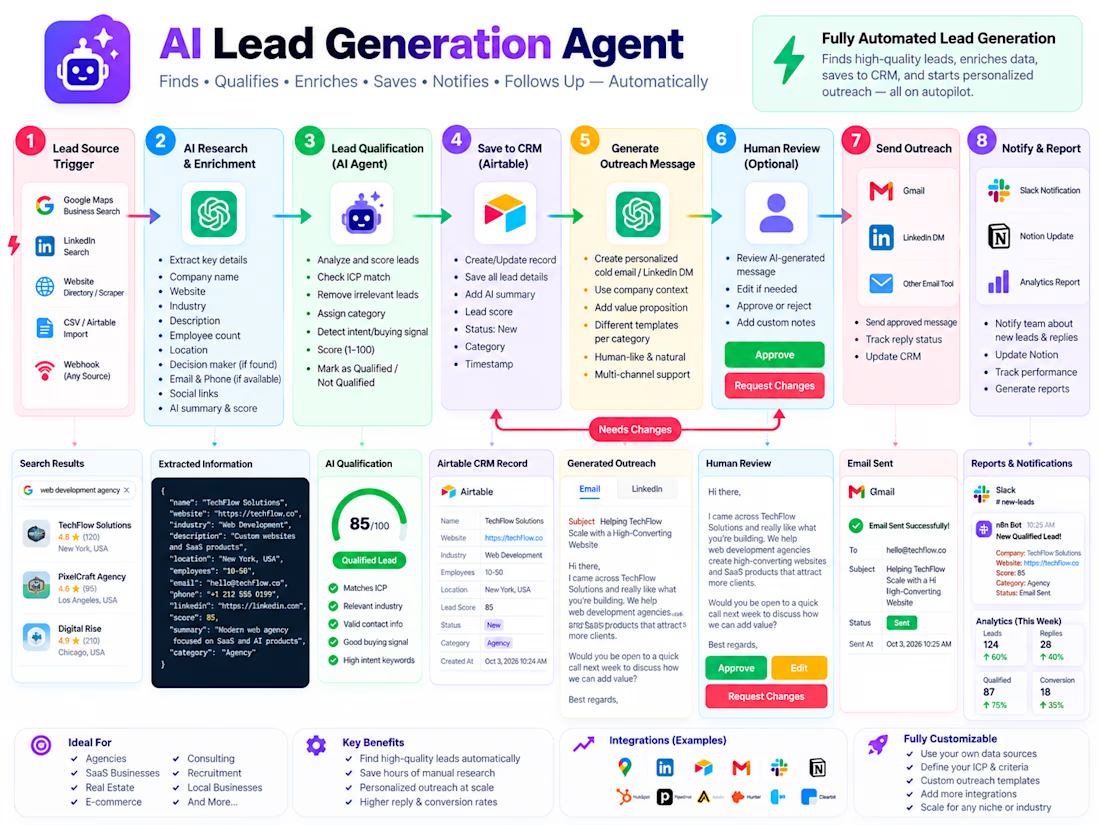
It can turn a repetitive lead-generation process into an automated workflow:
Find Leads → Research & Enrich → AI Qualify → Score → Save to CRM → Generate Personalized Outreach → Human Approval → Send → Track → Notify → Report
Instead of treating every prospect the same, the AI can analyze available lead information against your Ideal Customer Profile (ICP), organize and score prospects, and help prioritize the opportunities worth your team’s attention.
For outreach, it can use available business context to prepare personalized messages instead of sending the same generic pitch to everyone.
And when human judgment matters? Keep it.
Add an approval step so your team can Approve, Edit, or Reject an AI-generated message before anything is sent.
The result is simple: less repetitive research, faster lead handling, organized CRM data, more consistent follow-ups, and more time for your team to actually sell.
This workflow can be customized for B2B companies, SaaS businesses, agencies, real estate, recruitment, consulting, e-commerce, local businesses, service businesses, startups, and other sales teams.
Already have a lead-generation process? → Send me your current workflow, and I’ll show you where AI automation can remove the repetitive steps.
Still generating and managing leads manually? → Tell me your business and ideal customer, and I’ll help map out an AI lead-generation workflow around your process.
SEO Keywords
AI Lead Generation Agent, AI Lead Generation, Lead Generation Automation, Automated Lead Generation, n8n Automation, n8n Workflow, n8n AI Agent, AI Automation, AI Agent Development, AI Workflow Automation, B2B Lead Generation, B2B Sales Automation, Sales Automation, Lead Generation System, Lead Qualification, AI Lead Qualification, Lead Scoring, Prospecting Automation, AI Prospecting, Sales Prospecting, Lead Enrichment, CRM Automation, Automated Outreach, Personalized Outreach, Email Automation, Cold Email Automation, Sales Outreach Automation, Follow-Up Automation, AI Sales Agent, AI Sales Automation, Business Process Automation, Workflow Automation, Marketing Automation, CRM Integration, Airtable Automation, Gmail Automation, Slack Automation, Notion Automation, SaaS Automation, Agency Automation, Real Estate Lead Generation, Recruitment Automation, E-commerce Automation, Business Automation, No-Code Automation, AI Integration, Digital Transformation
#AILeadGeneration #LeadGeneration #LeadGenerationAutomation #AutomatedLeadGeneration #AIAgent #AIAgents #AIAutomation #AIWorkflow #WorkflowAutomation #n8n #n8nAutomation #n8nWorkflow #SalesAutomation #AISalesAgent #AISales #B2BLeadGeneration #B2BSales #B2BMarketing #LeadQualification #LeadScoring #LeadEnrichment #SalesProspecting #AIProspecting #Prospecting #CRM #CRMAutomation #SalesOutreach #OutreachAutomation #EmailAutomation #ColdEmail #FollowUpAutomation #MarketingAutomation #BusinessAutomation #ProcessAutomation #SaaS #SaaSAutomation #AgencyAutomation #RealEstate #RecruitmentAutomation #EcommerceAutomation #StartupAutomation #NoCode #LowCode #ArtificialIntelligence #GenerativeAI #DigitalTransformation #SalesTech #MarTech #BusinessGrowth #SalesGrowth #AutomationExpert
AI Chatbot DevelopmentBusiness Workflow AutomationAirtableN8NOpenAIaileadgenerationn8nautomationAI Agent Engineer



Seeing the AI qualify and score leads before they hit the CRM really cuts the noise and lets the team focus on the real opportunities.