The network for creativity
Join 1.25M professional creatives like you
Connect with clients, get discovered, and run your business 100% commission-free
Creatives on Contra have earned over $150M and we are just getting started
Back to feedPost

Every day, potential customers search for services like yours and if your business isn't optimized to appear in those results, you're losing that opportunity to a competitor who is.
I help local businesses improve their presence in Google Search and Google Maps through a structured, results-driven approach to local SEO: Google Business Profile optimization, local keyword strategy, citation consistency, and a proven review generation process.
The goal isn't just better rankings. It's more qualified inquiries from people who are already looking for what you offer.
I'm currently taking on new clients on Contra. If visibility has been holding your business back, let's talk about a strategy built around your goals.

contra.com
Local SEO Specialist | Boost Google Rankings & Local Visibility by Nouman Javeed
Read more about Local SEO Specialist | Boost Google Rankings & Local Visibility by Nouman Javeed on Contra.
The network for creativity
Join 1.25M professional creatives like you
Connect with clients, get discovered, and run your business 100% commission-free
Creatives on Contra have earned over $150M and we are just getting started



Related posts

Sometimes, the problem isn't your keyword. It's what you did with it.
You've done your keyword research, found a relevant search term, and included it naturally throughout your article. Everything is seemingly perfect, so why isn't the content performing as expected?
Well, SEO content writing involves much more than choosing the right keyword.
Think about it:
- Weak structure: Readers struggle to find the information they're looking for.
- Shallow answers: The article mentions the topic but doesn't actually address the reader's questions.
- Poor readability: Long paragraphs, unnecessary jargon, and repetitive explanations make the content harder to follow.
- Mismatched search intent: The keyword is relevant, but the article doesn't deliver what people actually expect when they search for it.
And that's where things can go wrong.
A well-chosen keyword can bring your content into the right search conversation, but the quality, relevance, and usefulness of the article matter too.
Piece of advice? Don't just optimize an article to include a keyword. Optimize it to answer the question behind that keyword.
Because ranking for a search term is one thing. Giving people a reason to stay, read, and trust your content is another.
When an SEO article underperforms, what's the first thing you'd review: the keyword, the structure, or the content itself?



Free 5-minute site teardown.
Not sure what's holding your website back? Send me the link.
I'll record a 5-minute video review of your site with practical suggestions on three things:
→ what slows it down
→ where visitors get stuck
→ what search engines can't read
Free, and no obligation. Message me here on Contra with your URL.
#WebsiteAudit #WebsiteTips #TechnicalSEO #UX #SaaS

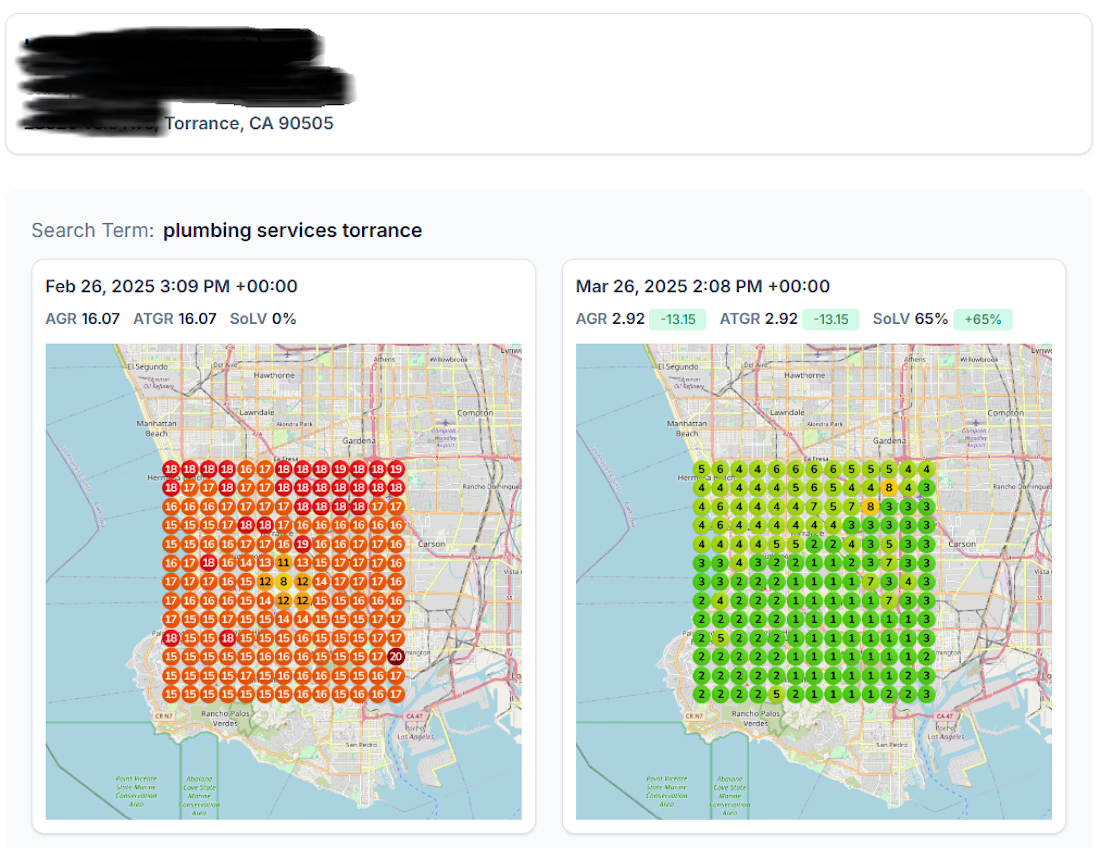
Plumbing, Torrance CA: “plumbing services torrance”
Rank 16 to rank 3, in four weeks.
Feb 26, 2025: the profile sat at positions 15–18 almost everywhere, with 0% top-3 share. Mar 26: average rank 2.9, top-3 share 65%, and position 1 across most of the southern grid.
The result of a full Google Business Profile optimization.

going from rank 16 to 3 in four weeks for a plumber in torrance is a real jump. how did that plumber end up working with you