The network for creativity
Join 1.25M professional creatives like you
Connect with clients, get discovered, and run your business 100% commission-free
Creatives on Contra have earned over $150M and we are just getting started
Back to feedPost

Inside the sHUMINT Methodology: Part II - Behavioral Profiling of AI
Yesterday I introduced the four pillars of Synthetic HUMINT (sHUMINT): behavioral profiling, probing, consistency testing, and attribution.
Today I want to focus on the first pillar.
If we accept that AI systems are becoming operational actors, then we need to answer a fundamental intelligence question:
How do you build a profile of something that has no face, no identity, and no history?
The answer is the same one HUMINT has relied on for decades:
You study behavior.
Current AI models inherit behavioral fingerprints from the human-generated data they were trained on. Those fingerprints don't reveal themselves in a single interaction they emerge through repeated observation, comparison, and structured questioning.
When profiling a model, I'm not looking for what it knows.
I'm looking for how it behaves.
Some of the behavioral indicators I watch include:
🔹 Structural Signature
Every model has default habits. Some naturally produce structured lists, others prefer flowing prose. Some consistently introduce caveats, while others move directly into conclusions. Those habits become surprisingly consistent over time.
🔹 Reasoning Defaults
When faced with ambiguity, every model makes assumptions. Which assumptions it chooses and which it ignores provide insight into its preferred reasoning patterns.
🔹 Recovery Under Pressure
Contradict a model. Challenge its conclusions. Introduce conflicting information.
Some models reassess.
Some become increasingly uncertain.
Others confidently defend incorrect conclusions.
That recovery behavior is often more informative than the original answer.
🔹 Confidence Calibration
Confidence itself is a behavioral signal.
Does the model routinely overstate certainty?
Does it hedge every conclusion?
Or does it consistently distinguish between evidence, inference, and speculation?
That calibration tends to remain remarkably stable.
🔹 Refusal & Boundary Patterns
Every model draws boundaries differently.
The interesting question isn't simply whether it refuses.
It's how it refuses, where it draws those boundaries, and how consistently those boundaries appear across different contexts.
Those patterns become part of the model's behavioral identity.
Behavioral profiling isn't about identifying an attacker from a single response.
It's about building a baseline.
Without a behavioral baseline, there is nothing to compare, challenge, or ultimately attribute.
That's why behavioral profiling is the foundation of sHUMINT.
Everything else builds on it.
Next: Part III: Consistency Testing: Why contradiction reveals more than agreement.
Analytical assessment for educational and situational-awareness purposes only. This post discusses behavioral analysis concepts and contains no operational guidance, attack methodology, or instructions for offensive use. Views are my own.

The network for creativity
Join 1.25M professional creatives like you
Connect with clients, get discovered, and run your business 100% commission-free
Creatives on Contra have earned over $150M and we are just getting started
Related posts



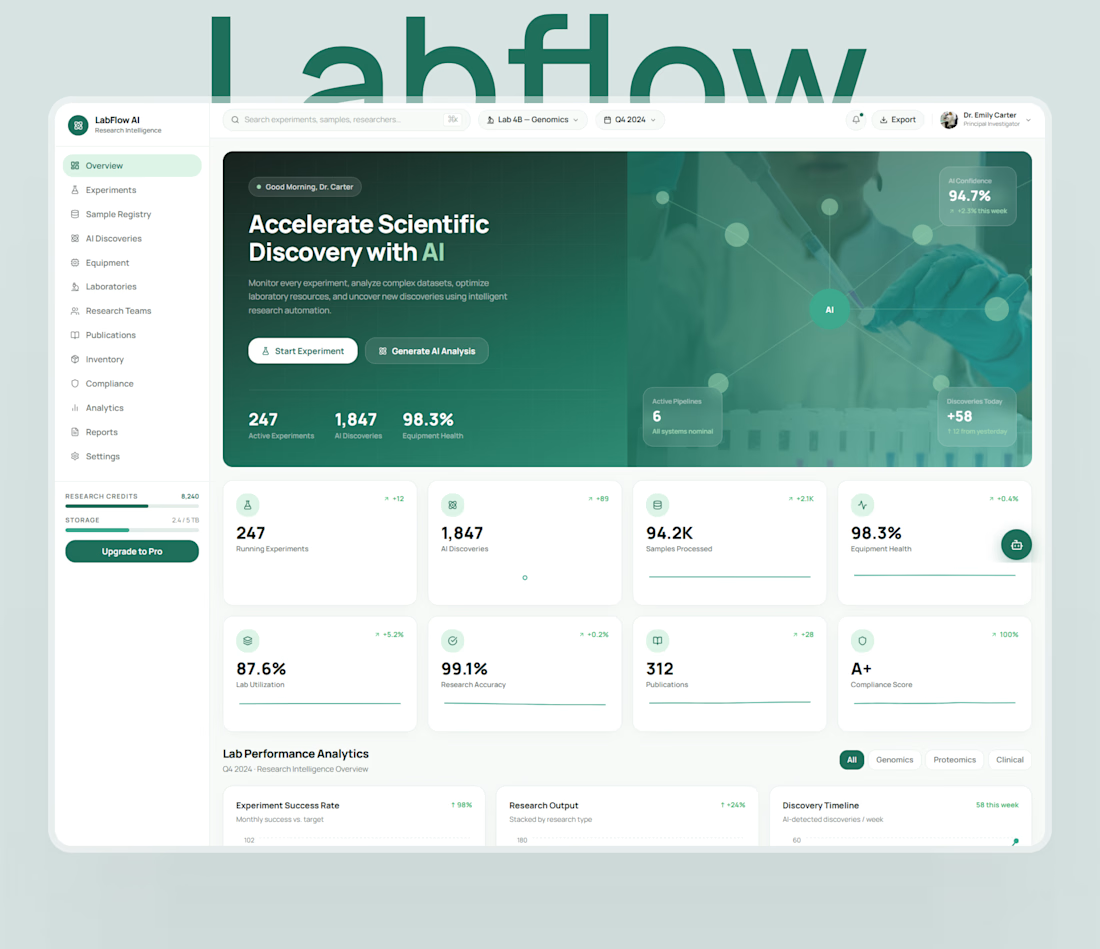
Meet LabFlow AI—a premium dashboard concept for modern research laboratories, combining AI insights, experiment tracking, equipment monitoring, and analytics into one intelligent workspace.
#UIDesign #SaaS #LabTech #Figma #CraftedDots



Looks cool

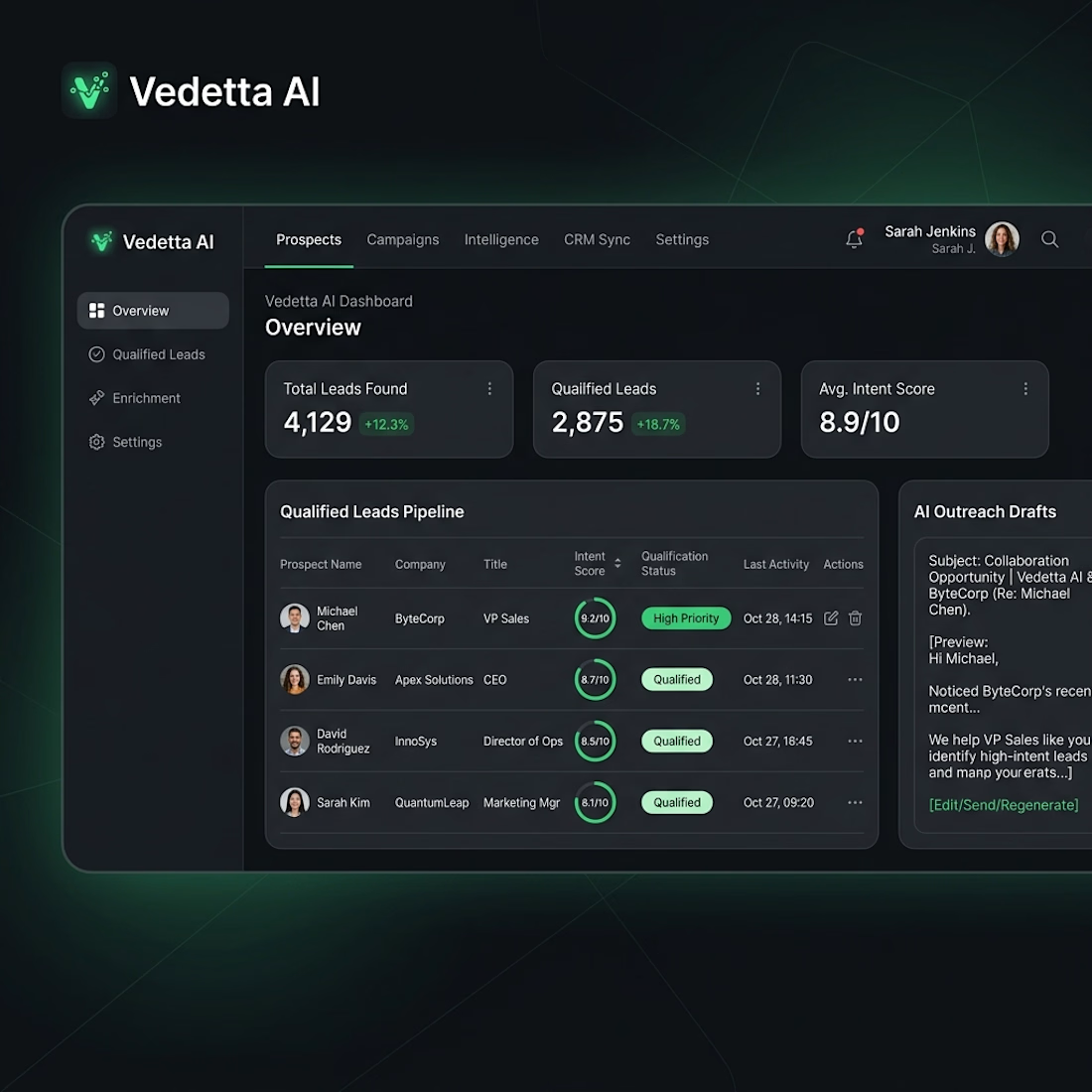
Vedetta AI: Autonomous Lead Prospecting Agent
The Problem: B2B agencies spend countless hours manually searching platforms for leads and filtering out low-budget opportunities. The Solution: I built a custom Node.js autonomous agent that works 24/7. It continuously monitors data sources, parses unstructured text, and passes it through a strict Claude/Gemini scoring model to determine real commercial intent. It then drafts a highly personalized outreach message and pushes it to a Telegram channel for a 1-click human approval. It entirely automates the top of the sales funnel. Tech Stack (Skills da taggare): Node.js, TypeScript, AI Agents, Prompt Engineering, API Integration.









Trending

Claude
Claude has entered the design space. How are you using Claude Design?

Contra University
Learn from expert creatives how to earn more using next-gen AI tools.
fifaworldcup2026
The World Cup is here and the whole world's watching. How are you designing for the world stage?
creativeaiflow
Creative AI workflows are evolving. What tools do you use, and what are their strengths and weaknesses?
freelancerlife
Freelancer life is wins, pivots, and everything in between. What’s yours right now?