The network for creativity
Join 1.25M professional creatives like you
Connect with clients, get discovered, and run your business 100% commission-free
Creatives on Contra have earned over $150M and we are just getting started
Back to feedPost

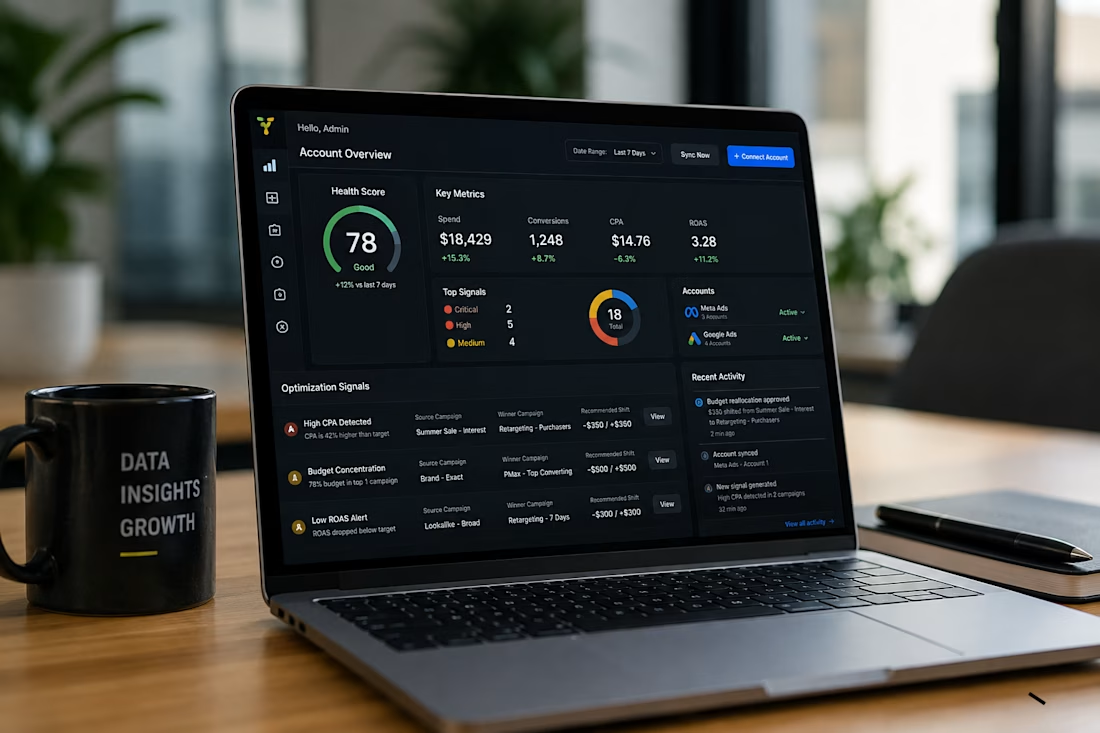
🚀 I recently built an AI-powered Ad Performance Monitoring & Budget Optimization SaaS
Managing Meta + Google Ads across multiple accounts often means constantly checking dashboards, comparing CPA/ROAS/CPC, and deciding where budget should move.
So I built an MVP that turns this process into an intelligent optimization workflow.
What it does:
🔗 1-Click Meta & Google OAuth
Connect ad accounts without manually copying access tokens.
📊 Automated Campaign Monitoring
Background workers continuously pull campaign performance and evaluate account health.
🚨 Anomaly & Performance Detection
Automatically detects:
• CPA/CPC/CPM spikes
• ROAS drops
• Wasted spend
• Budget concentration
• Low Google Quality Scores
• Low impression share
• Creative fatigue
🤖 Claude AI Recommendations
Instead of simply saying "Campaign X is performing badly," the system explains why and recommends where budget should potentially move.
💰 Controlled Budget Reallocation
No blind automation.
The system proposes:
Reduce → $X from Campaign A
Increase → $Y to Campaign B
The user reviews the recommendation and clicks:
👉 Approve & Execute
Only then does the platform update the campaign budgets through the advertising APIs.
🔐 Auditability & Security
Encrypted credential storage
Complete activity logs
Approval-gated execution
Multi-tenant architecture
Stripe subscription billing
Production + simulation modes
Tech Stack
Python | Django/FastAPI | PostgreSQL | Redis | Celery | Meta Graph API | Google Ads API | Anthropic Claude | OAuth 2.0 | Stripe | Docker
This project brought together several areas I enjoy working on:
Backend Engineering + APIs + AI/LLMs + Automation + SaaS Architecture
I'm particularly interested in working with SaaS founders, marketing agencies, AdTech companies, and teams looking to build AI-powered automation into their products.
If you're building something similar—or have a complex backend/API/AI automation problem—let's connect.
#Python #Django #FastAPI #AI #LLM #SaaS #AdTech #GoogleAds #MetaAds #Automation #BackendDevelopment #APIs #ClaudeAI #OpenToWork
The network for creativity
Join 1.25M professional creatives like you
Connect with clients, get discovered, and run your business 100% commission-free
Creatives on Contra have earned over $150M and we are just getting started



Related posts

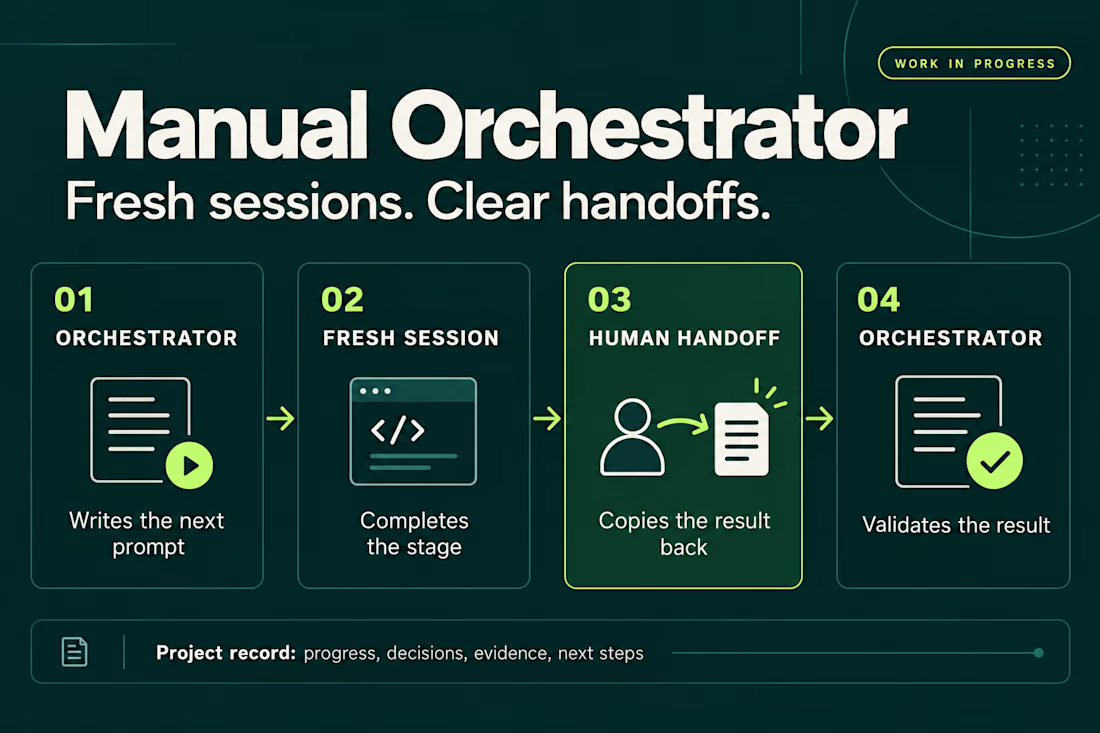
I’ve been working on a small skill called Manual Orchestrator to make longer projects with AI agents easier to manage.
The problem started with a familiar situation: one chat would accumulate plans, implementation details, corrections, and test results. By the time I was ready for the next phase, I wanted a fresh conversation without losing the decisions we’d already made.
Manual Orchestrator gives that process some structure. One chat acts as the orchestrator: it breaks the work into stages and writes a prompt for the next one. I run that prompt in a new session, then bring the result back. The orchestrator reviews it against the stage’s criteria before preparing the next prompt. If something needs fixing, I go back to the same worker session.
The skill also keeps a record in the project with the current stage, decisions, evidence, and next steps. That makes it easier to pause, resume, or hand the work to another session.
The handoff is manual. I choose when to open a session and carry the result back. The orchestrator and worker sessions can also use different agent CLIs, with the prompt adapted to the capabilities available.
It’s open source and still a work in progress. I’m using it to learn what helps in practice and where the workflow needs to improve. Installation has been checked for Codex, Claude Code, and Gemini CLI, but the full workflow hasn’t been tested across every CLI or version.
If you try it, I’d be interested in hearing what works and where it gets in your way.


Your Business Doesn't Need More Tools. It Needs Better Systems.
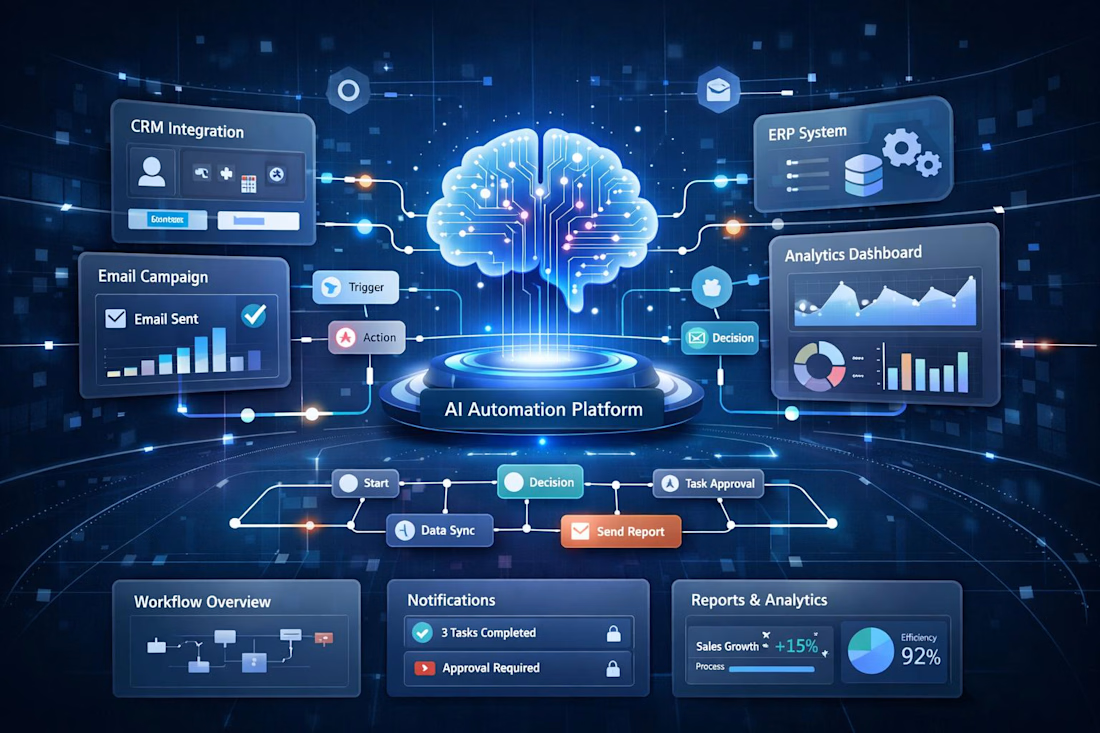
Most businesses don't have a software problem. They have an integration problem.
Their CRM is disconnected from their database. Their spreadsheets require manual updates. Their reports take hours to prepare. Their teams waste valuable time moving information between platforms.
That's where I come in.
I'm a Full-Stack AI Engineer specializing in building connected, intelligent business systems.
What I can build for your business:
CRM & ERP Integrations — Connect business platforms, databases, and third-party services through APIs.
Workflow Automation — Eliminate repetitive processes with intelligent automation.
Custom Dashboards — Turn scattered business data into actionable insights.
Data Pipelines — Build reliable systems for collecting, processing, validating, and synchronizing data.
AI-Powered Solutions — Integrate LLMs, intelligent agents, and automation into existing workflows.
Custom Software — Build complete web applications and business platforms from architecture to deployment.
I've independently developed complex digital platforms, including government-level systems, international applications, and AI-powered products.
My approach is simple:
Understand the business problem. Design the right architecture. Build the complete solution. Make it reliable.
I'm interested in working with founders, agencies, and businesses looking to modernize their operations and build software that actually solves problems.
Have a complex workflow or an integration challenge? Let's build something that works.
#FullStackDevelopment #AIAutomation #CRMIntegration #WorkflowAutomation #SoftwareEngineering #AIEngineering #Contra

When a CRM-to-database sync fails halfway, how do you handle it: idempotent retries, or a reconciliation pass afterward? That's usually where integrations start to drift.

For an AI scribe, I'd test what happens when someone switches encounters while a draft is still generating.
In my Arogya / Aurora EHR work, typed or dictated rounds become editable drafts. AI content stays advisory, and a clinician explicitly approves anything added to the chart.
The first response should stay attached to its original encounter. Before saving, I'd check that the encounter being reviewed still matches the draft, as well as requiring clinician approval.
That context check belongs in the save workflow, even when the draft reads well.
kapilchauhan.netlify.app
Arogya / Aurora EHR: AI for inpatient care | Kapil Chauhan
Production hospital and EHR platform that accelerates rounds, documentation, records, and care operations with clinician-reviewed AI.