The network for creativity
Join 1.25M professional creatives like you
Connect with clients, get discovered, and run your business 100% commission-free
Creatives on Contra have earned over $150M and we are just getting started
Back to feedPost

Everyone talks about building cloud infrastructure.
Few people ask an important question:
What happens if it fails tomorrow?
A server crashes.
A database becomes unavailable.
An entire region experiences an outage.
Without a recovery plan, even the best applications can become unavailable in minutes.
That's why Disaster Recovery is a fundamental part of cloud architecture.
It's not about expecting failure.
It's about being prepared for it.
A strong disaster recovery strategy includes:
✅ Regular backups
✅ Multi-AZ deployments
✅ Infrastructure automation
✅ Monitoring and alerting
✅ Defined recovery objectives (RTO & RPO)
The goal isn't to prevent every incident.
The goal is to ensure the business can recover quickly when incidents occur.
One thing cloud computing has taught me:
Success isn't measured by how systems perform on their best days.
It's measured by how well they recover on their worst days.
Resilience is not an extra feature.
It's part of the architecture.
#CloudComputing #AWS #DisasterRecovery #DevOps #CloudArchitecture #SiteReliability #BusinessContinuity #Technology #LearningInPublic #Tech
The network for creativity
Join 1.25M professional creatives like you
Connect with clients, get discovered, and run your business 100% commission-free
Creatives on Contra have earned over $150M and we are just getting started





Related posts

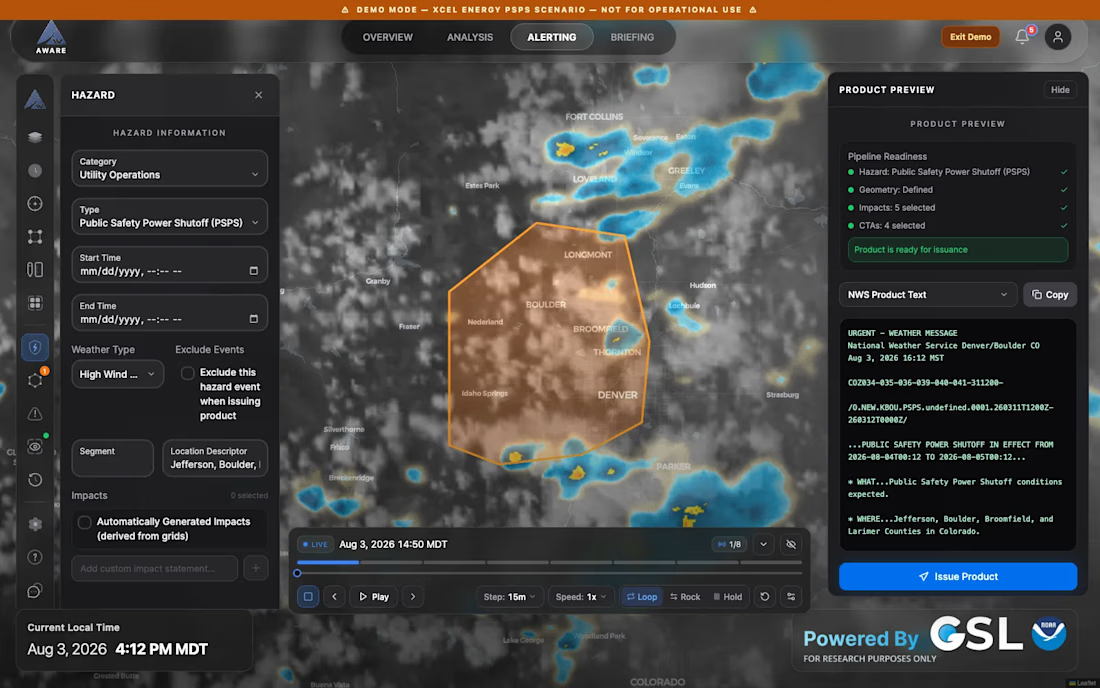
A complex product can lose users every time they switch screens.
For AWARE, a weather decision-support research workspace, I designed around keeping forecasters oriented as they moved from live conditions to a hazard product and partner briefing.
The map stayed central. Different working modes shared that context. A persistent time control helped make the forecast period clear.
The design question was practical: what should stay visible while someone makes the next decision?
That’s the kind of problem I help teams solve—dense data, demanding workflows, and interfaces where clarity matters.
See the case study:
https://contra.com/p/cWPmOb66-aware-decision-support-for-nws-forecasters
If your team is redesigning a complex web app or struggling with a core workflow, message me here on Contra.

E-commerce Revenue Recovery & Retention Automation System
I designed an e-commerce revenue recovery and retention system to show how online stores can recover abandoned sales and bring more customers back to purchase again.
The system automates key customer journeys including abandoned-cart recovery, post-purchase follow-up, win-back campaigns, repeat-purchase reminders, and customer segmentation.
Instead of relying on manual follow-ups, the workflow uses customer behavior and purchase data to trigger the right action at the right time.
The system follows a simple journey:
Customer Visits → Adds to Cart → Abandons → Automated Follow-up → Purchase → Retention Workflow → Repeat Purchase
I also structured the system to track how customers move through each stage, so the business can see where revenue is being recovered and where customers are dropping off.
The project demonstrates how automation can help an e-commerce brand:
Recover lost sales • Increase repeat purchases • Improve retention • Reduce manual follow-up • Increase customer lifetime value
Tools & technologies: Shopify, Klaviyo/Zoho Marketing Automation, n8n, Make, Zapier, CRM systems, email/SMS automation, and customer-data workflows.


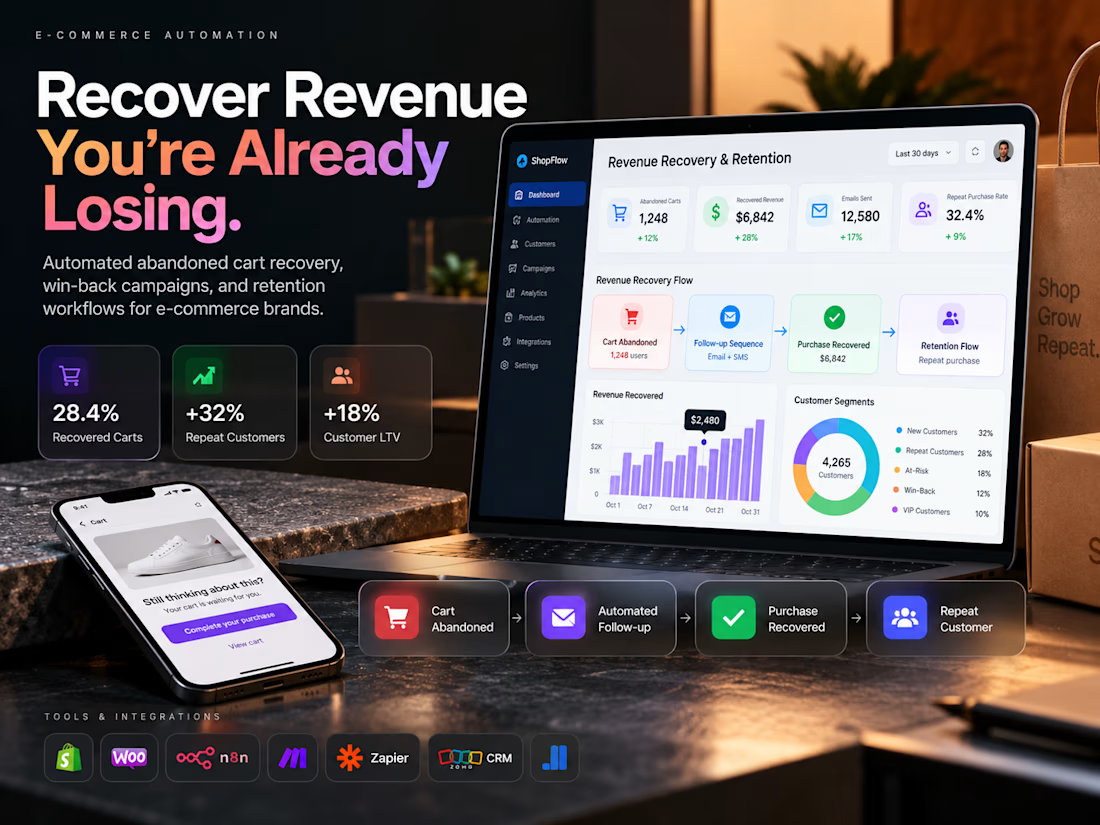

What caught my attention was the stage by stage tracking you built, it should pinpoint exactly where the drop offs happen and where the recovered revenue comes from

In 2024 I took over a vet telehealth app. The previous developer was gone, nothing was in version control, and it had never made it to production.
My first instinct was to start fixing bugs. Glad I didn't. I spent the first days getting it into GitHub, setting up Docker so local dev actually worked, and wiring GitHub Actions to deploy to the server. Boring work, but after that every fix could actually ship.
Then came the real features: scheduling, Stripe, Zoom calls etc.
Lesson I keep relearning: on a stuck project, get a reliable way to ship first. Nothing fancy here, just a plain nginx server and an automated deploy. The point is that every fix goes out the same way.

getting it into git and Docker before touching any bugs is the move, respect