The network for creativity
Join 1.25M professional creatives like you
Connect with clients, get discovered, and run your business 100% commission-free
Creatives on Contra have earned over $150M and we are just getting started
Back to feedPost

A simple rule I use before automating any business process: write it down as steps a new employee could follow. If you can't, automation will only make the chaos faster.
Once the steps are clear, tools like n8n plus a few API calls can take over the boring parts: copying data between systems, sending follow-ups, building reports. The goal is fewer manual clicks, not more software.
Happy to look at a process you'd like to automate.
The network for creativity
Join 1.25M professional creatives like you
Connect with clients, get discovered, and run your business 100% commission-free
Creatives on Contra have earned over $150M and we are just getting started


Related posts

An insurance advisory firm came to me with a GoHighLevel account that was fighting them.
Automations only fired from forms, not when a deal moved.
One pipeline was carrying four different processes.
Some stages only existed as workarounds.
We're rebuilding it. The first piece is live: a stage gate that holds every move until the right information is saved and checked.
→ Every stage move asks for confirmation, so no accidental drags
→ Application Submitted won't go through without a sold value
→ Recontact tags can't be applied without a date and a reason
→ Uploaded documents are attached straight to the deal
→ A small backend on Vercel validates, saves, reads the data back, and only then moves the card. No API keys in the browser.
The team works in French and English, through a white-label GHL domain, and it all runs inside their normal GHL screen.
If your CRM has stages your team only uses as workarounds, that's usually the first thing worth fixing.
Free 30-minute automation audit: link in the comments 👇
#GoHighLevel #GHL #CRM #InsuranceAgency #WorkflowAutomation #SmallBusiness

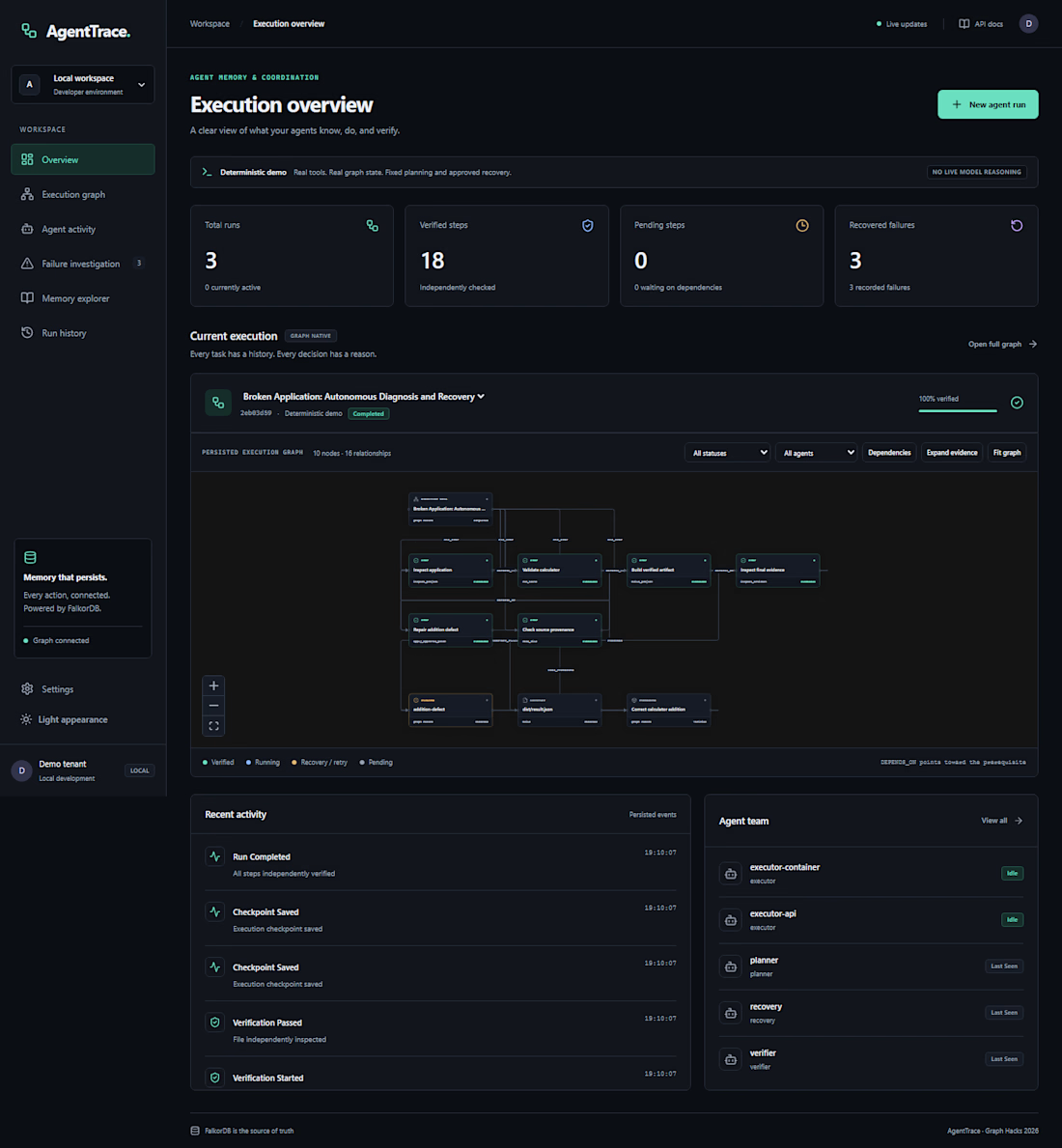
An AI agent fails halfway through a job. What should it remember when it tries again?
That question led me to build AgentTrace, a Python and FalkorDB project for keeping track of agent runs. It records task progress and decisions in a graph so you can inspect what happened and see where a run stopped. That’s especially useful when several agents share a workflow.
When you debug an agent run, what do you look for first: the failed step, the input that caused it, or the decision that sent it down that path?


Big week for me. On Thursday I'm being inducted into the engineering profession, and on Friday I graduate from the Federal University of Technology Akure after six years of studying Industrial and Production Engineering.
Industrial engineering taught me one thing above all: map the process before you try to improve it. Find where time is wasted, remove the steps nobody needs, then make the rest run reliably.
That's exactly what I do for businesses now, with AI automation in Make.com, n8n, Zapier and GoHighLevel. Same principles, different factory floor.
Grateful to everyone who helped me get here. I'm taking on new projects in automation, operations and video editing, so if your team needs a hand, my services are on my profile.


@Daniel Fajuyi Huge congratulations on the induction and graduation, Daniel. Six years of Industrial and Production Engineering is a serious milestone. That mindset of mapping the process and stripping out wasted steps before automating is exactly what separates clean n8n...