The network for creativity
Join 1.25M professional creatives like you
Connect with clients, get discovered, and run your business 100% commission-free
Creatives on Contra have earned over $150M and we are just getting started
Back to feedPost

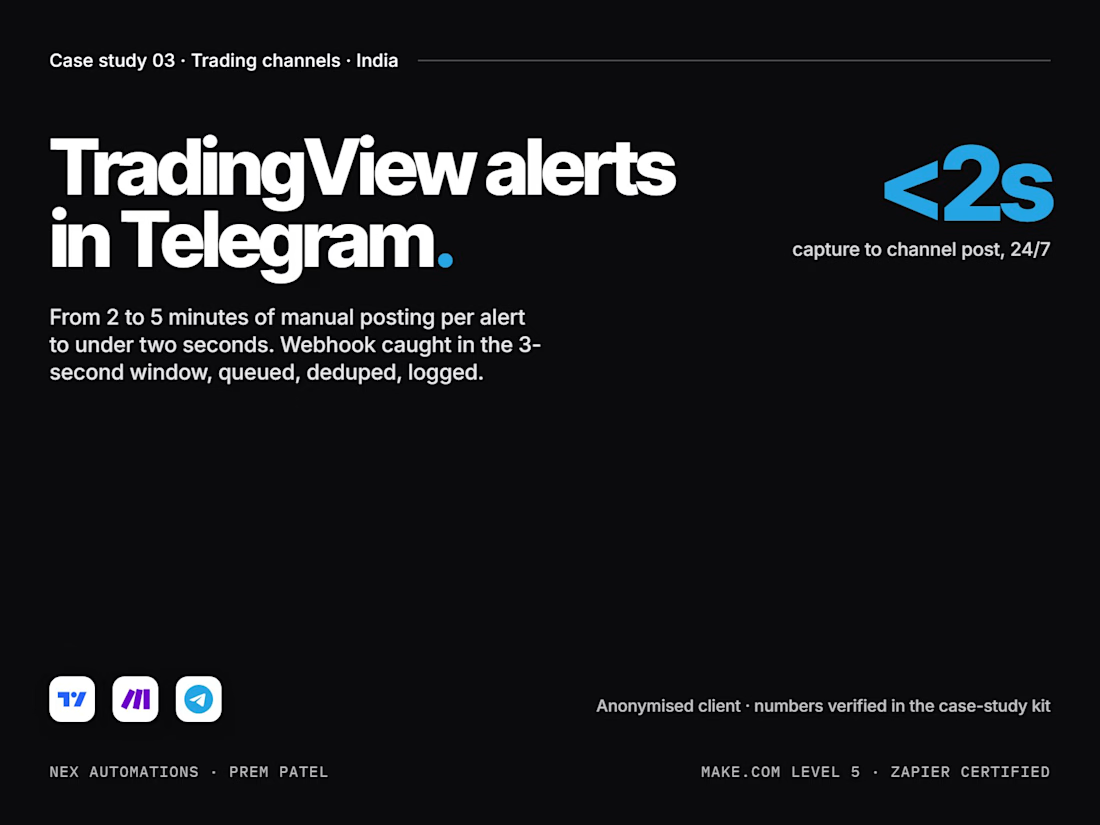
How do you get TradingView alerts into Telegram in under 2 seconds, 24/7, without losing or doubling a signal? The pipeline is easy to describe and hard to keep alive. Four traps decide it.
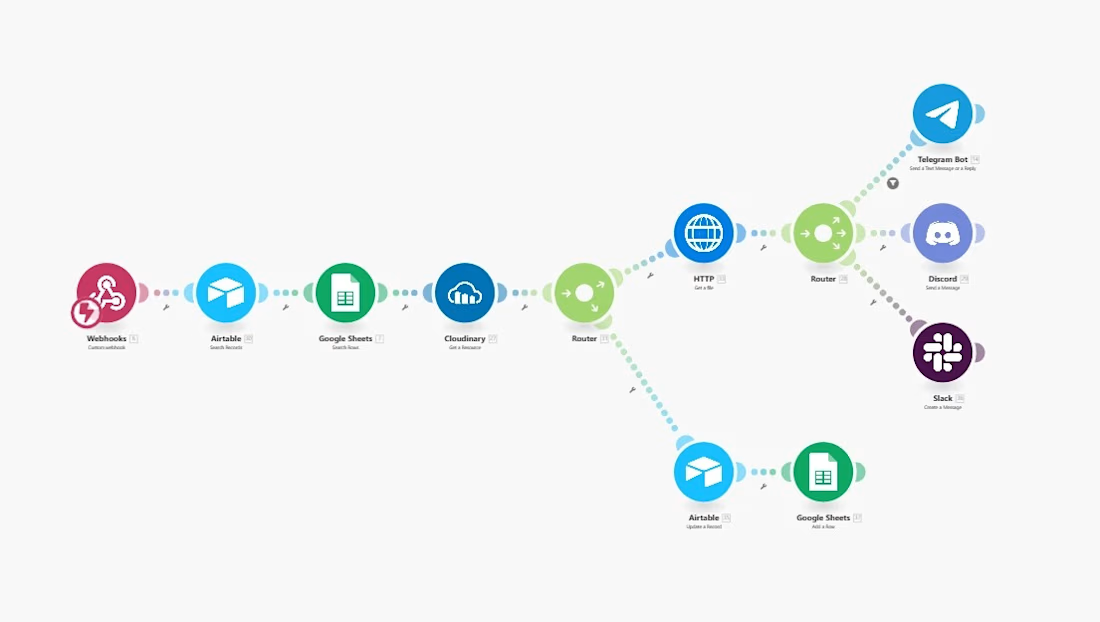
The shape: TradingView fires a webhook, Make.com catches it, formats the message the way the channel wants it, and posts it. Capture to post in under 2 seconds, around the clock, no human in the loop. That is the scenario in the image, running for a registered research analyst since 2025.
1. The 3-second window. TradingView gives a webhook receiver about 3 seconds to respond. A slow receiver loses the alert and nothing anywhere tells you. Fix: acknowledge instantly, process afterwards, never inline.
2. Telegram's rate cap. A channel takes roughly 20 messages a minute. One volatile candle across several symbols can fire more than that, and the extras vanish silently. Fix: a per-channel queue that preserves order and releases under the cap.
3. Duplicates. Retries and repeated triggers post the same signal twice unless every alert carries a dedupe key. Two identical entries in a row is how a channel loses trust in one afternoon. Fix: a key built from symbol, signal and bar time, checked before every send.
4. Silent death. The worst failure is the pipeline stopping while you assume it is posting. Fix: every run logged, every failure alerting you on a separate channel within seconds, and a heartbeat so silence itself raises an alarm.
One more for Indian channels: if the channel belongs to a SEBI-registered adviser, promotional messages need the registration number leading the message and you need retrievable send records. That is a formatting and logging problem, so the pipeline handles it.
Branded alert images instead of plain text are the same pipeline with one extra step: an image engine lays the signal over a base card by URL, so every alert ships as a picture. That build is its own case study on my profile.
The full case study is on my profile, and the delivered version (I install it on your Make.com account, with your templates, queue, dedupe, alerting and a send log) is the TradingView product on my services page.
Prem Patel, Nex Automations. Make.com Level 5 certified, official Make partner, Zapier Certified Expert.


The network for creativity
Join 1.25M professional creatives like you
Connect with clients, get discovered, and run your business 100% commission-free
Creatives on Contra have earned over $150M and we are just getting started





Related posts

I built QwikClean, a cleaning service platform in Nigeria that streamlines booking management and customer notifications. Recognising that people often ignore emails, I focused on engaging them through popular social media channels.
Key Features:
Real-time Alerts: A dedicated Telegram bot provides instant booking updates to the business owner.
Availability Scheduling: Live calendar management prevents double-booking by automatically marking reserved dates.
Customer Reminders & Self-Service: Automated notifications are sent 24 and 2 hours before appointments, allowing customers to cancel or reschedule via Telegram (with applicable fees) and set alerts.
Available Now: Telegram and Email
Coming Soon: WhatsApp, Instagram DMs, and SMS


FadeFlow: From “Can I book Saturday?” to “You’re booked.”
I built FadeFlow for Fade District, a fictional solo barbershop in Yaba, Lagos, run by Malik Adeyemi.
The problem is simple: a lot of bookings start with a message like:
“Can I get a haircut Saturday afternoon?”
From there, Malik has to ask for the service, check availability, reply with time options, create the booking, confirm it, collect the deposit, send reminders, and handle changes.
FadeFlow removes that back-and-forth.
Customers can choose a service, see available times, pay a ₦5,000 deposit, and confirm their appointment themselves.
And when they still message instead, FadeFlow turns the inquiry into a structured booking request. Malik can see what they want, send available times, and create the booking in one action.
Once it's booked, FadeFlow keeps everything connected:
✓ Calendar updated
✓ Customer updated
✓ Confirmation sent
✓ Reminder scheduled
Rescheduling works the same way. The old slot is released, the new one is reserved, and the related reminders are updated automatically.
I built it around one idea:
Let the customer handle the predictable parts. Let Malik handle the moments that actually need him.
Lovable project links:
Landing page (Customers view):
https://screenshot-perfect-6501.lovable.app
Webapp (Malik's view):
https://id-preview--329aba93-5208-4e22-947a-05f325da1d5c.lovable.app/app
Built with Lovable.
#lovablechallenge @Lovable

looking shap

Just wrapped up an AI voice agent for a residential cleaning business 🎙️ It handles the full call end to end — checks service area, gives a live quote, checks real calendar availability, and books the appointment straight onto Google Calendar. Built with Vapi + n8n + Google Calendar API. Portfolio build, but fully working — swipe through the n8n workflow in the video 👀
#aiworkflow #automation #voiceai


