The network for creativity
Join 1.25M professional creatives like you
Connect with clients, get discovered, and run your business 100% commission-free
Creatives on Contra have earned over $150M and we are just getting started
Back to feedPost
📊 𝐆𝐨𝐨𝐝 𝐁𝐨𝐨𝐤𝐤𝐞𝐞𝐩𝐢𝐧𝐠 𝐒𝐭𝐚𝐫𝐭𝐬 𝐰𝐢𝐭𝐡 𝐆𝐨𝐨𝐝 𝐇𝐚𝐛𝐢𝐭𝐬
Good bookkeeping isn't about perfection—it's about building consistent habits.
Whether you use 𝐐𝐮𝐢𝐜𝐤𝐁𝐨𝐨𝐤𝐬 𝐎𝐧𝐥𝐢𝐧𝐞, 𝐗𝐞𝐫𝐨, 𝐨𝐫 𝐚𝐧𝐲 𝐜𝐥𝐨𝐮𝐝 𝐚𝐜𝐜𝐨𝐮𝐧𝐭𝐢𝐧𝐠 𝐬𝐨𝐟𝐭𝐰𝐚𝐫𝐞, simple habits can make a big difference.
✅ Record transactions regularly
✅ Reconcile bank accounts on time
✅ Review financial reports
✅ Keep supporting documents organized
Small habits today help keep your books accurate, your finances organized, and your business moving forward.
𝐆𝐨𝐨𝐝 𝐡𝐚𝐛𝐢𝐭𝐬. 𝐂𝐥𝐞𝐚𝐧 𝐛𝐨𝐨𝐤𝐬. 𝐁𝐞𝐭𝐭𝐞𝐫 𝐛𝐮𝐬𝐢𝐧𝐞𝐬𝐬 𝐝𝐞𝐜𝐢𝐬𝐢𝐨𝐧𝐬.
💬 𝐖𝐡𝐢𝐜𝐡 𝐛𝐨𝐨𝐤𝐤𝐞𝐞𝐩𝐢𝐧𝐠 𝐡𝐚𝐛𝐢𝐭 𝐡𝐚𝐬 𝐦𝐚𝐝𝐞 𝐭𝐡𝐞 𝐛𝐢𝐠𝐠𝐞𝐬𝐭 𝐝𝐢𝐟𝐟𝐞𝐫𝐞𝐧𝐜𝐞 𝐢𝐧 𝐲𝐨𝐮𝐫 𝐛𝐮𝐬𝐢𝐧𝐞𝐬𝐬?


💡 Bookkeeping Tip: Don't wait until month-end to organize your books. Spending just 15–30 minutes each week reviewing transactions can save hours of cleanup later.
The network for creativity
Join 1.25M professional creatives like you
Connect with clients, get discovered, and run your business 100% commission-free
Creatives on Contra have earned over $150M and we are just getting started











Related posts

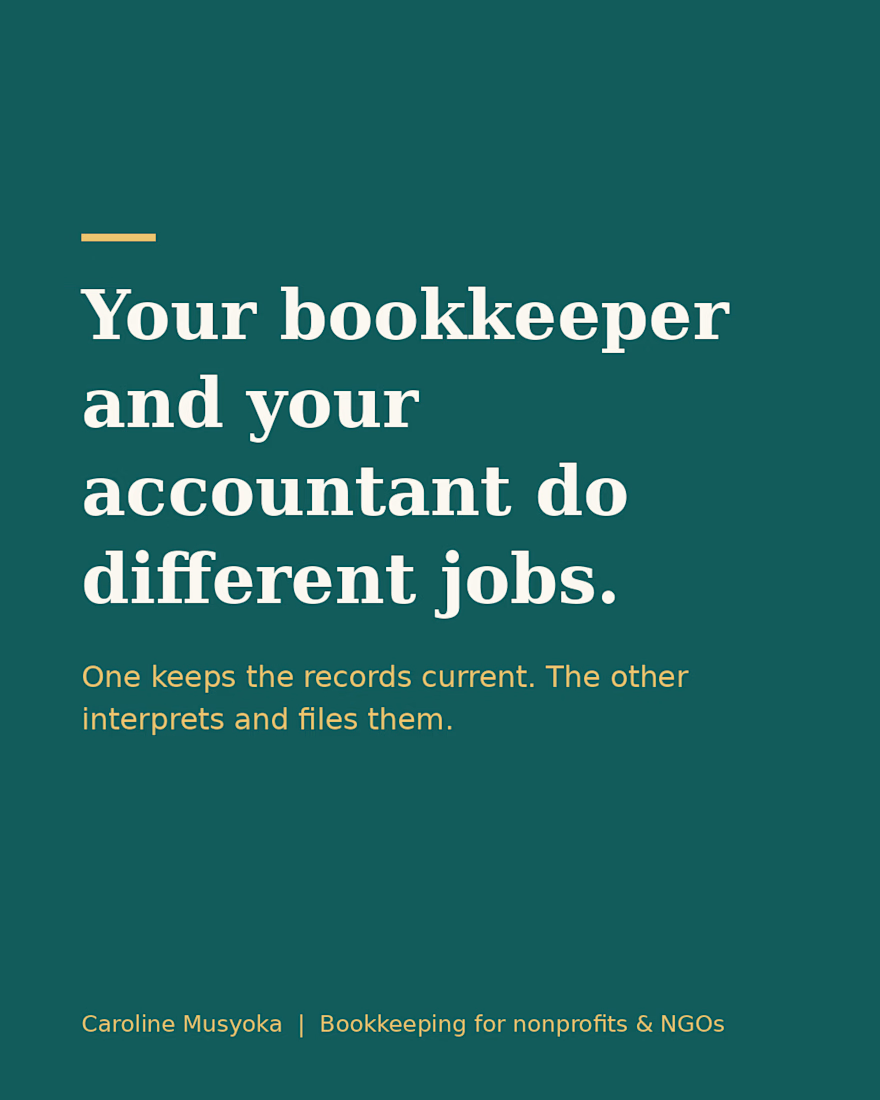
Your bookkeeper and your accountant do different jobs, and many organizations only find that out at tax time.
A bookkeeper keeps the records current all year: transactions categorized, accounts reconciled, reports ready. An accountant interprets those records, advises on them and handles filings.
When the first job isn't done well, the second one gets slower and more expensive. Clean monthly books are what make year-end a quick conversation instead of a rescue project.

So true! Clean books throughout the year make a huge difference. Regular bookkeeping saves time, reduces stress, and makes year-end much smoother for everyone. 👏
Episode 7: Your bank balance is not your income. 💸
As a designer, money reaches you from Stripe, PayPal, Wise, direct transfers and Contra. By the time it lands, fees, currency conversion and delays have already taken a cut, and some of it never gets recorded.
That’s why a monthly bank reconciliation matters. It means matching your bank statement to your books, line by line, so you can:
✅ Spot the client invoice that was never paid
✅ Catch the software subscription you forgot to cancel
✅ Find the processor fees nobody recorded
✅ Know your real profit per project
✅ Reach tax time with clean numbers instead of a panic
It takes about 30 minutes a month. A gap you catch in October is easy to fix. A gap you find a year later is expensive.
#bookkeeping #freelancedesigner #designbusiness #freelancefinance #smallbusiness


You are giving real concepts how finances can be handled

I was talking to a prospective client for my bookkeeping business.
She asked what are the key benefits of hiring a bookkeeper. I was semi-prepared with an answer:
1. Saves Time - frees you from daily data entry, reconciliations, and invoice tracking so you can focus on growing your business.
2. Financial Accuracy - prevents calculation errors, misclassified expenses, and messy records that lead to lost tax deductions.
3. Better Cash Flow Management - tracks incoming and outgoing money to help you spot shortfalls early and pay bills on time.
4. Smoother Tax Preparation - keeps year-round records organized, making tax season faster and reducing audit risks.
5. Clearer Strategic Insights - generates clean financial reports (like P&L and balance sheets) that inform budgeting and hiring decisions.
6. Cost-Effective Scaling - outsourcing or hiring a part-time bookkeeper is often more affordable than maintaining a full-time in-house accounting department.
Wondering what I missed? What else do you tell your clients when they ask this question?
I’d add peace of mind! 😊 Business owners shouldn’t have to guess whether they can afford their next hire or investment. Good bookkeeping helps them make those decisions with confidence, not just keep track of what’s already happened.