The network for creativity
Join 1.25M professional creatives like you
Connect with clients, get discovered, and run your business 100% commission-free
Creatives on Contra have earned over $150M and we are just getting started
Back to feedPost

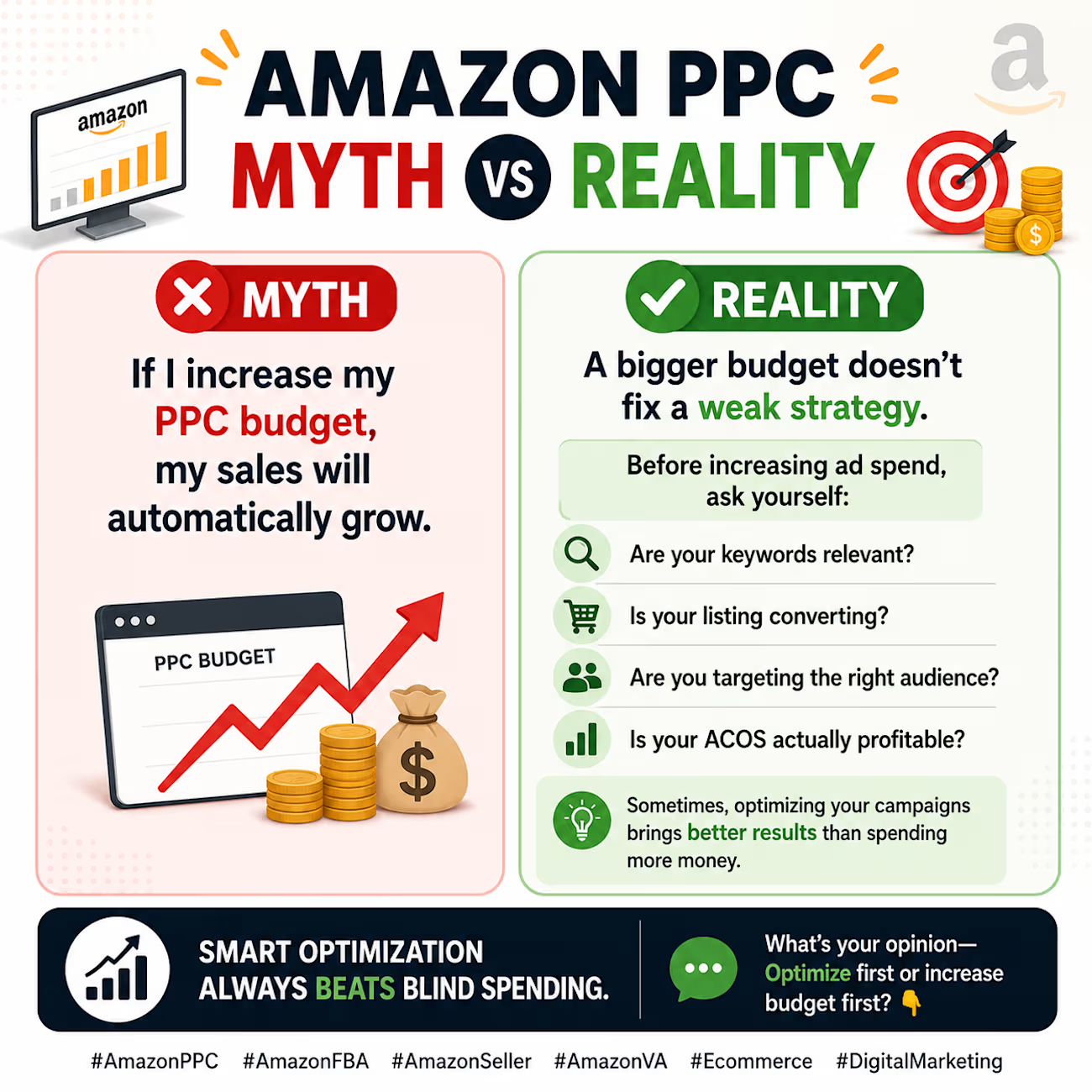
🚨 Amazon PPC Myth vs Reality
❌ Myth:
"If I increase my PPC budget, my sales will automatically grow."
✅ Reality:
A bigger budget doesn't fix a weak strategy.
Before increasing ad spend, ask yourself:
Are your keywords relevant?
Is your listing converting?
Are you targeting the right audience?
Is your ACOS actually profitable?
Sometimes, optimizing your campaigns brings better results than spending more money.
📈 Smart optimization always beats blind spending.
What's your opinion—optimize first or increase budget first? 👇
#AmazonPPC #AmazonFBA #AmazonSeller #AmazonVA #Ecommerce #SellerCentral #DigitalMarketing
The network for creativity
Join 1.25M professional creatives like you
Connect with clients, get discovered, and run your business 100% commission-free
Creatives on Contra have earned over $150M and we are just getting started





Related posts

“We need more leads.”
Maybe.
Or maybe the 247 leads already sitting in your CRM would like a word. 😅
One thing I keep noticing in marketing operations:
companies spend enormous energy getting people into the funnel — and surprisingly little figuring out what happens to them afterward.
A lead comes in.
Nobody owns it.
Follow-up happens “later.”
Intent signals go unnoticed.
Three weeks pass.
Then we increase the ad budget.
Before spending another dollar on acquisition, I’d ask one question:
What happened to the last 100 leads?
The answer may be more valuable than another campaign.
#MarketingOperations #CRM #GrowthStrategy



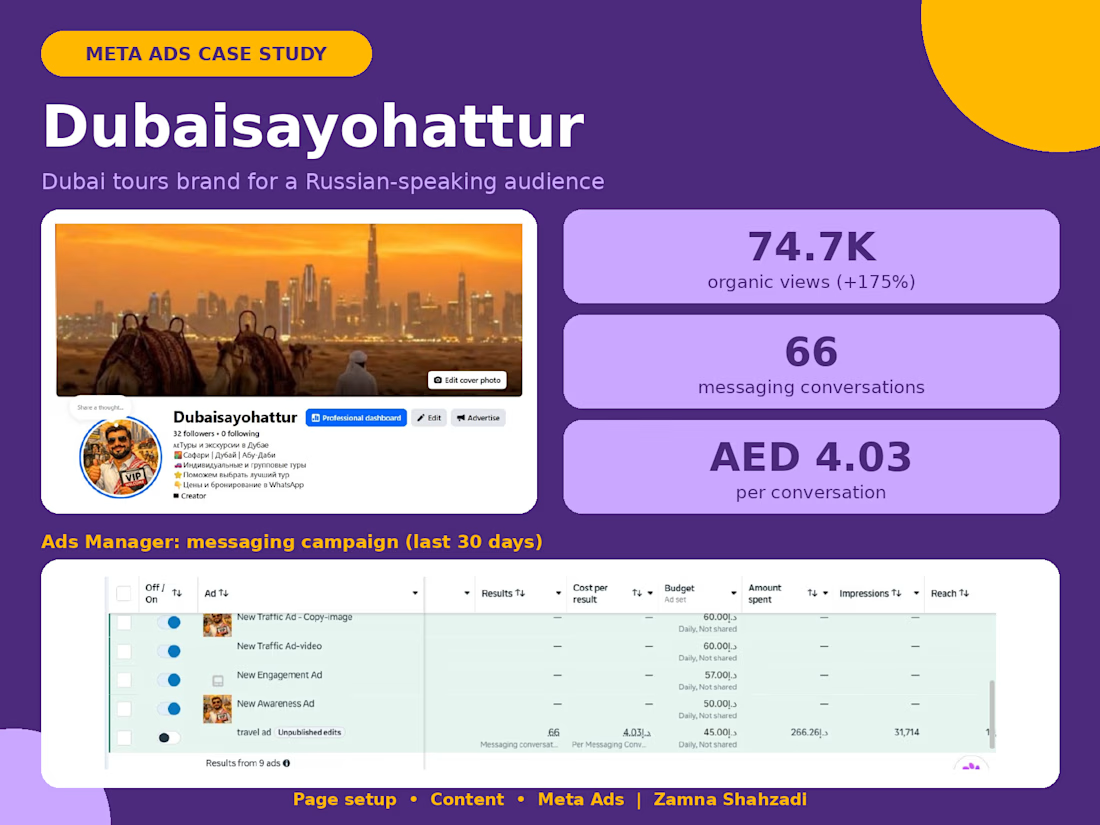
Title: Dubai Tours Brand: 74.7K Views and 66 Leads on a Small Budget
Post text:
Dubaisayohattur is a Dubai tours brand that serves a Russian-speaking audience. Before I joined, they were advertising on Instagram only. I took over the full social media and Meta Ads side of the business.
What I did
Set up the page and bio so it was clear and trustworthy
Created daily posts, reels, and stories with Russian-language captions
Built the strategy, detailed audience targeting, and Russian ad copy
Directed the video content, and the client shot original footage at my request
Ran and optimized Meta Ads in Ads Manager
Organic results (30 days)
74.7K views, up 175%
99.9% of views came from new people
48.5K viewers reached
68 content pieces published in the first week
Paid results
66 messaging conversations at AED 4.03 each
AED 266 total spend
31.7K impressions and 19.7K reach
Tools: Canva, Meta Business Suite, Ads Manager, Facebook, Instagram
The client's CEO also shared a testimonial about the work, and I'm glad to show it on request.



Impressive results and clear presentation! Love seeing data-driven case studies like this. 📊🔥
Hot take: most businesses don’t need more marketing.
They need fewer leaks.
More leads won’t fix a broken follow-up process.
More content won’t fix a disconnected customer journey.
More AI tools won’t fix a workflow nobody understands.
And more automation won’t fix a bad process — it will just make the bad process run faster.
The work I enjoy most starts with a different question:
Where is the system actually breaking?
Sometimes it’s between marketing and sales.
Sometimes it’s inside the CRM.
Sometimes nobody owns the next step.
Sometimes valuable intent is there — but no one is recognizing it.
That thinking is behind a lot of the work I’ve been building lately: marketing operations, CRM workflows, automation systems, investor/customer journeys, event marketing, and digital growth.
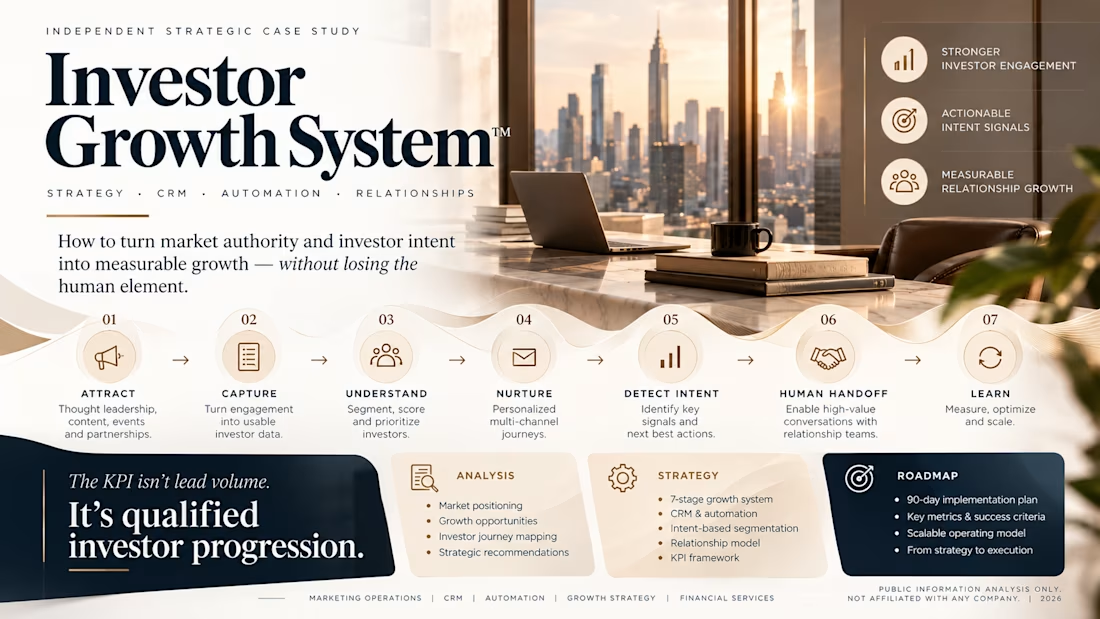
I recently added several new projects and strategic case studies to my Contra portfolio — including an Investor Growth System exploring how content, intent signals, CRM, automation, and human relationships can work as one system.
My favorite principle from the project:
Automation should prepare the conversation — not replace the relationship.
If you work in marketing, operations, or growth, I’m curious:
What’s the biggest “leak” you see inside businesses today?
#MarketingOperations #MarketingStrategy #CRM #MarketingAutomation #GrowthStrategy #BusinessOperations #FinancialServices