The network for creativity
Join 1.25M professional creatives like you
Connect with clients, get discovered, and run your business 100% commission-free
Creatives on Contra have earned over $150M and we are just getting started


The network for creativity
Join 1.25M professional creatives like you
Connect with clients, get discovered, and run your business 100% commission-free
Creatives on Contra have earned over $150M and we are just getting started





Related posts

HavenWell Coaching Studio
Lagos, Nigeria | Wellness & Life Coaching
HavenWell Coaching Studio is a fictional one-on-one coaching practice that was struggling with the manual work involved in managing appointment inquiries.
The solution is an end-to-end booking experience that allows clients to discover services, check availability, select a time, and confirm appointments without unnecessary back-and-forth.
For the coach, the system centralizes appointments, inquiries, clients, availability, and follow-up workflows, reducing the repetitive administrative work involved in managing bookings.
The core idea:
Turn “Can I book?” into “You’re booked.”
Kindly view the website link:
https://pixel-perfect-showcase-0295.lovable.app/


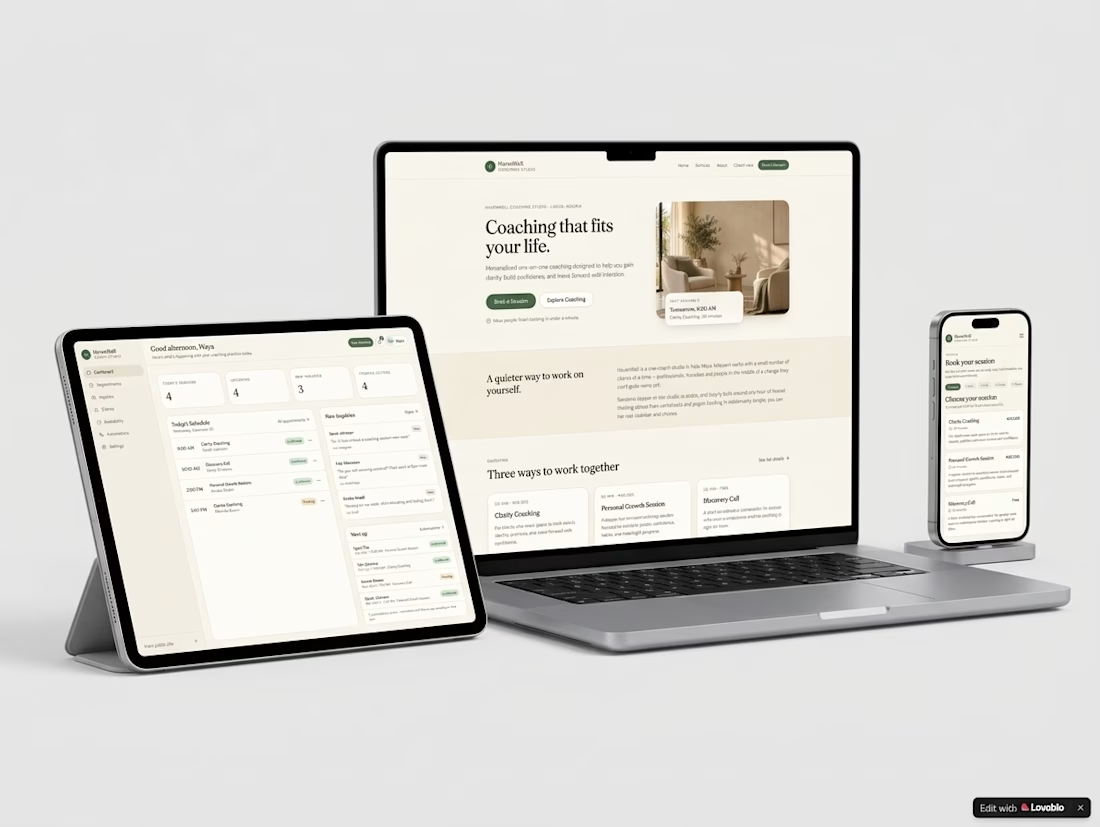

Strong use of spacing and typography. The layout feels intentional without being overworked.

Website redesign complete 🚀
Can’t wait to share the full site. Until then, here’s my personal favorite interaction from the project.
Industry: Data / Crypto


Really clean design.

☀️ Meet SunGrid Solar — a complete booking system I built for a solar consultancy in Austin, Texas.
The problem: customers want a solar consultation, but scheduling means calls, voicemails, double-bookings, and no-shows.
The fix — one app that does the work:
📅 Live availability — customers see real open slots and book in 6 simple steps, with travel time, lunch breaks and daily limits built in
✅ Instant confirmation — a booking reference on screen, no waiting
🔁 Self-service — customers reschedule, cancel or confirm attendance themselves; the original slot frees up instantly
🏠 Owner dashboard — every booking appears live with full customer & property details
🛠️ Service requests — customers report issues with photos; the team assigns, schedules and resolves them
Built entirely with @Lovable — design, database, authentication, and real-time updates.
#solar #buildinpublic