The network for creativity
Join 1.25M professional creatives like you
Connect with clients, get discovered, and run your business 100% commission-free
Creatives on Contra have earned over $150M and we are just getting started
Back to feedPost

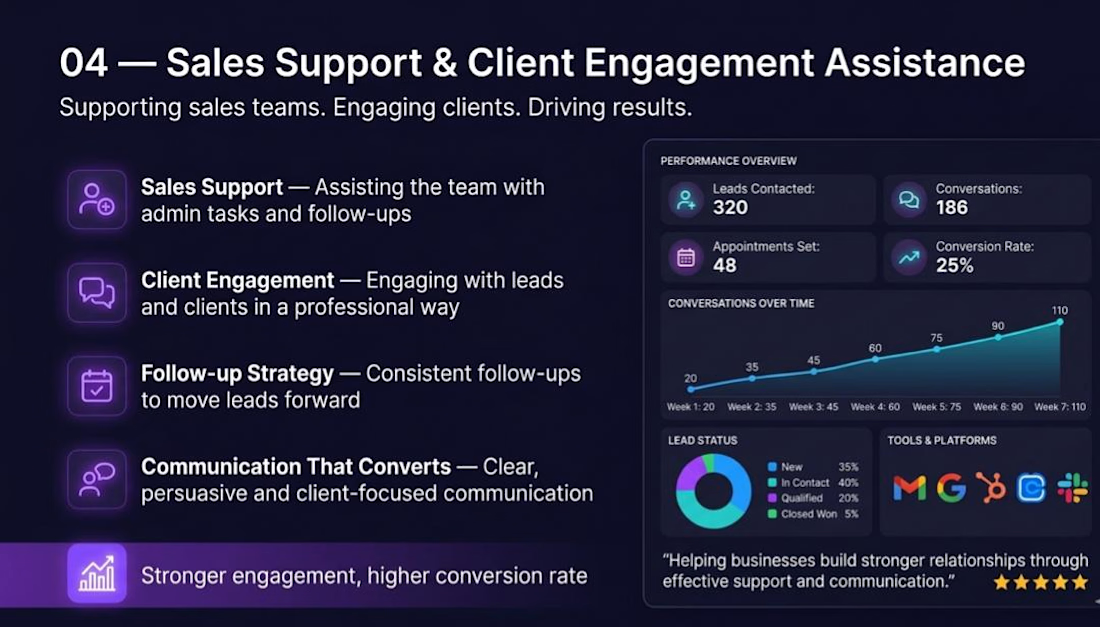
This project showcases my experience supporting sales communication and maintaining professional client engagement. It includes follow-up coordination, communication support, and customer interaction management designed to help businesses build stronger relationships and improve overall engagement consistency.


The network for creativity
Join 1.25M professional creatives like you
Connect with clients, get discovered, and run your business 100% commission-free
Creatives on Contra have earned over $150M and we are just getting started

Challenges
View all


Related posts


If you're a freelancer or independent, you're running a one-person business.
You need a marketing strategy too.
Your time is split between doing the work and finding the next client. Posting more won't always solve the problem. Sometimes your offer needs to be clearer, your work needs stronger proof, or it needs to be easier for someone to enquire.
i made a free 34-minute guide to help you work out what deserves your next ten marketing hours.
It covers your offer, content, ads and the route to an enquiry, with a decision tree to help you choose what to fix first.
Here's the trailer. Watch the full guide on YouTube:
https://youtu.be/xM7G509bsrk

Thanks for this. A guideline always helps a new contra user like me.

MY CLIENT Asked me to edit an EDUCATIONAL WORKSHOP Video
Rate me out of 10 🤗🌟
NOTE: Client provides some low quality clips , that's why some parts of the video looks like low quality .
even though
I stabilized the videos and remove noise in the video as much as i can 💫🥱
EDITED BY : Harsha Vardhan
Services : Video editing - 3D Animation - Motion Graphics
3+ Years Experience in this fields


Does someone on your team lose a day or two building the sales report every week or month?
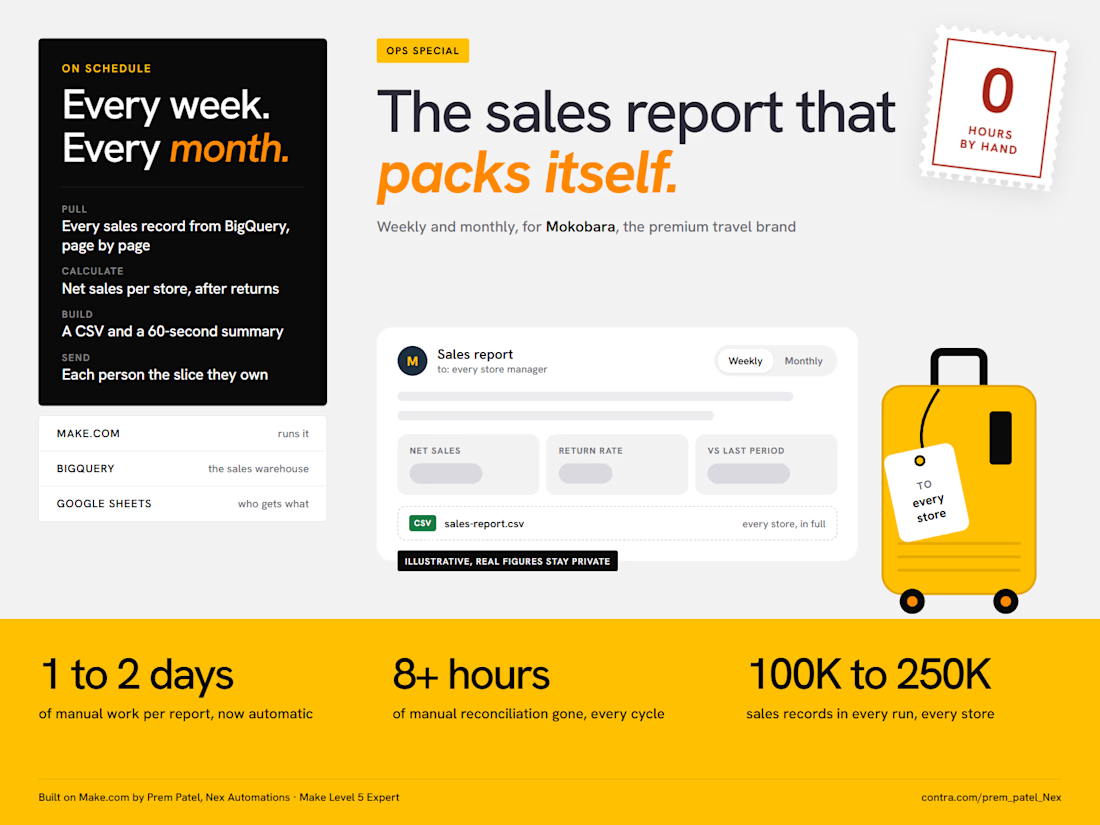
That was the starting point at Mokobara, the premium travel brand. Pulling sales across all their stores, checking returns, reconciling the numbers and emailing each manager took 1 to 2 days every cycle, with 8+ hours of that spent just reconciling.
I built them an automation on Make.com a few months ago. It has run on its own ever since, weekly and monthly:
Make pulls every sales record from BigQuery, 100K to 250K per cycle. That is too many for one request, so it reads them page by page and stitches them back together.
It calculates the numbers the team actually uses: net sales per store after returns and discounts, return rates and the change against the last period.
It builds a CSV with the full breakdown and a short email summary you can read in 60 seconds.
It reads a Google Sheet of store representatives and emails every one of them the report for their own store.
The result: the reporting problem is gone. The report went from 1 to 2 days of manual work to fully automatic, and the 8+ hours of reconciliation dropped to zero.
Two things I would do the same way again:
Calculate "net sales" in the automation, not in the warehouse. The business rule for what counts as a net sale is not what the raw data stores.
Send people their slice, not the whole report. One report for everyone gets skimmed by everyone.
The figures in the image are placeholders, the real ones stay with the client.
What report is your team still building by hand? Tell me where the data lives and I will tell you how I would automate it.