The network for creativity
Join 1.25M professional creatives like you
Connect with clients, get discovered, and run your business 100% commission-free
Creatives on Contra have earned over $150M and we are just getting started
Back to feedPost

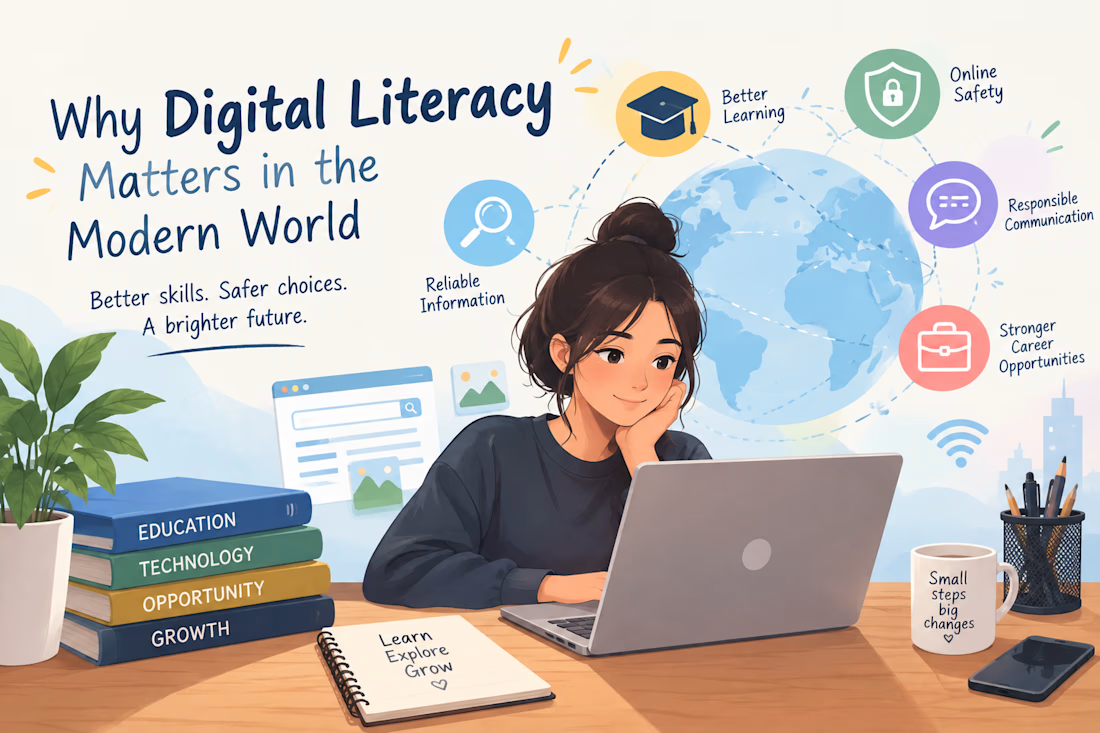
Why Digital Literacy Matters in the Modern World
Imagine going through an entire day without using the internet. No Google searches, no messaging apps, no online classes, no digital payments, and no social media. For most people, that would be surprisingly difficult.
Technology is now part of almost everything we do. But using a smartphone or computer does not necessarily mean someone is digitally literate. There is a big difference between knowing how to use technology and knowing how to use it wisely.
Digital literacy means having the skills to use digital devices and online information confidently, safely, and responsibly. In a world that is becoming more connected every day, these skills are becoming increasingly important.
What Does Digital Literacy Really Mean?
Digital literacy is more than knowing how to download an app or search for something online.
It includes knowing how to find useful information, decide whether a source can be trusted, communicate appropriately online, protect personal information, and use different digital tools for work, education, and everyday tasks.
For example, anyone can see a post on social media and share it within seconds. A digitally literate person is more likely to pause and ask, “Is this actually true?” before passing it on.
That small habit can make a big difference.
Finding Reliable Information Online
The internet has made information easier to access than ever before. At the same time, it has become harder to know what information deserves our trust.
A search can produce thousands of results, but not all of them are accurate. Some websites use misleading headlines, while social media posts can spread claims without any reliable evidence behind them.
Digital literacy gives people the ability to look beyond the headline. They can check where information came from, compare different sources, and think about whether the evidence actually supports the claim.
This is particularly useful for students who use the internet for assignments and research.
Why Students Need Digital Skills
Education has changed significantly because of technology. Students can watch lectures, read digital books, attend online classes, and find educational material from almost anywhere.
But having access to these resources is only part of the picture.
Students also need to know how to search effectively and recognize trustworthy information. They need to organize digital files, use learning platforms, and understand how to avoid copying unreliable information into their work.
These are practical skills that can make studying easier and prepare students for a future where technology will probably play an even bigger role.
Digital Literacy and the Workplace
Walk into almost any modern workplace and you will probably find computers, online communication, digital documents, or specialized software being used.
Employees may need to send emails, join video meetings, manage information, create presentations, or learn a new program. Technology can also change quickly, which means people sometimes have to learn new tools while already doing their jobs.
Someone who is comfortable learning and using digital tools can adapt more easily to these changes.
Digital literacy, therefore, is not just useful for getting a job. It can also help people continue learning once they are already working.
Staying Safer Online
There is another important side of digital literacy: online safety.
People share personal information online every day, sometimes without thinking about where that information might end up. Learning about privacy settings, suspicious links, strong passwords, and common online scams can help people make safer choices.
For example, receiving a message that creates panic and asks for personal information is a reason to stop and check before responding.
Digital literacy does not make someone completely protected from online risks, but it can make them more aware of the warning signs.
Communicating Responsibly
Technology has made communication incredibly convenient. We can send a message to someone on the other side of the world almost instantly.
But online communication can also cause misunderstandings.
Without facial expressions or tone of voice, a simple message can sometimes sound very different from what the sender intended. People may also post things online without considering who could see them later.
Being digitally literate means understanding that good communication still matters online. Thinking before posting, respecting other people, and knowing when a private conversation is more appropriate than a public post are all part of responsible digital behavior.
Not Everyone Starts With the Same Skills
It is easy to assume that everyone understands technology because smartphones and the internet are so common. That is not necessarily true.
Some people have grown up using digital devices, while others have had much less opportunity to use them. Access to reliable internet, devices, and digital education can also vary between communities.
This means digital literacy should not be treated as something everyone automatically knows.
Schools, workplaces, libraries, and community organizations can help people build practical digital skills and become more comfortable with technology.
How Can We Become More Digitally Literate?
Becoming digitally literate does not mean learning everything about technology.
It can start with simple habits: checking information before sharing it, learning how privacy settings work, recognizing suspicious messages, using reliable sources for research, and becoming comfortable with the digital tools needed for school or work.
The key is to keep learning.
Technology will continue to change, and new platforms and tools will appear. The ability to learn and adapt may be just as valuable as knowing how to use a particular app today.
Conclusion
Digital literacy has become an important part of everyday life. It affects how we learn, work, communicate, find information, and protect ourselves online.
Being digitally literate is not about being the person who knows the most about technology. It is about being able to use technology with good judgment.
As more parts of our lives move into the digital world, those skills will become increasingly useful. Learning them now can help people make better decisions online and feel more confident navigating the technology around them.
The network for creativity
Join 1.25M professional creatives like you
Connect with clients, get discovered, and run your business 100% commission-free
Creatives on Contra have earned over $150M and we are just getting started
Trending
retrofuturism
Share your favorite designs from the past exploring the distant future. Or your own take on the aesthetic 🚀
halftone
Dots. Texture. Grain. Let's see your designs using the halftone technique.

Midjourney
Creatives are showing off what they're making with Midjourney.
colorgrade
Video editors sound off: How do you enhance the mood of your video in color grading?
Related posts

How AI Is Changing Education
Artificial Intelligence is transforming the way we teach, learn, and access education. But is AI replacing teachers? Not at all. It is becoming a powerful tool that can work alongside them.
AI can adapt learning to individual students. It can explain difficult concepts, provide practice questions, and allow students to learn at their own pace.
AI also comes with responsibilities. Overdependence on technology can affect problem-solving, communication, and writing skills. AI can sometimes provide incorrect information, so its answers should always be checked carefully.
AI can make education smarter, more personalized, and more accessible—but responsible use and human connection will always matter.

Website Design Showcase — LeadClass
We explored a modern education website concept designed to create a clean, engaging, and professional digital experience for online learning platforms.
🎓 Key highlights:
Modern and visually engaging UI
Clear course and content presentation
Instructor and testimonial sections
Strong call-to-action placement
Responsive design for all devices
User-focused navigation and layout
The goal was to create a digital experience that makes learning content easy to discover while giving the brand a strong and credible online presence.
🔗 Explore the LeadClass Webflow template: https://webflow.com/templates/html/leadclass-website-template
#WebDesign #UIUXDesign #WebsiteDesign #Webflow #EducationWebsite #EdTech #UIDesign #UXDesign #WebDesignInspiration #WebsiteDevelopment #CreativeDesign

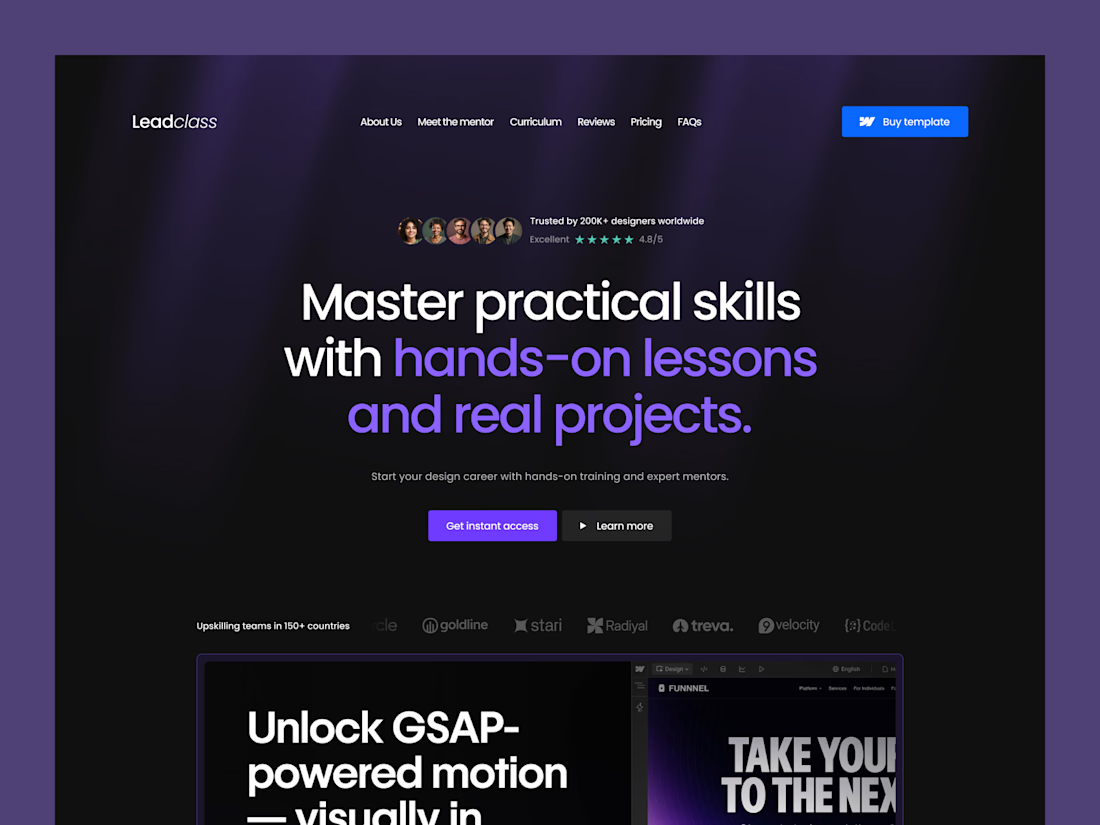

We pulled this one from the archives, an older concept exploring a modern learning platform.
The design combines a dark visual system with bright accents, modular course cards, progress tracking, analytics, and a responsive mobile experience.
An early exploration of how courses, progress, and learning tools could come together in one cohesive product.


