The network for creativity
Join 1.25M professional creatives like you
Connect with clients, get discovered, and run your business 100% commission-free
Creatives on Contra have earned over $150M and we are just getting started
Back to feedPost

What if your website could tell you something was wrong before your customers did?
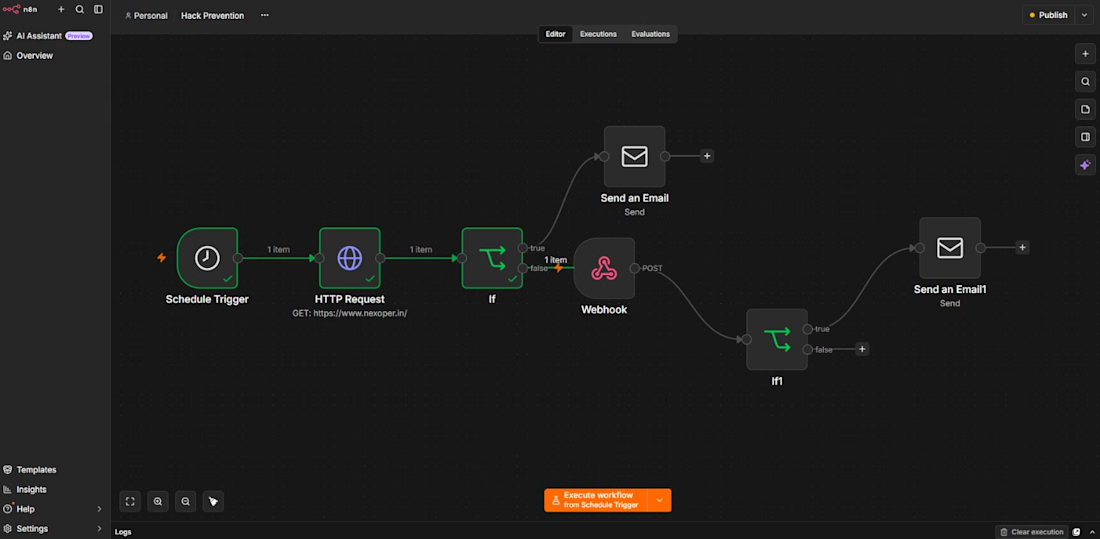
I built an automated website monitoring workflow using n8n to turn routine availability checks into an automated detection → decision → notification pipeline.
Here's what happens:
01 — Schedule Trigger
Automatically starts the monitoring workflow.
02 — HTTP Request
Sends an automated HTTP GET request to the target website.
03 — Conditional Logic
An If node evaluates the result and determines which path should execute.
04 — Webhook Event Handling
A separate POST webhook provides an event-driven entry point for incoming requests.
05 — Secondary Decision Layer
Another If node evaluates the incoming event and routes the workflow accordingly.
06 — Automated Alerts
Email notifications turn defined conditions into actionable alerts.The architecture combines two powerful automation patterns:Scheduled monitoring + Event-driven processing
So instead of:
“Let me check the website.”
the system becomes: “Check it automatically. Evaluate it. Respond when necessary.”
Built with n8n + HTTP requests + webhooks + conditional branching + automated email notifications.
This project reminded me that good automation isn't just about removing clicks.
It's about building systems that can observe, decide and respond without waiting for a human.
What would you automate first in your own infrastructure?
#n8n #Automation #WorkflowAutomation #WebDevelopment #DevOps #UptimeMonitoring #WebsiteMonitoring #Webhooks #APIAutomation #NoCode #LowCode #Infrastructure #AutomationEngineering


The network for creativity
Join 1.25M professional creatives like you
Connect with clients, get discovered, and run your business 100% commission-free
Creatives on Contra have earned over $150M and we are just getting started





Related posts

LumaClean was losing hours to manual quoting, scheduling, confirmations, rescheduling, and follow-up. LumaFlow turns that entire process into one automated booking workflow.
I built LumaFlow for a fictional Chicago cleaning business, LumaClean.
The problem was simple: too much back-and-forth just to turn a customer inquiry into a confirmed booking.
So I built a workflow that handles the journey:
→ Instant quote
→ Smart availability
→ $40 deposit
→ Booking confirmation
→ Reminders
→ Rescheduling
→ Booking recovery
The goal wasn't to build another pretty booking page.
It was to give the owner less work to do.


Vert nice


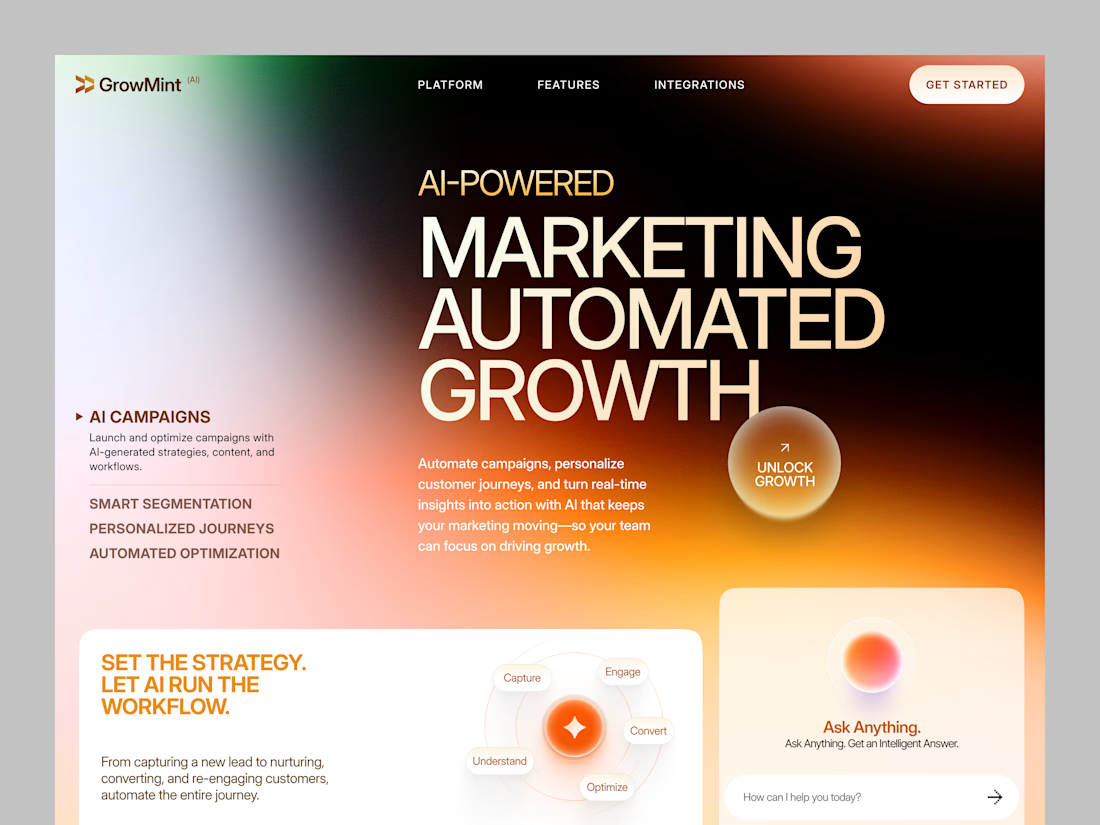
GrowMint AI - AI Marketing Automation Website
An AI marketing automation experience designed around the needs of marketing teams, growth marketers, and digital businesses.
The interface brings campaign management, customer journeys, analytics, and AI-driven optimization into a focused SaaS product experience, making complex automation easier to understand and navigate.

Nice design

FadeFlow: From “Can I book Saturday?” to “You’re booked.”
I built FadeFlow for Fade District, a fictional solo barbershop in Yaba, Lagos, run by Malik Adeyemi.
The problem is simple: a lot of bookings start with a message like:
“Can I get a haircut Saturday afternoon?”
From there, Malik has to ask for the service, check availability, reply with time options, create the booking, confirm it, collect the deposit, send reminders, and handle changes.
FadeFlow removes that back-and-forth.
Customers can choose a service, see available times, pay a ₦5,000 deposit, and confirm their appointment themselves.
And when they still message instead, FadeFlow turns the inquiry into a structured booking request. Malik can see what they want, send available times, and create the booking in one action.
Once it's booked, FadeFlow keeps everything connected:
✓ Calendar updated
✓ Customer updated
✓ Confirmation sent
✓ Reminder scheduled
Rescheduling works the same way. The old slot is released, the new one is reserved, and the related reminders are updated automatically.
I built it around one idea:
Let the customer handle the predictable parts. Let Malik handle the moments that actually need him.
Lovable project links:
Landing page (Customers view):
https://screenshot-perfect-6501.lovable.app
Webapp (Malik's view):
https://id-preview--329aba93-5208-4e22-947a-05f325da1d5c.lovable.app/app
Built with Lovable.
#lovablechallenge @Lovable

looking shap