The network for creativity
Join 1.25M professional creatives like you
Connect with clients, get discovered, and run your business 100% commission-free
Creatives on Contra have earned over $150M and we are just getting started
Back to feedPost

ÉCRIN: What if a luxury maison designed its own video player?
Luxury houses obsess over every detail. The weight of a clasp. The stitching on a leather strap. The precision of a watch crown.
Yet when you visit their websites and press play on a campaign film, you're often greeted by the same generic video controls found everywhere else.
I wondered: What if the craftsmanship didn't stop at the video player?
That question became ÉCRIN; a collection of luxury-inspired skins built on Video.js v10.
Each takes its cues from a different craft.
Voyage borrows from travel trunks, with leather-wrapped edges, brass hardware, and a zipper that controls volume.
Bridle turns the seek bar into a leather strap with a sliding buckle.
Horlogerie draws from watchmaking, with precision markings, jeweled details, and a rotary crown.
Folio takes a quieter approach with stitched leather, restrained controls, and stationery-inspired details.
Grand Tourer brings the warmth of a luxury cockpit, with an illuminated timeline and tactile metal dial.
But these aren't five static concepts. They're five appearances of one working player. Open Settings → Appearance and switch between them while the video plays.
I also wanted to see whether the idea would hold up beyond a standalone demo.
So I created Maison Vérane, a fictional Parisian leather-goods house, complete with collections, atelier stories, and a campaign film featuring ÉCRIN Voyage.
The goal was simple: make the player feel like it was designed alongside the brand, not added afterward.
Explore all five skins: https://ecrin.vercel.app/
See ÉCRIN on a luxury brand website: https://maison-verane-two.vercel.app/
Because sometimes, the smallest interface deserves just as much craftsmanship as everything around it.
#VideoJS #VideoJSSkinsChallenge #Contra
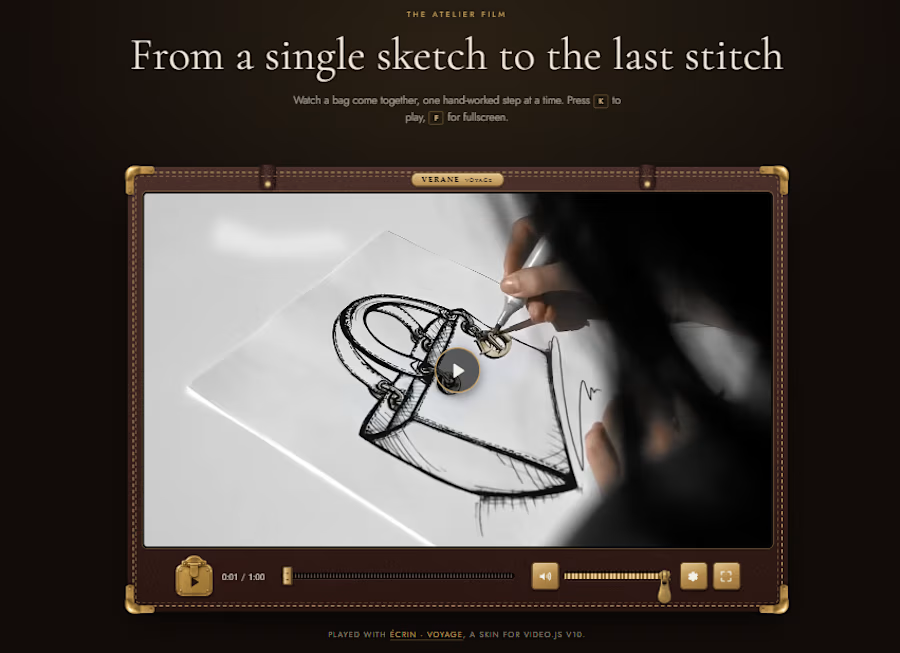
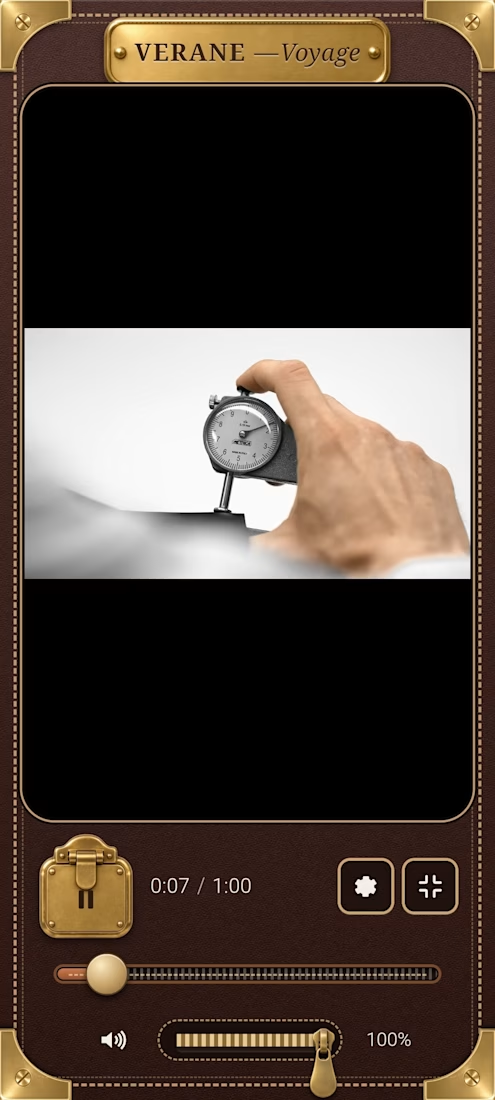

What if a luxury maison designed its own player, great question. ÉCRIN looks refined.
The network for creativity
Join 1.25M professional creatives like you
Connect with clients, get discovered, and run your business 100% commission-free
Creatives on Contra have earned over $150M and we are just getting started





Related posts


Aero, a Video.js skin that looks like a 2007 media player.
I grew up on that era of glossy, bubbly software and wanted to see if it could work as a modern player without the bad parts. The shell is glass, the buttons are orbs, and the seek bar fills up like a tube of liquid, bubbles and all. It’s split into the video’s chapters.
The gloss stays on the frame. Time and chapter sit on a dark LCD strip so you can always read them, whatever’s playing. There are three colors: Sky, Lime and Berry.
It works on phones, does a floating dock in full screen, and you can run the whole thing from the keyboard.
I made the demo video for it too.
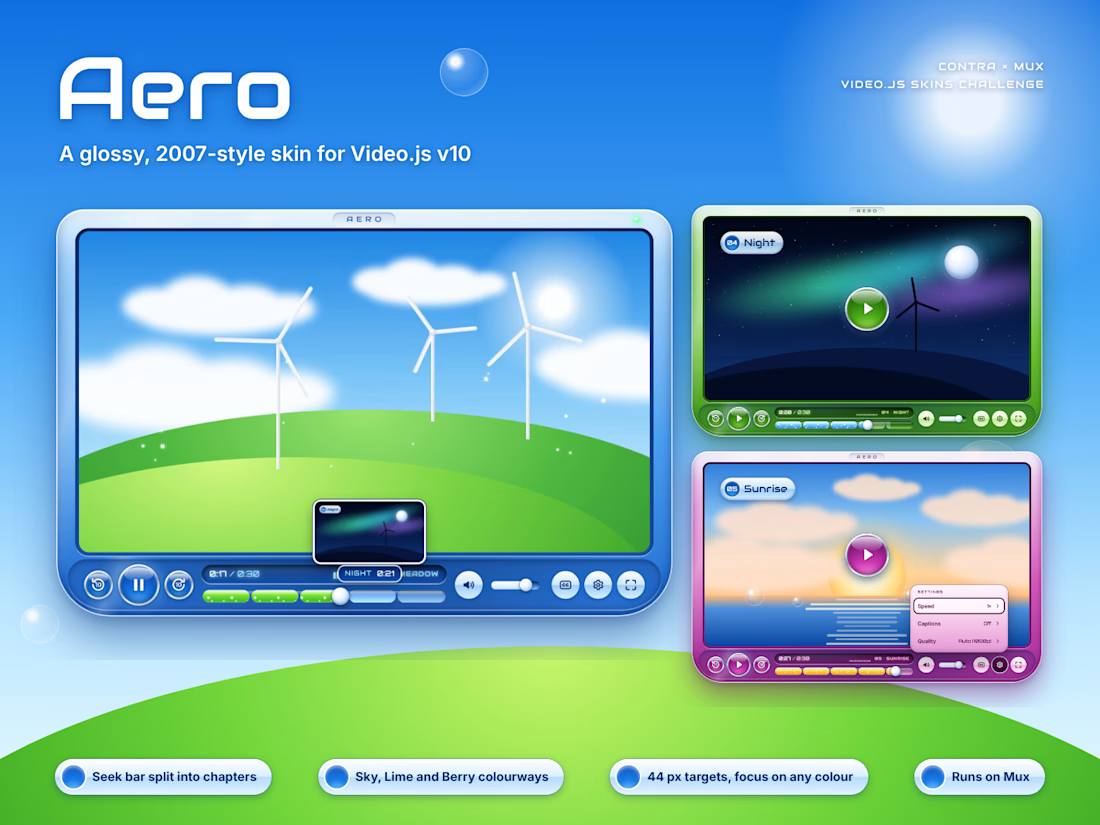
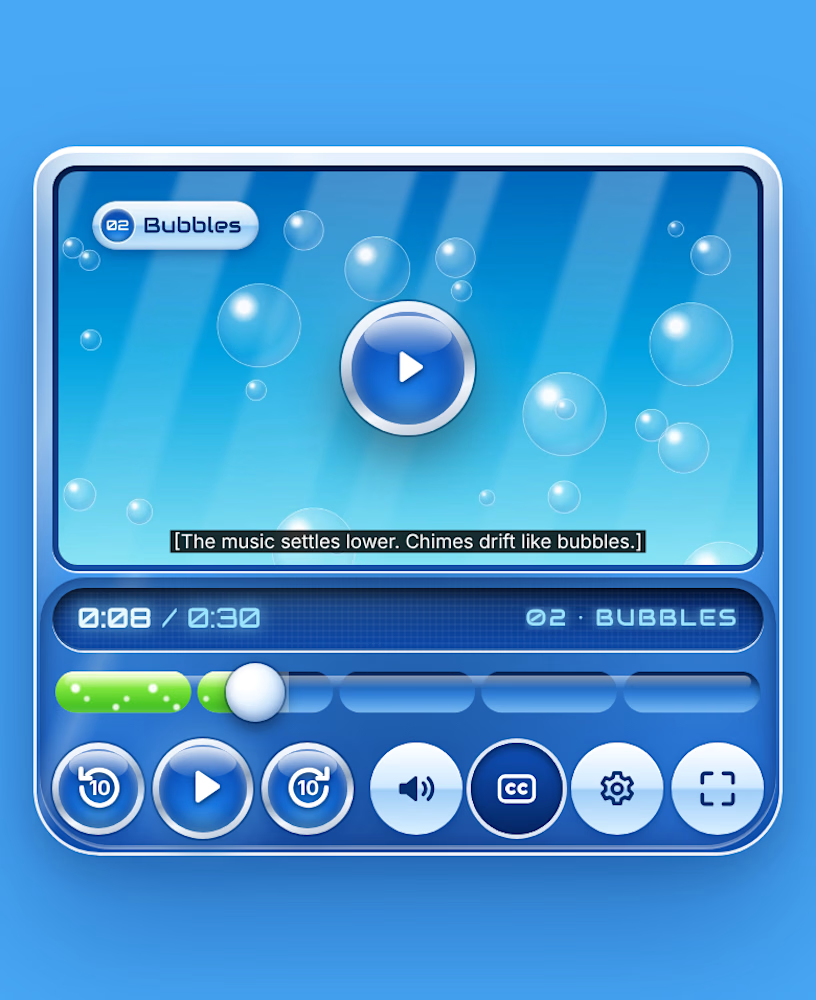
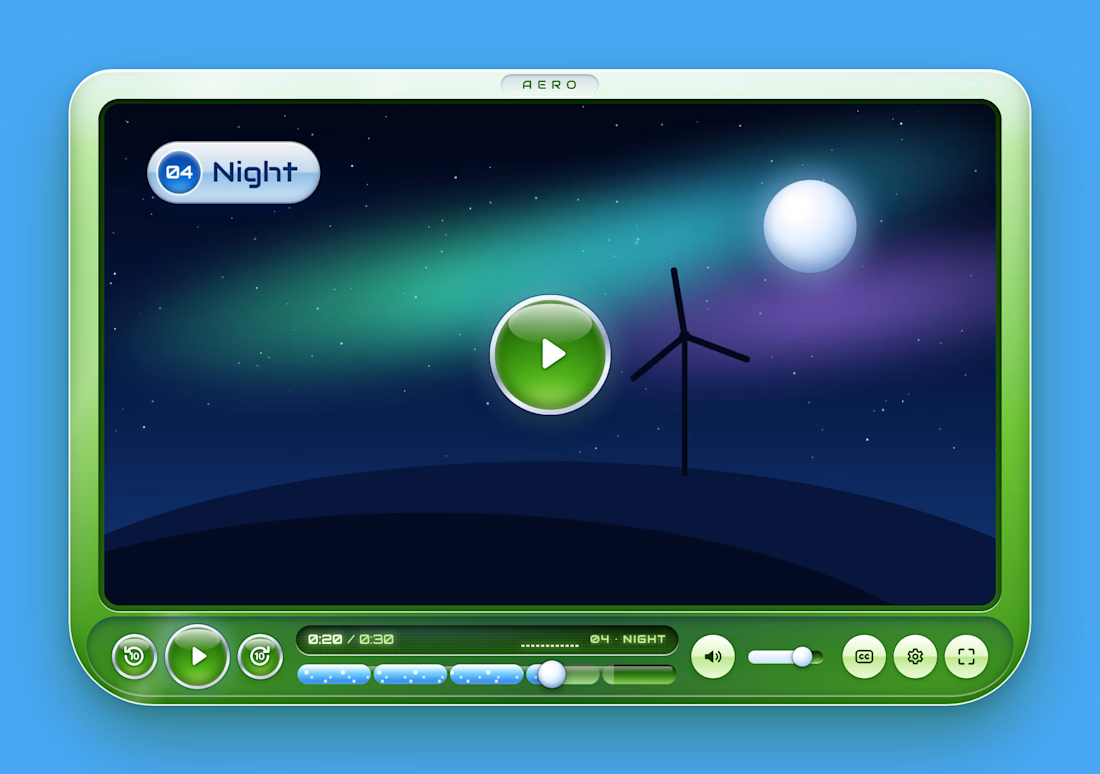

The orb buttons and the glossy shell took me straight back to Vista. Love that the seek bar fills like liquid, we both went for water in our skins 🙂

I made a video player whose timeline listens to the film. 🎧
VESPER is my Video.js v10 skin: one pane of glass, and a seek bar drawn from the recording's own sound. Quiet scenes rest flat, dialogue breathes, and the loud moments rise. No fake equaliser bars — that's Pulse, built from the real audio energy of every film.
Everything else waits inside the same glass and opens only when you ask:
→ Jog: hold Play and turn. The farther you turn, the finer it seeks, with the real frame under your finger.
→ Explore: search a word in the transcript and land on that exact line. Scenes and private Moments live here too.
→ Repeat: loop one sentence, or any A–B range.
→ Sound: tap for volume, hold for a five-band glass EQ with four presets.
→ Dock: hold the grip and move the whole panel to any edge. Pin it and it stays.
It's built to work for everyone: full keyboard control with visible focus, 44 px touch targets, captions you can size and place, higher contrast and calm motion when your device asks for it.
The Sintel film is streamed by Mux, and four more demos (a NASA lesson, a scripted meeting, a product concept and an Icelandic waterfall) show the same controls on very different content.
Try it: https://vesper-player.pages.dev
#videojsskinschallenge
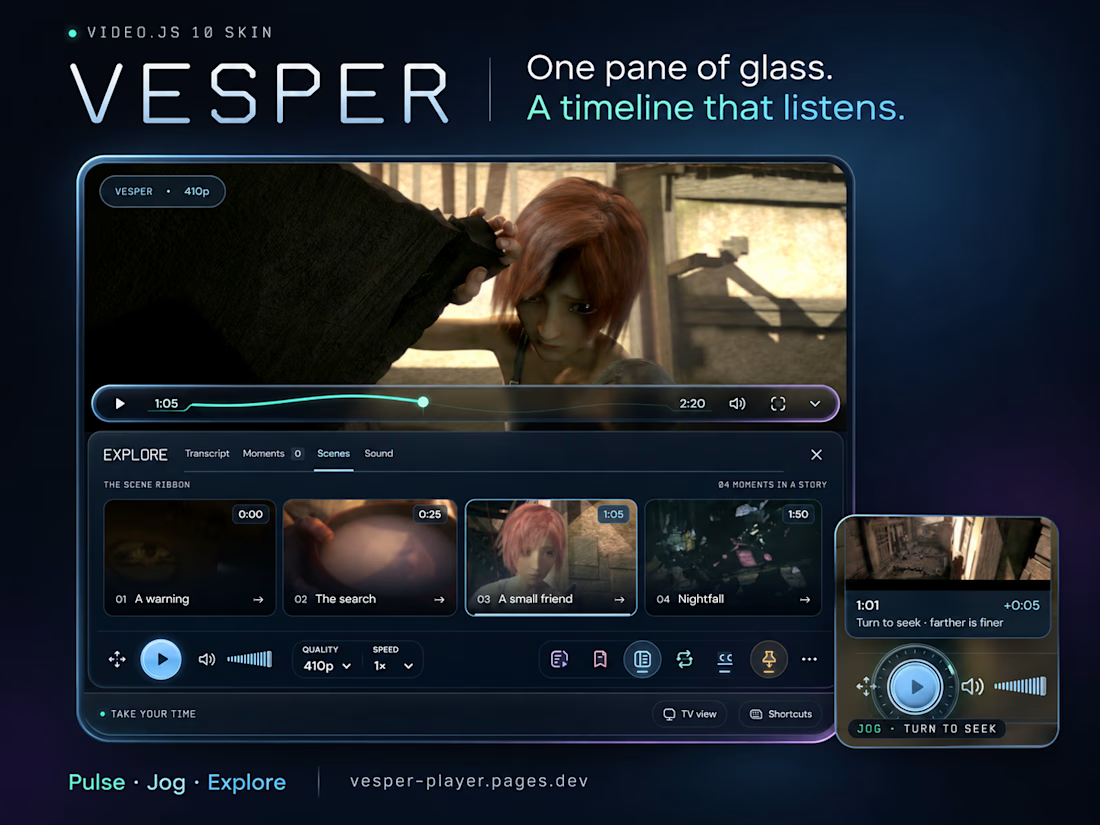
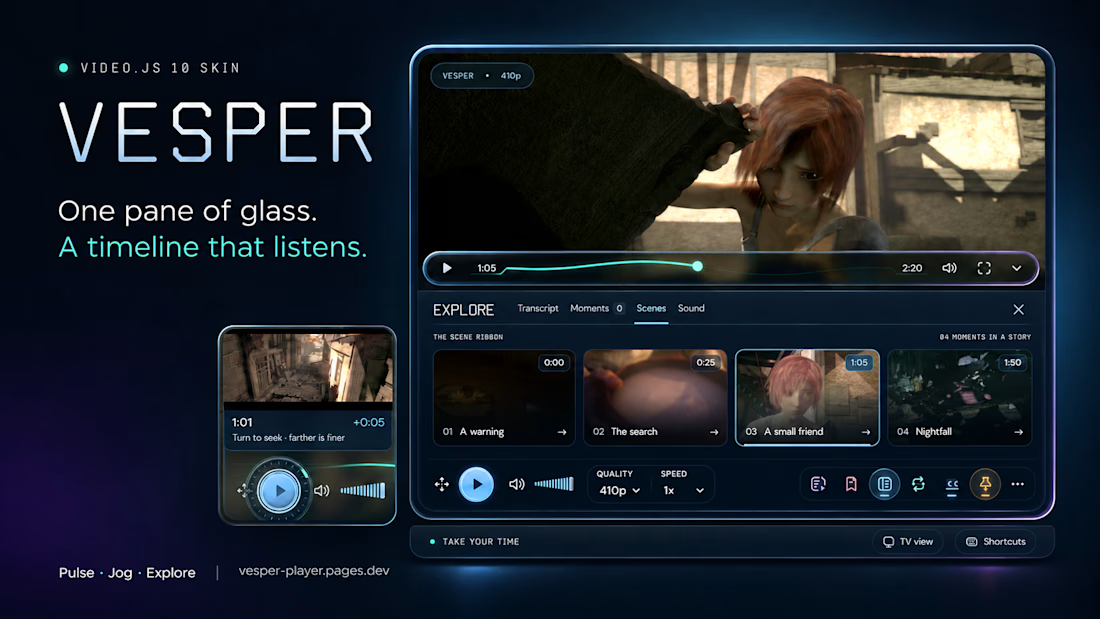
A seek bar drawn from the film's own sound is a brilliant idea. Quiet scenes flat, loud moments rising, so good.

Bangles — A Playful Video.js v10 React Skin
I built Bangles, a vibrant, jewelry-inspired React video player skin for Video.js v10. Instead of a standard monochrome player, it wraps the video in a warm gradient frame with a colorful, bead-style segmented timeline and a bold, tactile yellow play trigger.
Designed for lifestyle, creator, and e-commerce experiences, Bangles pairs playful aesthetics with full accessibility—dynamically adapting to system themes, RTL/LTR directions, reduced motion, and high-contrast preferences.

Great work 👏🏻