The network for creativity
Join 1.25M professional creatives like you
Connect with clients, get discovered, and run your business 100% commission-free
Creatives on Contra have earned over $150M and we are just getting started
Back to feedPost

AI Grievance Portal & Ticket Intelligence System - Auto Classification, Sentiment Analysis & Smart Routing


The network for creativity
Join 1.25M professional creatives like you
Connect with clients, get discovered, and run your business 100% commission-free
Creatives on Contra have earned over $150M and we are just getting started
Related posts

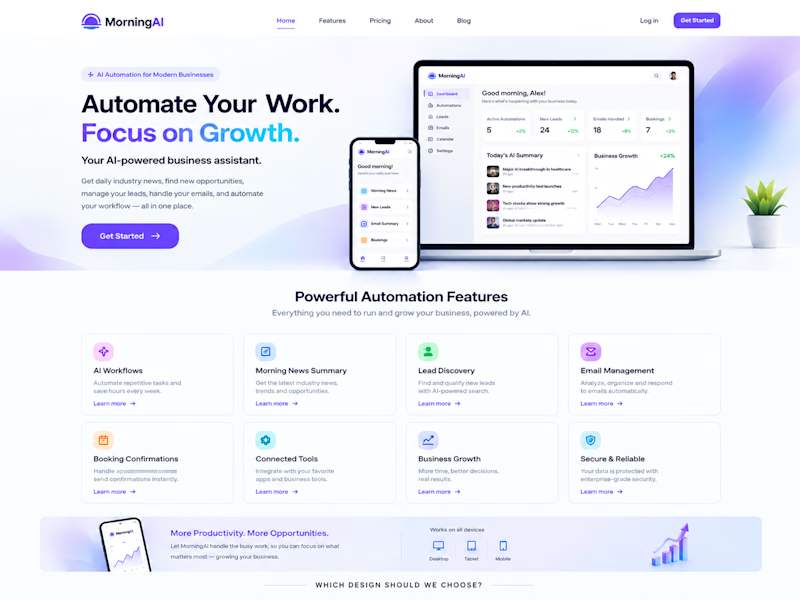
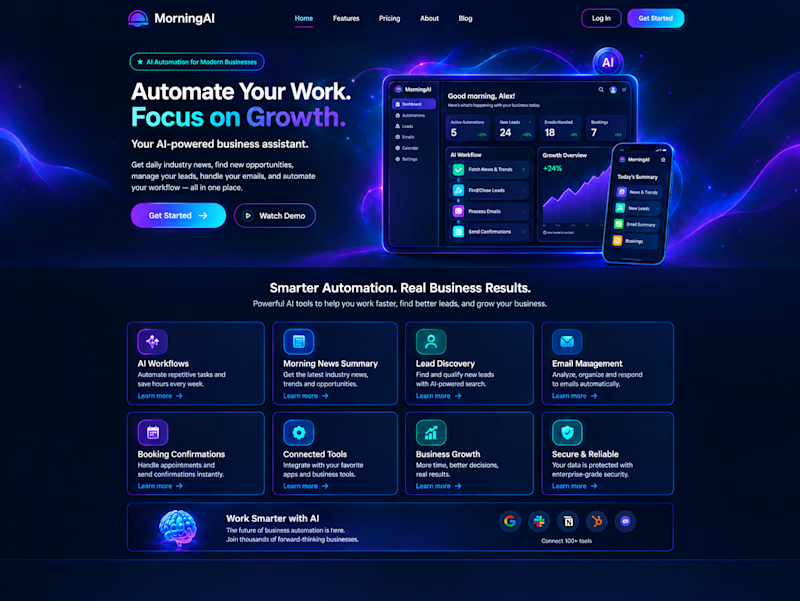
I'm building MorningAI — an AI automation platform designed to help businesses save time and work smarter.
I'm deciding on the website's visual direction, and I'd love your opinion!
🅰️ Design A: Light, clean & professional
🅱️ Design B: Dark, futuristic & premium
Which design should I choose for MorningAI — A or B?
Drop your choice in the comments! 👇
4 voted
57%
3 voted
43%
7 votes
Closed

Building software with AI requires more than a good prompt.
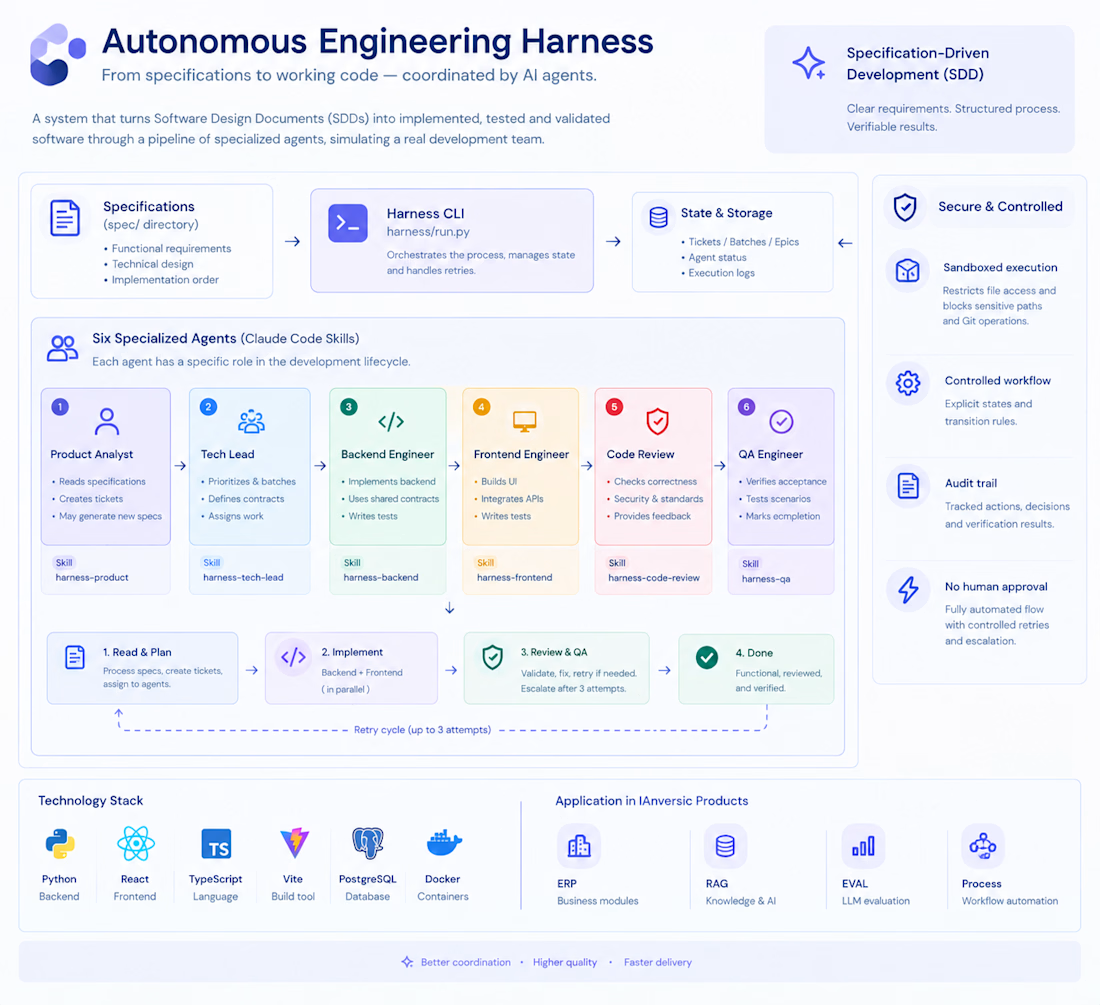
I've been developing my own Autonomous Engineering Harness to structure how I build software with AI.
The idea is simple: instead of relying on AI to generate code one task at a time, I wanted a more structured process that connects specifications, task planning, implementation, code review, and QA.
The harness organizes the workflow into clear stages:
- Specifications: define what needs to be built.
- Task planning: break requirements into manageable units.
- Implementation: coordinate AI-assisted development.
- Review: check the result against the intended requirements.
-QA: validate the software before considering the work complete.
The goal isn't to make AI autonomous for the sake of it. It's to make AI-assisted engineering more structured, repeatable, and easier to validate.
I'm applying this approach to my own projects and continuing to refine the framework as I learn what works in practice.
I wrote more about the approach, the engineering decisions behind it, and how the framework works on my website.
Read the full story: https://yitsymosqueda.com/autonomous-engineering

I'd carry acceptance criteria from the spec into QA as explicit checks, with a result attached to each one. When the spec changes mid-build, does the workflow flag which completed tasks and QA results need to be revisited?

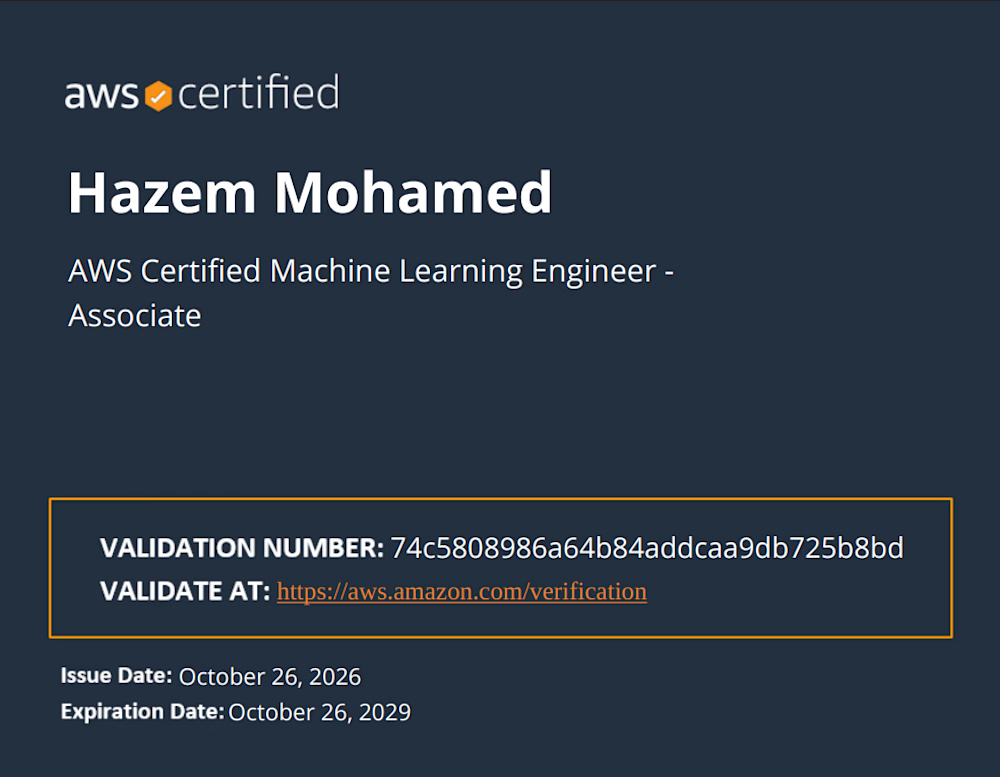
Proud to officially add the AWS Certified Machine Learning Engineer - Associate certification to my toolkit!
Building robust machine learning pipelines and scaling AI workloads securely on the cloud has always been a key focus of mine. Earning this certification has been a great deep-dive into mastering AWS ML infrastructure, MLOps best practices, and production-grade architectures.
Ready to bring these advanced capabilities to upcoming data science and engineering projects! Let's build something impactful. 💡💪
🔗 Verify Certificate:
Validation Number: 74c5808986a64b84addcaa9db725b8bd
Verification Link: https://aws.amazon.com/verification
#AWS #MachineLearning #AI #CloudComputing #DataAnalysis #MLOps


Congratulations on earning the AWS Machine Learning Engineer certification, Hazem khaled! Robust pipelines and cloud automation make all the difference for production-grade AI systems.