The network for creativity
Join 1.25M professional creatives like you
Connect with clients, get discovered, and run your business 100% commission-free
Creatives on Contra have earned over $150M and we are just getting started
Back to feedPost

AI Agents don’t usually fail because the LLM is weak.
Most of the time, they fail because the system around the LLM isn’t designed for production.
A demo agent can look impressive with just a prompt and a few tools.
But production changes everything.
Your agent needs:
→ Reliable context management
→ Persistent memory
→ Proper tool selection
→ Retry and fallback logic
→ Error handling
→ Observability and logging
→ Clear boundaries for decision-making
Without these layers, even a powerful model can become unreliable.
This is one of the biggest differences between building an AI demo and engineering an AI product.
The LLM is important, but it’s only one part of the architecture.
Production AI is not just prompt engineering. It’s system engineering.
What has been the biggest challenge for you while building AI agents?
Want to see how this works in a real AI agent?
I’ve explained the complete concept of context engineering, the biggest reasons AI agents lose context in production, and the practical approach I use to solve these problems in my latest YouTube video.
▶️ Watch the full video on YouTube - https://www.youtube.com/watch?v=XAnu2WJ9tRk
#AI #AIAgents #AgenticAI #SoftwareEngineering #GenerativeAI

Absolutely agree. Production AI is much more about system engineering than just prompt engineering. Reliability, memory, observability, and fallback strategies make all the difference. 🚀
The network for creativity
Join 1.25M professional creatives like you
Connect with clients, get discovered, and run your business 100% commission-free
Creatives on Contra have earned over $150M and we are just getting started




Related posts

An experimental AI-agent application for researching business opportunities using web search, webpage extraction, evidence collection and structured analysis.




The evidence collection step is where I would look first. When two pages disagree, do you keep both source links so someone can see why the analysis chose one?

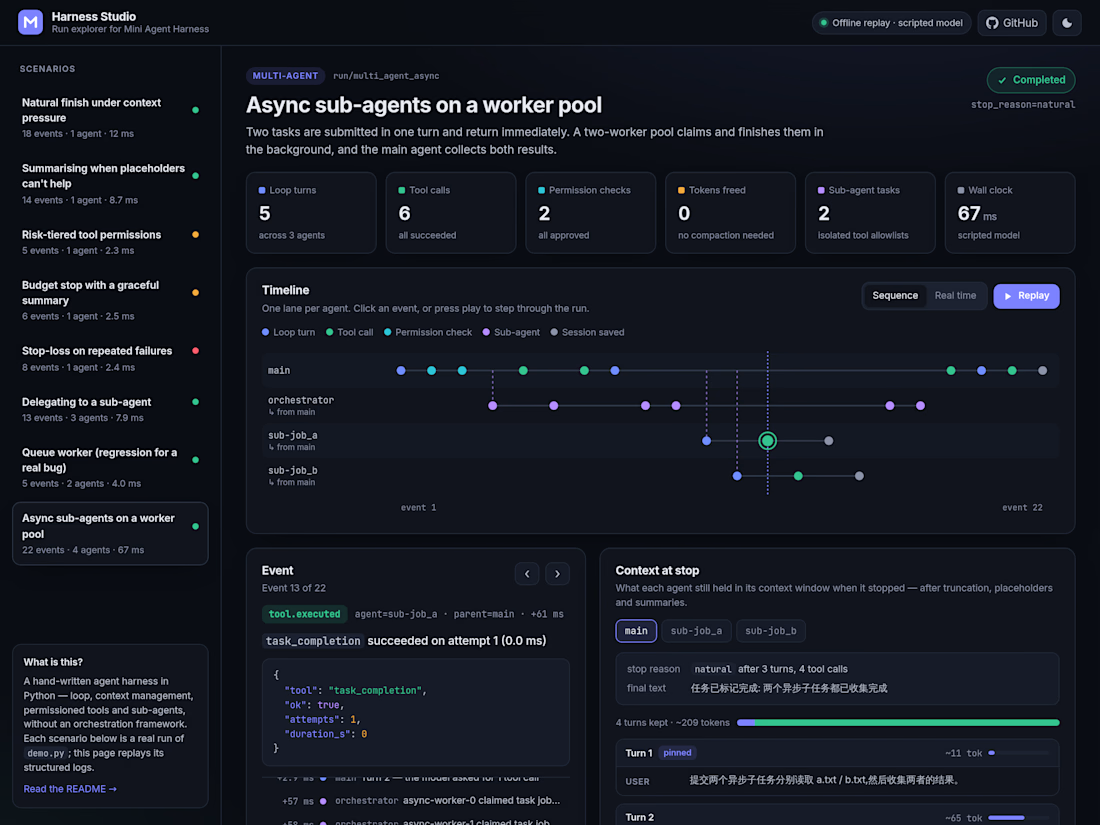
Most agent bugs are invisible: the agent loops, drops context or calls a tool it shouldn't, and all you see is a wrong answer. I wrote an agent harness from scratch in Python — loop control, context compaction, permissioned tools, sub-agents — and Harness Studio, a web app that replays every run: one lane per agent, each event explained, and the exact context each agent held when it stopped.



Fall of the Red Dome
I created this film with the new AI Agent from Leonardo AI.


It's cool, I will definitely try the model out