The network for creativity
Join 1.25M professional creatives like you
Connect with clients, get discovered, and run your business 100% commission-free
Creatives on Contra have earned over $150M and we are just getting started
Back to feedPost

Project Highlight: Starting SEO for a New Website — Challenges & Solutions
Recently, I started working on the SEO of a newly launched website, Noviqa Digital (noviqadigital.com).
As a digital marketer, I discovered that launching a website is just the beginning. Getting Google to discover, crawl, and index it comes with its own technical challenges.
Here are 4 real issues I faced and how I approached them:
1. Google Search Console Verification
Initially, I faced difficulties with DNS verification.
✅ Solution: Successfully verified the website using the HTML file upload method.
2. XML Sitemap Errors
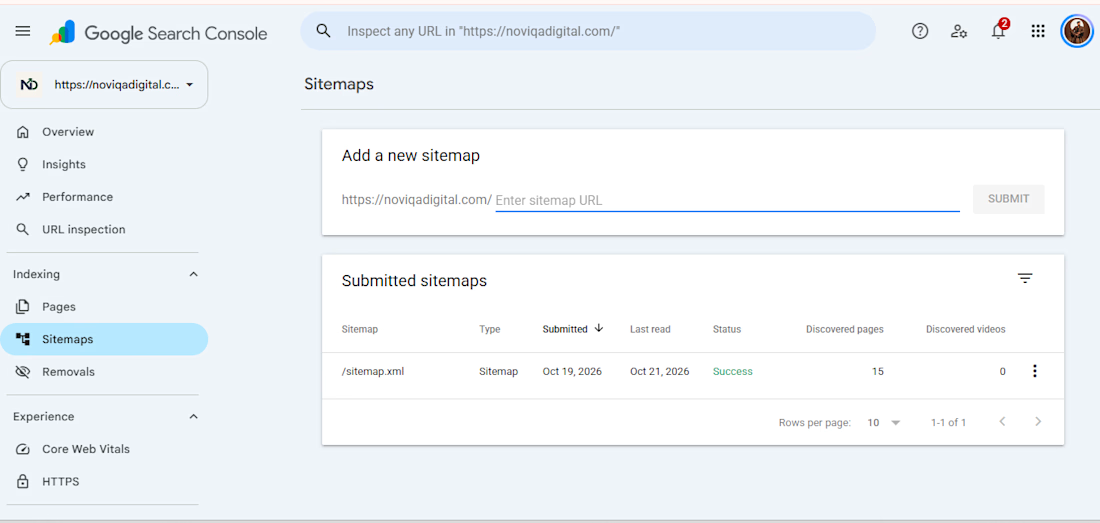
After creating a dynamic XML sitemap for the Laravel website, I encountered an error: "XML declaration allowed only at the start of the document."
✅ Solution: Investigated the issue, identified an unwanted newline in the PHP entry file, corrected it, and restored the sitemap functionality.
3. Sitemap Submission
Google needed a clear structure to discover the website's important pages.
✅ Solution: Submitted the XML sitemap through Google Search Console, which successfully discovered 15 URLs.
4. Pages Discovered but Not Indexed
One of the service pages was discovered by Google but wasn't indexed.
✅ Solution: Used URL Inspection, performed a successful live URL test, and submitted an indexing request.
What I Learned:
SEO isn't just about keywords and backlinks. Technical SEO, crawlability, website structure, and indexing are equally important foundations.
And most importantly, a page being discovered by Google doesn't guarantee it will be indexed or ranked.
I'm continuing to work on the website's SEO and will share more practical lessons as the project progresses.
Website: https://noviqadigital.com
#TechnicalSEO #GoogleSearchConsole #SEO #WebsiteOptimization #DigitalMarketing #Laravel

The network for creativity
Join 1.25M professional creatives like you
Connect with clients, get discovered, and run your business 100% commission-free
Creatives on Contra have earned over $150M and we are just getting started



Related posts


One thing I've learned about website design is that starting with the design isn't always the best place to start.
Before I open Elementor or begin arranging sections, I want to understand a few things.
What is this business trying to achieve?
Who are we building the website for?
What should visitors understand when they land on the homepage?
And what action should they take?
These questions matter because a website can look impressive and still fail to communicate the right message.
I've come to appreciate that good website development involves more than knowing how to use a page builder.
It requires understanding the business, thinking through the user experience, and making decisions that serve a clear purpose.
The design is important.
The development is important.
But the thinking behind both is what brings everything together.
𝗗𝗼𝗻'𝘁 𝗷𝘂𝘀𝘁 𝗯𝘂𝗶𝗹𝗱 𝗮 𝘄𝗲𝗯𝘀𝗶𝘁𝗲 𝘁𝗵𝗮𝘁 𝗹𝗼𝗼𝗸𝘀 𝗴𝗼𝗼𝗱. 𝗕𝘂𝗶𝗹𝗱 𝗼𝗻𝗲 𝘁𝗵𝗮𝘁 𝗸𝗻𝗼𝘄𝘀 𝘄𝗵𝗮𝘁 𝗶𝘁'𝘀 𝘀𝘂𝗽𝗽𝗼𝘀𝗲𝗱 𝘁𝗼 𝗮𝗰𝗵𝗶𝗲𝘃𝗲.
For fellow designers and developers:
What's the first thing you consider before starting a new website project?

Onboarding process section for a city inspired design agency website. Complete Project coming soon.

More pages do not equal more clients.
A common mistake growing businesses make is thinking they need a 20-page website with endless dropdown menus just to look "legitimate."
What actually happens:
Visitors get lost in nested menus.
Mobile navigation becomes clunky.
Half the pages sit half-empty with generic filler text.
When someone lands on your site looking to hire you, they don’t want an encyclopedia. They want quick answers and a clear path to reach out.
Here is the high-converting 4-page blueprint that consistently outperforms bloated websites:
1. Home: The High-Impact Overview
State what you do in plain language, showcase your top proof/testimonials, and provide an obvious call to action within the first scroll.
2. Services / Work: Clear Deliverables
Break down exactly what you offer, who it’s for, and the outcomes clients can expect. Transparent scopes build trust immediately.
3. About: The Human Element
People buy from people. Share your background, your standards, and why you do what you do. Keep it authentic, not corporate.
4. Contact: Zero Friction
Don't make them fill out a 10-question survey. Provide a clean form, direct contact details, and a one-tap option (like WhatsApp or phone) for mobile visitors.
Cut the fluff. When every page has a specific purpose and a direct next step, your conversion rate climbs.
Looking to turn a bloated or outdated website into a lean, fast, client-generating platform? Send me a message and let's streamline your setup.
#WebDesign #WebDevelopment #ConversionRate #UXDesign #Frontend #FreelanceDev


Agree for most service businesses. The one exception I'd add is local search: if a business covers several towns or very different services, a page for each one helps them show up on Google. The menu can still stay at four items though.