The network for creativity
Join 1.25M professional creatives like you
Connect with clients, get discovered, and run your business 100% commission-free
Creatives on Contra have earned over $150M and we are just getting started
Back to feedPost

Unpopular opinion: "Move fast and iterate later" isn't always the right strategy - especially for startup products with limited budgets.
One of the most memorable projects I worked on was an AI-powered journaling app and its special because it was my first end to end delivery project.
The client had a powerful vision.
The budget was tight.
And the requirements? They evolved with every conversation.
We could have jumped straight into development and figured things out along the way.
Instead, we deliberately slowed down.
For nearly two weeks, we focused on understanding the product before writing a single user story.
Here's what we did:
- Conducted multiple discovery sessions to understand the actual product vision - not just the feature list.
- Studied competitor products to identify industry-standard features, differentiators, and opportunities.
- Built user journeys and wireframes before finalizing requirements.
- Prioritized features into MVP vs future releases, ensuring every development hour was spent on high-value functionality.
That extra effort upfront gave everyone - client, designers, developers, and QA - a shared understanding of what we were building.
The result?
- The product launched successfully.
- Minimal requirement ambiguity during development.
- Fewer unnecessary revisions.
- Better utilization of a limited development budget.
One lesson I keep coming back to:
Speed doesn't come from writing code faster. It comes from reducing uncertainty before development begins.
As Business Analysts, sometimes our biggest contribution isn't creating documents. It's helping the team ask the right questions before anyone starts building.
Have you ever worked on a project where slowing down at the beginning actually accelerated delivery?
The network for creativity
Join 1.25M professional creatives like you
Connect with clients, get discovered, and run your business 100% commission-free
Creatives on Contra have earned over $150M and we are just getting started



Related posts

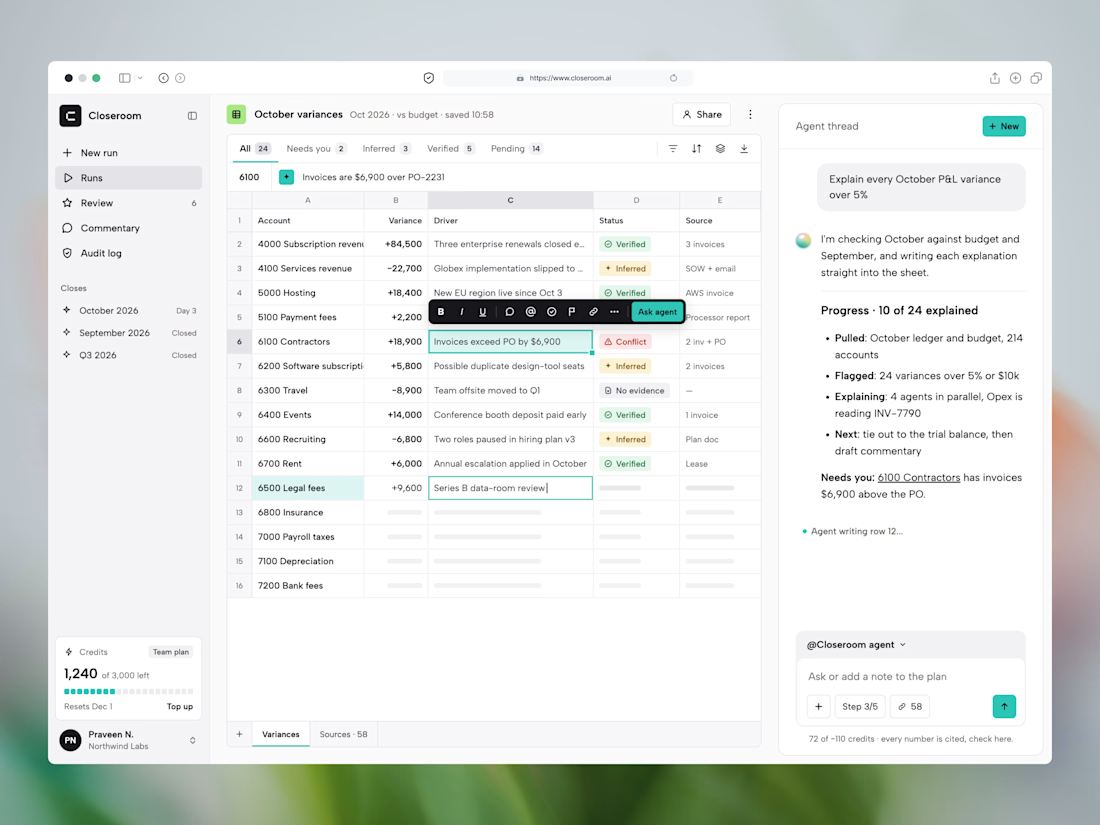
Closing the books shouldn't take days of detective work.
The problem: Every month, finance teams spend days explaining why the numbers moved. They dig through invoices, POs and ledger lines to justify each variance against budget, then chase approvals and write board commentary. It's slow, manual and hard to audit.
The solution: Closeroom is an AI agent for month-end close. You ask in plain words, and it explains every variance, cites the source document behind each number, ties the totals out to the trial balance, and flags anything that doesn't add up for a human decision.
The impact: The work moves from investigation to review. Teams close faster, reviewers sign off with evidence in hand, and every number can be traced for audit.
Concept · B2B FinTech · AI SaaS


Love this!

Onboarding feels fast when every step hands off to the next.
Slide the screen, fill the progress, roll the number. No spinners, no dead frames.

Your AI-assisted product is supposed to deduct ₦50,000.
It deducts ₦500,000.
Who owns that mistake?
Would "AI built it" be an acceptable explanation to your customer?
I use AI in my design process.
For research, it helps me organize information and explore questions.
For design thinking, it helps me challenge assumptions and explore different directions.
For inspiration, it helps me get unstuck.
But there's something I won't outsource:
My judgment.
I still have to understand the problem, question the suggestions, consider the user, make the design decisions and validate the experience.
AI can help generate the work faster.
But the people who approve and ship a product must own what reaches the user.
AI can assist the process. It cannot replace the responsibility behind the product.
Founders building digital products: what's your human-review process before an AI-assisted feature reaches your customers?
I'm also open to remote UI/UX and Product Design opportunities and selected projects. If you're building something and need thoughtful design alongside AI-assisted execution, let's connect.

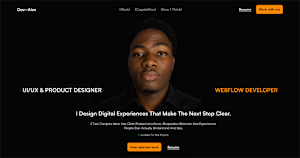
dev-alex-portfolio-84bb19.webflow.io
Dev~Alex — UI/UX & Product Designer | Webflow Developer
Explore the product design, UI/UX and responsive Webflow work of Alexander Yerokun (Dev~Alex).