The network for creativity
Join 1.25M professional creatives like you
Connect with clients, get discovered, and run your business 100% commission-free
Creatives on Contra have earned over $150M and we are just getting started
Back to feedPost
Making software faster is not always about doing more work. Sometimes, it is about eliminating work the system does not need to do.
Imagine an application processing thousands of records. If it repeatedly copies information it already has, it can consume additional memory and processing time, especially as the workload grows.
One way to improve efficiency is to work with existing data instead of creating unnecessary copies.
But there is a trade-off.
Keeping references to existing data can make the system more efficient, but it also introduces constraints around how long that data remains available and when it can safely be used.
Creating a separate copy may consume more resources, but it can make the data easier to manage independently.
This is where engineering judgment matters.
The goal is not to eliminate every copy or optimize every operation. It is to understand where the overhead comes from, determine whether it meaningfully affects performance, and choose an approach that balances efficiency with maintainability.
Good engineering is not about using fewer resources at all costs. It is about removing unnecessary costs without creating unnecessary complexity.


One thing I keep coming back to is that optimization always involves trade-offs.
Reducing memory usage is useful, but not if it introduces unnecessary complexity or makes the system harder to maintain.
The network for creativity
Join 1.25M professional creatives like you
Connect with clients, get discovered, and run your business 100% commission-free
Creatives on Contra have earned over $150M and we are just getting started



Related posts

The fix for an agent that keeps getting your design system wrong isn't a better prompt.
It's putting the rules where the agent reads them.
In the repo. In skills. In checks it can run itself.
Writing a course about exactly this.

What sells it for me is the refusal telling the agent exactly where the token should go. A bare "no hex" error usually just sends it looping. Does guard.mjs run only as an agent hook, or in pre-commit too so it catches humans as well?

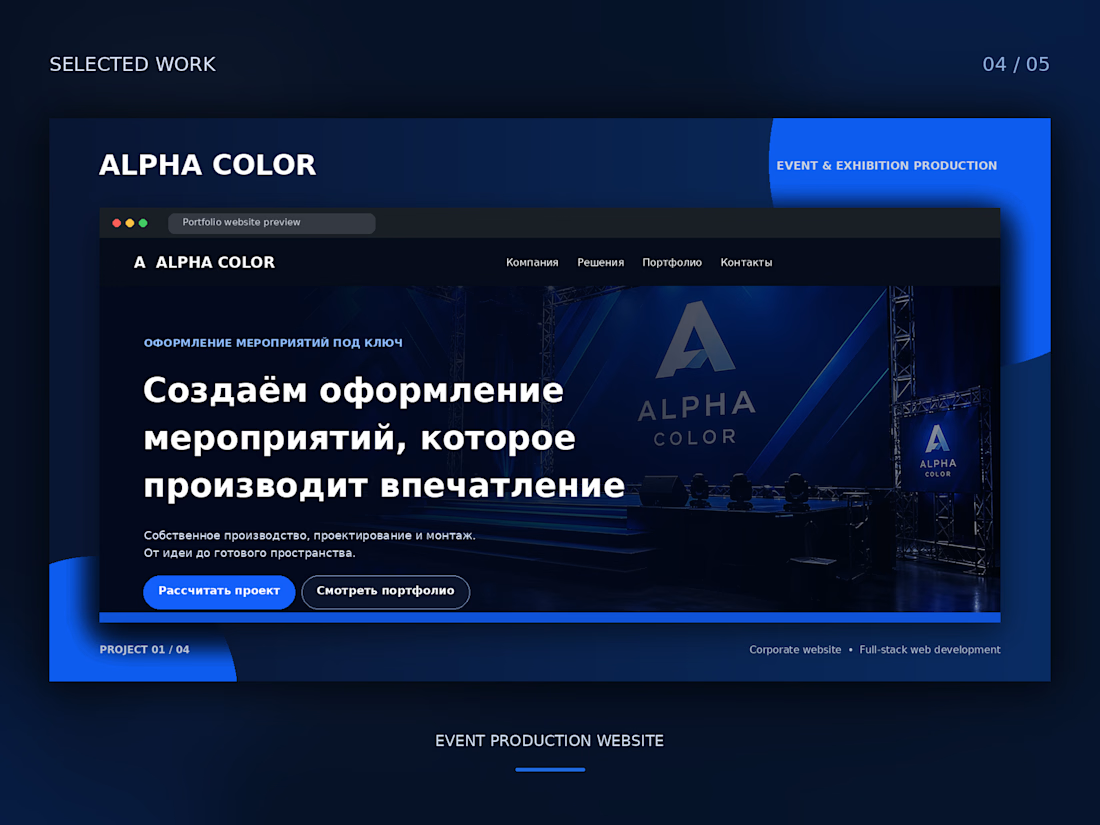
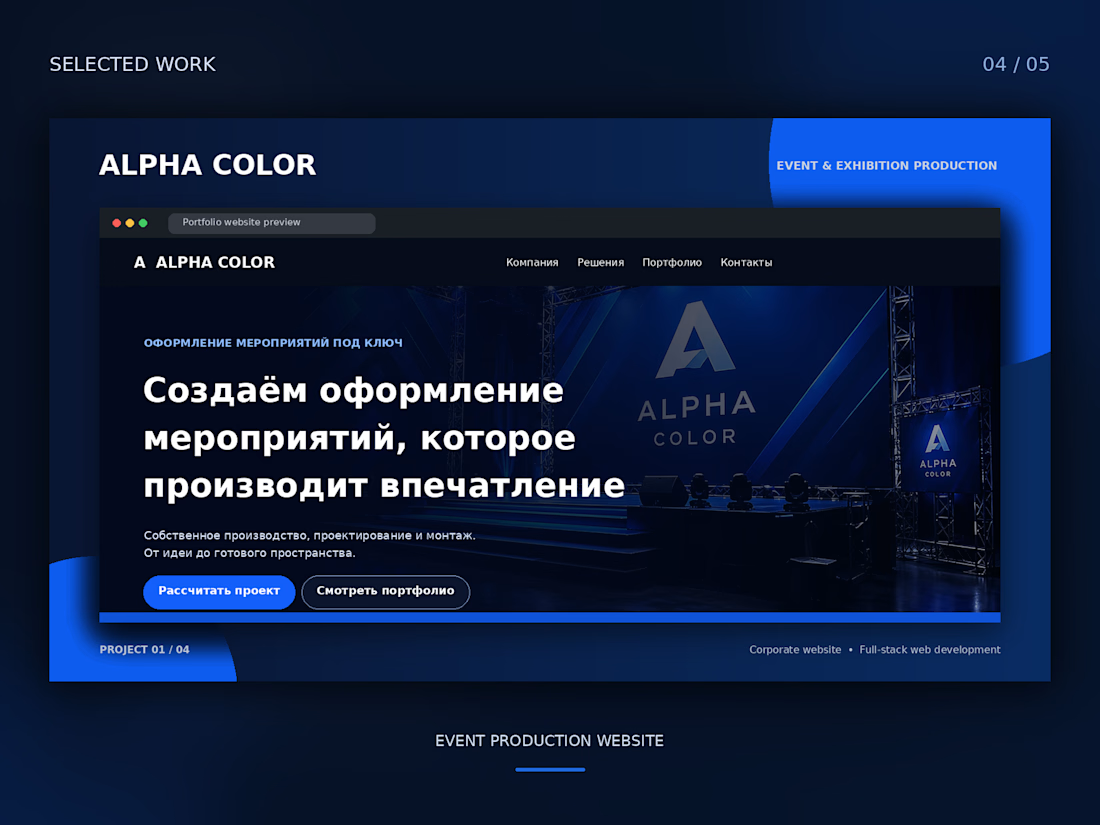
Developed a custom corporate website for an event production and creative services company.
The platform showcases event solutions, production capabilities, completed projects, and professional services through a modern dark-themed interface.
Implemented multiple service and portfolio pages, interactive elements, responsive navigation, and customer inquiry forms with server-side processing.
Built with PHP, HTML5, CSS3, and JavaScript, with a focus on responsive design, structured content, and a consistent visual identity.


Full Stack Web Development | Selected Projects
I build modern websites, real-time applications, and custom digital solutions — from elegant business websites to complex communication platforms.
Here are five projects from my development portfolio:
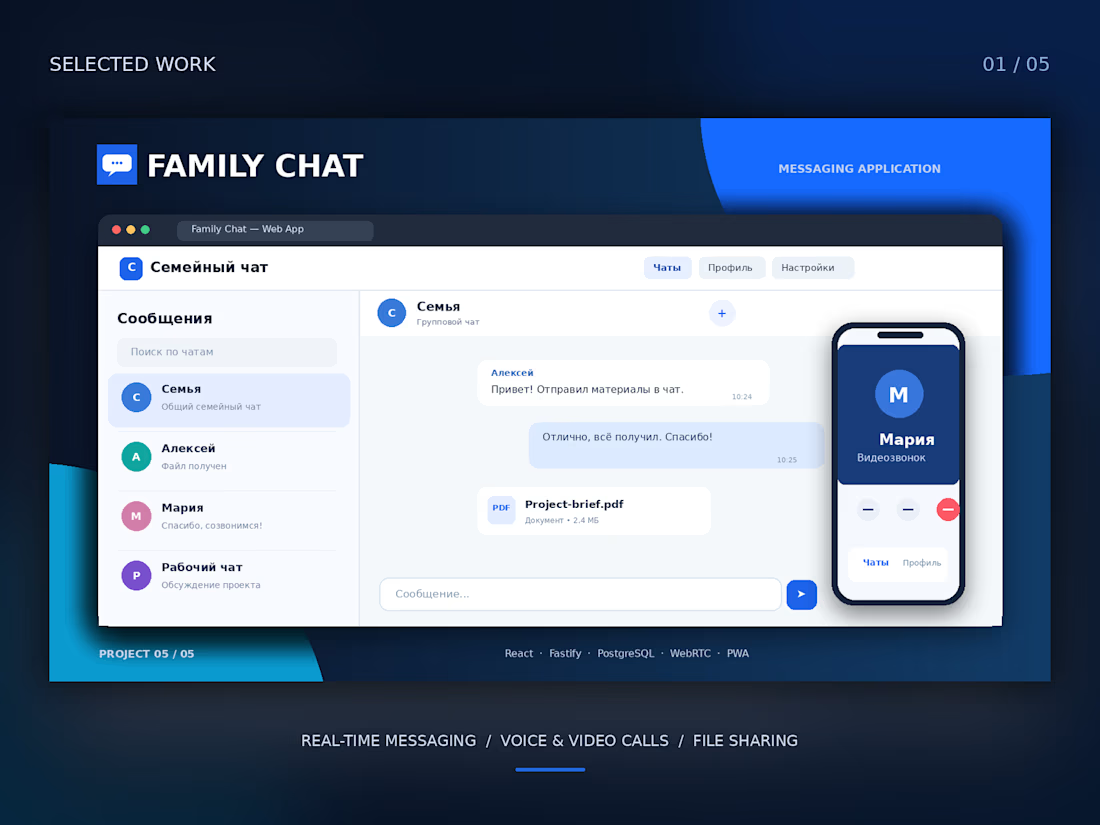
1. Family Chat — Real-Time Messaging Application
A full-stack messaging platform featuring real-time text communication, voice and video calls, file sharing, and an installable Progressive Web App (PWA).
Technologies: React, FastAPI, PostgreSQL, WebRTC, WebSockets.
2. AURUM AUTO — Premium Automotive Website
A modern automotive website featuring a premium interface, responsive design, vehicle presentations, and business-oriented functionality.
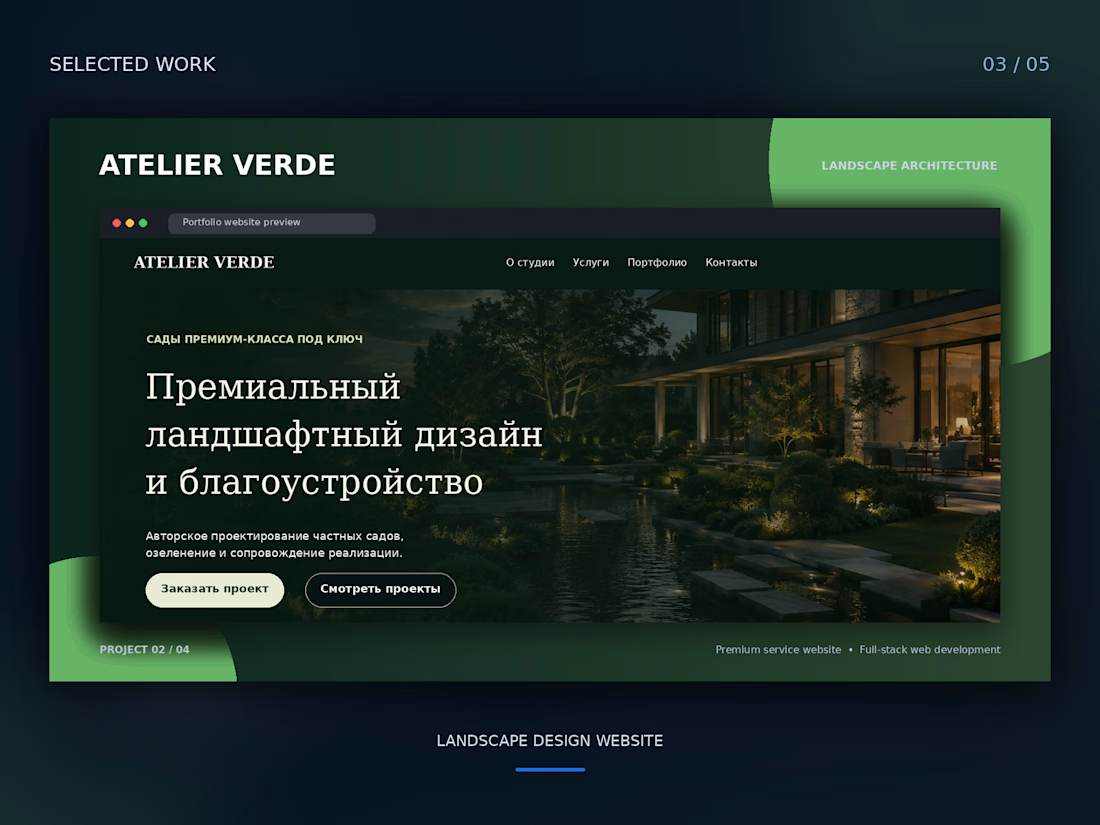
3. Atelier Verde — Landscape Design Website
An elegant website showcasing landscaping services, outdoor design projects, and professional portfolios.
4. Alpha Color — Event Production Website
A corporate website for an event production company, featuring services, creative solutions, and project presentations.
5. LUMÉRA — Beauty & Wellness Website
A modern, responsive website for the beauty industry, combining refined visual design with intuitive navigation and service presentations.
What I specialize in:
Full Stack Web Development
Custom Web Applications
Real-Time Communication Systems
Business Websites and Landing Pages
E-commerce and Online Catalogs
API Integrations
Responsive UI/UX Development
I focus on building reliable, scalable, and visually appealing digital products that solve real business problems.
Available for freelance projects and long-term collaborations.