The network for creativity
Join 1.25M professional creatives like you
Connect with clients, get discovered, and run your business 100% commission-free
Creatives on Contra have earned over $150M and we are just getting started
Back to feedPost

Building a Scalable Education Partnership Model Driving £500k+ in Revenue
Overview
This project focused on designing and scaling a strategic partnership model within the education sector to create apprenticeship pathways while driving commercial growth.
The objective was to align educational institutions with a technology provider in a way that delivered long-term value for both parties, rather than a one-off transactional relationship.
The Challenge
Education institutions often face barriers when adopting new technologies, including cost, integration, and demonstrating long-term value.
At the same time, traditional sales approaches were not sufficient to drive adoption at scale. A more strategic, partnership-led model was required to:
Create meaningful value for institutions
Support skills development through apprenticeships
Enable sustainable commercial growth
Approach
I designed a partnership framework that aligned commercial, educational, and operational value.
This included:
-Structuring partnerships around apprenticeship opportunities, creating a clear and compelling entry point for institutions
-Positioning the offering as a long-term capability investment, not just a product sale
-Designing a repeatable partnership model that could be adapted across multiple institutions
-Tailoring each partnership to reflect the specific priorities and decision-making structures of each organisation
Execution
The model was initially implemented with Manchester College, where we:
-Established apprenticeship pathways linked to immersive technology
-Delivered a VR training environment, including hardware, learning modules, and accreditation
-Created a structured framework that balanced institutional needs with commercial outcomes
Following this, I refined and extended the model to:
-Regent’s College London
-Loughborough University
-Each partnership was adapted to suit the institution while maintaining a consistent underlying structure, enabling scalability without losing relevance.
Impact
-Contributed to over £500,000 in VR system sales across partner institutions
-Established long-term strategic partnerships rather than one-off transactions
-Created a repeatable model for future education partnerships
-Strengthened positioning within the education sector through value-led collaboration
Additional Notes
Due to client confidentiality and NDAs, detailed internal strategies and commercial agreements cannot be shared. This portfolio reflects my approach, structure, and key outcomes.


The network for creativity
Join 1.25M professional creatives like you
Connect with clients, get discovered, and run your business 100% commission-free
Creatives on Contra have earned over $150M and we are just getting started





Related posts



Great design Daniel 🎉🎉

PROJECT TYPE
Self paced eLearning course design and development concept based on an existing 250 slide professional training presentation.
CLIENT PROBLEM / BUSINESS CHALLENGE
The organization had a substantial PowerPoint presentation containing the core training material, but the content needed to become more than a collection of presentation slides.
A successful eLearning experience needed to organize the material into a clear learning journey that could support approximately four hours of self paced learning while keeping learners engaged and helping them apply the information.
The challenge was therefore not simply transferring slides into an LMS. The content needed instructional structure, learner focused navigation, multimedia, activities, assessments, resources, and a consistent digital learning experience.
WHAT I DID
I approached the project as an instructional design and eLearning development workflow, restructuring the existing content around the learner experience.
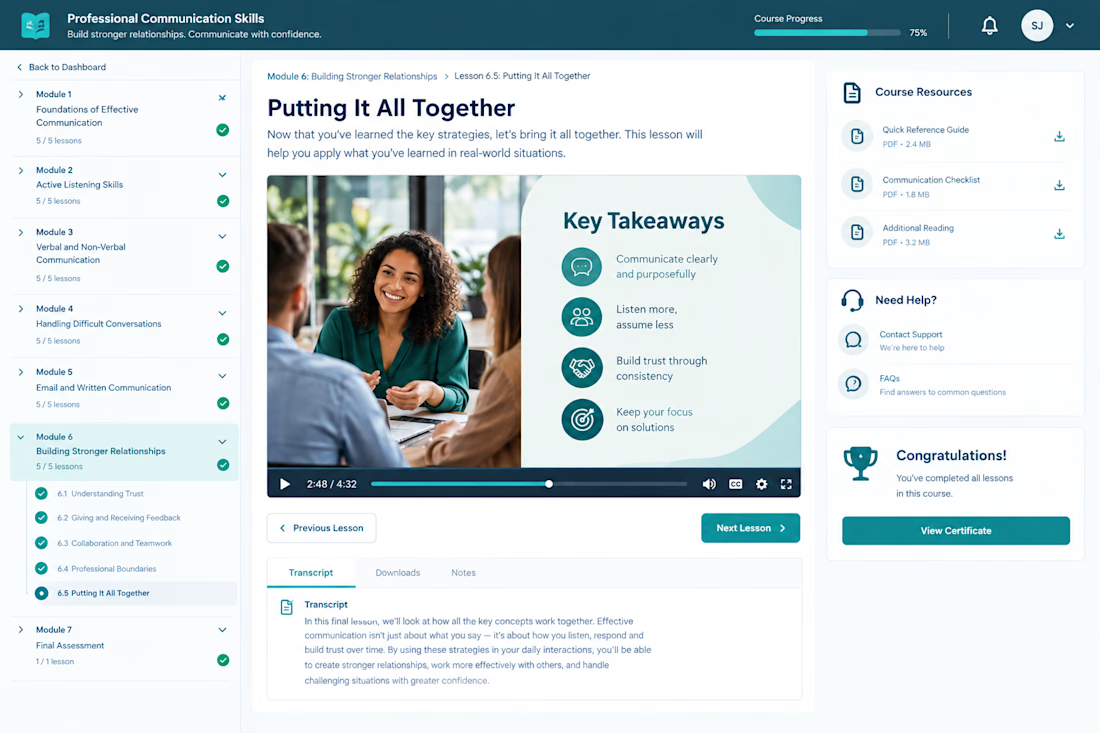
The course concept includes:
• Clear modules and lesson progression
• Structured learning objectives and content flow
• Learner focused navigation
• Multimedia based lesson presentation
• Practical learning activities and application points
• Assessment and knowledge check opportunities
• Progress tracking throughout the course
• Downloadable learning resources
• Transcript support for lesson content
• Clear previous and next lesson navigation
• Completion recognition and certificate access
• Consistent visual treatment across the learning experience
The course interface was designed to make a large amount of professional training content feel easier to navigate and consume independently, while maintaining a polished corporate learning standard.
RESULT / OUTCOME
The completed concept demonstrates how an existing presentation can be transformed into a structured self paced eLearning experience rather than simply reproduced as slides.
The final experience provides learners with a clear course structure, visible progress, interactive lesson elements, supporting resources, assessment opportunities, and a consistent path through the training.


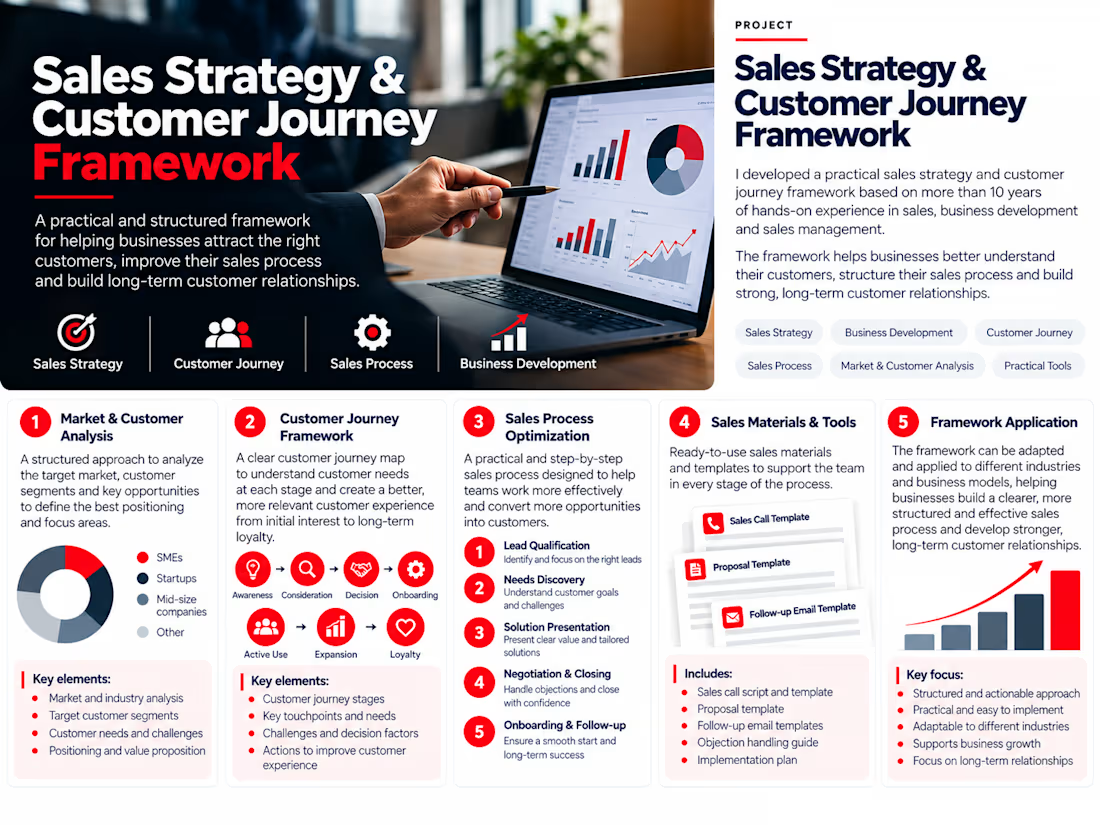
I developed a practical Sales Strategy & Customer Journey Framework based on more than 10 years of hands-on experience in sales, business development and sales management.
The framework covers the complete customer journey — from market and customer analysis to needs discovery, solution presentation, objection handling, negotiation, closing and follow-up.
It is designed to help businesses better understand their customers, structure their sales process and build stronger long-term customer relationships.