The network for creativity
Join 1.25M professional creatives like you
Connect with clients, get discovered, and run your business 100% commission-free
Creatives on Contra have earned over $150M and we are just getting started
Back to feedPost

Why 7 Million Lines Broke Cursor
Ever wondered why AI coding tools struggle with huge codebases?
We pushed Cursor, Copilot, and ChatGPT to their limits — and learned that system context matters more than code context.
Knowledge graphs are the missing piece.
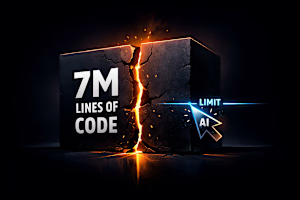
medium.com
Why 7 Million Lines Broke Cursor
How Knowledge Graph–Driven AI Makes Monolith to Microservices Migration Possible
The network for creativity
Join 1.25M professional creatives like you
Connect with clients, get discovered, and run your business 100% commission-free
Creatives on Contra have earned over $150M and we are just getting started
Related posts


We’re choosing the motion for an AI analytics product demo, and I can’t decide.
Both clips show the same flow. Someone asks a question in plain English. The agent checks permissions, plans the query, runs it past guardrails and builds the dashboard.
1. A walks you through each step as it happens.
2. B skips the steps and drops you straight onto the result.
A shows the work. B shows the speed. For a landing page I keep going back and forth.
Which one would make you trust the product more? Comment A or B, and tell me why.
3 voted
100%
0 voted
0%
3 votes
Closed

I think according to your query the output should consist on a list of clients with late invoices rather then showing charts etc,

Each member of my team is unique, each of them has his own style, own "handwriting", colors choice, editing (Leonardo in this case), imagination...
But there is one thing that unites all my 13 creators - high speed, no matter what difficult task is.
The scripts are written by me, always, directorial work and negotiations are also on me - BUT. It wouldn't mean anything without my AI-stars🔥


13:40: a finished Figma frame. 15:48: this, live on Vercel
Claude wrote every line of the code. I spent those two hours on the part clients actually pay for: looking at each version and saying what's off
17 commits, each one deployed. My notes went in as screenshots with red circles:
→ make the button edges look like ticket cutouts
→ replay the story chips every time you scroll past them
→ spacing 156, then 92, then back to 156
What made it fast was one Figma frame called "Ready for Dev". Every size, color and gap came from there, so nobody had to guess what the mockup meant
For a founder this means a real link on day one, and a fix you ask for at lunch is live by the afternoon

