The network for creativity
Join 1.25M professional creatives like you
Connect with clients, get discovered, and run your business 100% commission-free
Creatives on Contra have earned over $150M and we are just getting started
Back to feedPost

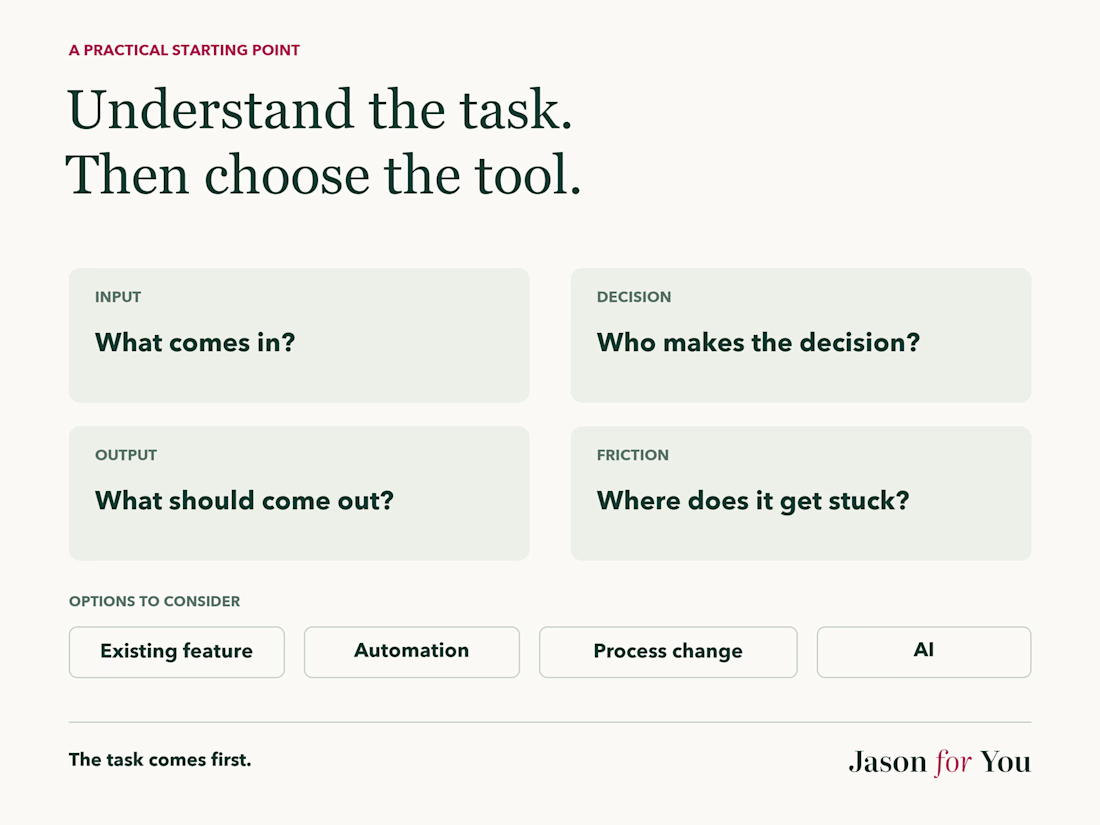
Before adding AI to a workflow, describe the task in ordinary language.
What comes in? Who makes the decision? What should come out? Where does the process get stuck?
aThen consider the options: an existing software feature, ordinary automation, a process change, or AI. That sequence is part of the consulting method I’ve designed for Jason for You.
The network for creativity
Join 1.25M professional creatives like you
Connect with clients, get discovered, and run your business 100% commission-free
Creatives on Contra have earned over $150M and we are just getting started



Related posts

Exploring two color palette directions for a women’s health app. Which one feels right to you? 👀
32 voted
56%
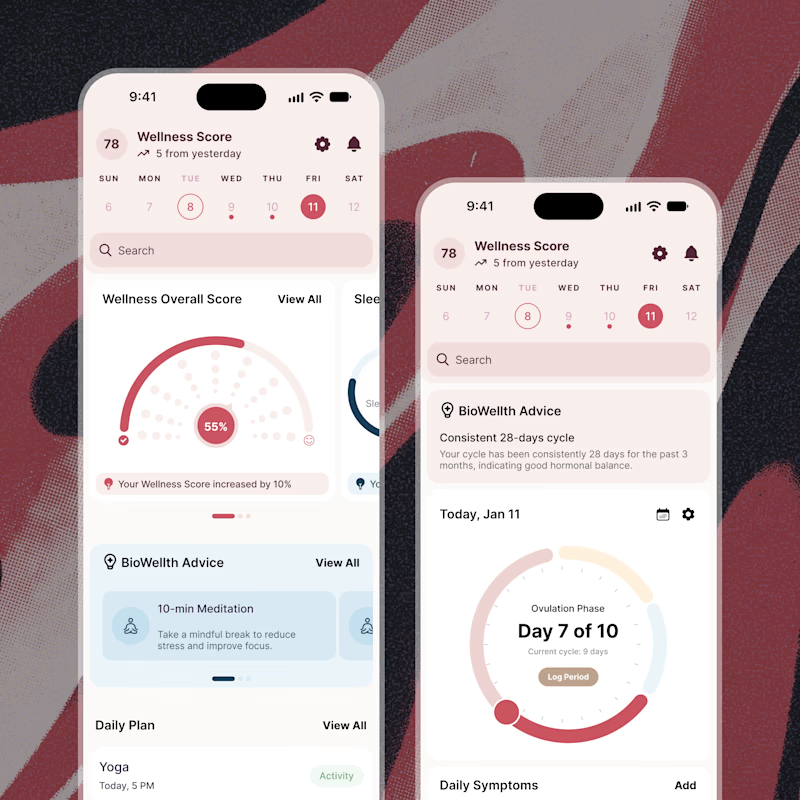
25 voted
44%
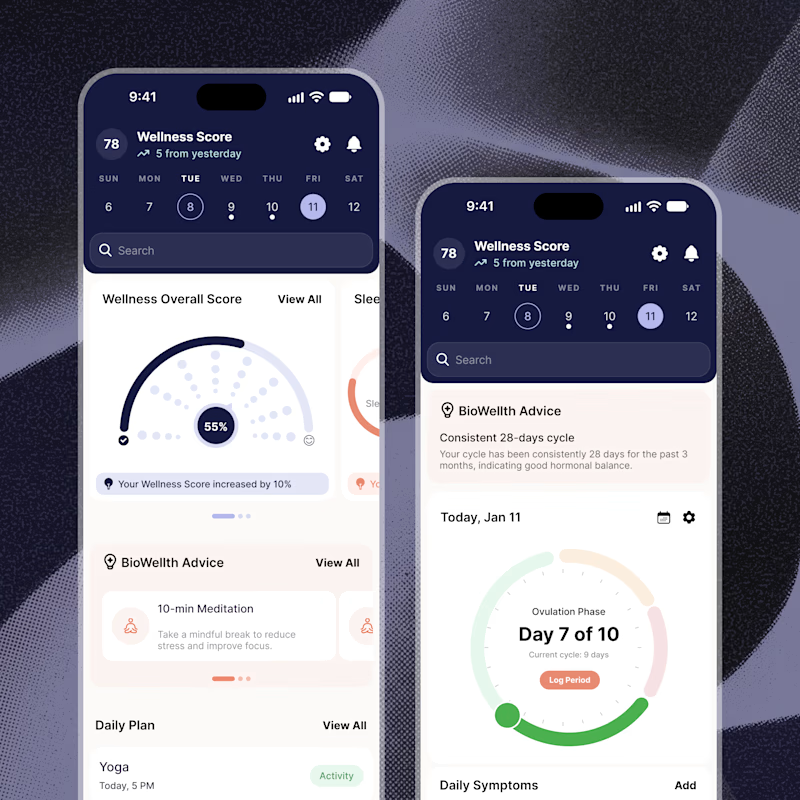
57 votes
Closed

Both are amazing! The purple definitely has better contrast, but I’d still go with the berry one, purely a personal preference

I built a lamp that switches on with your scroll. 💡
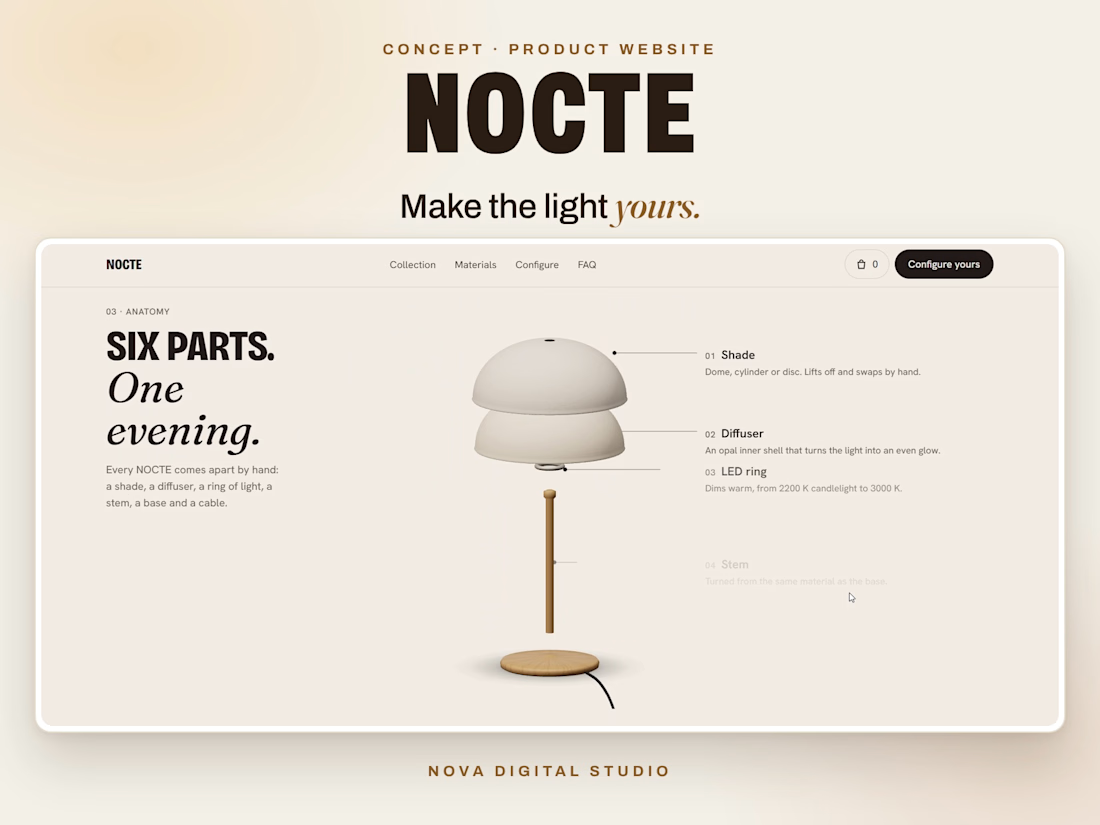
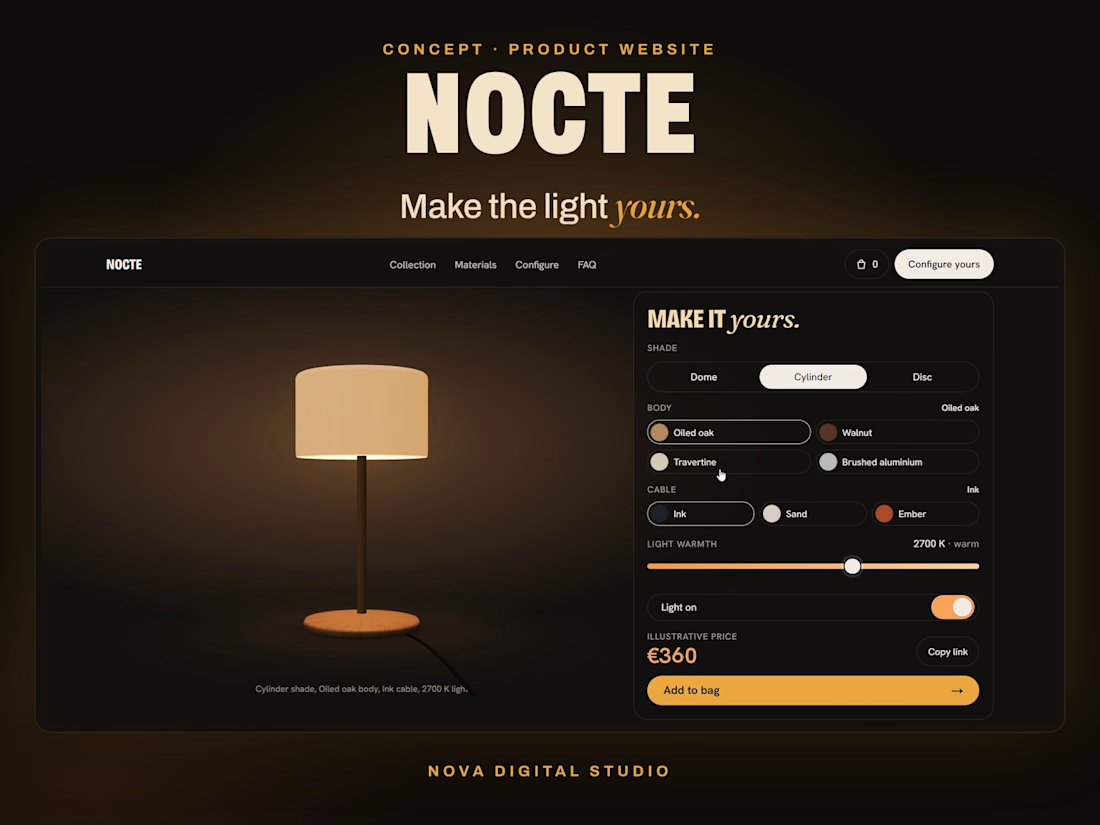
NOCTE is a concept site for a modular table lamp. Scroll into the configurator and the cream page fades into night, the lamp lights up, and its warm light tints the whole page.
Change the light from 2200 K to 3000 K and the page shifts with it.
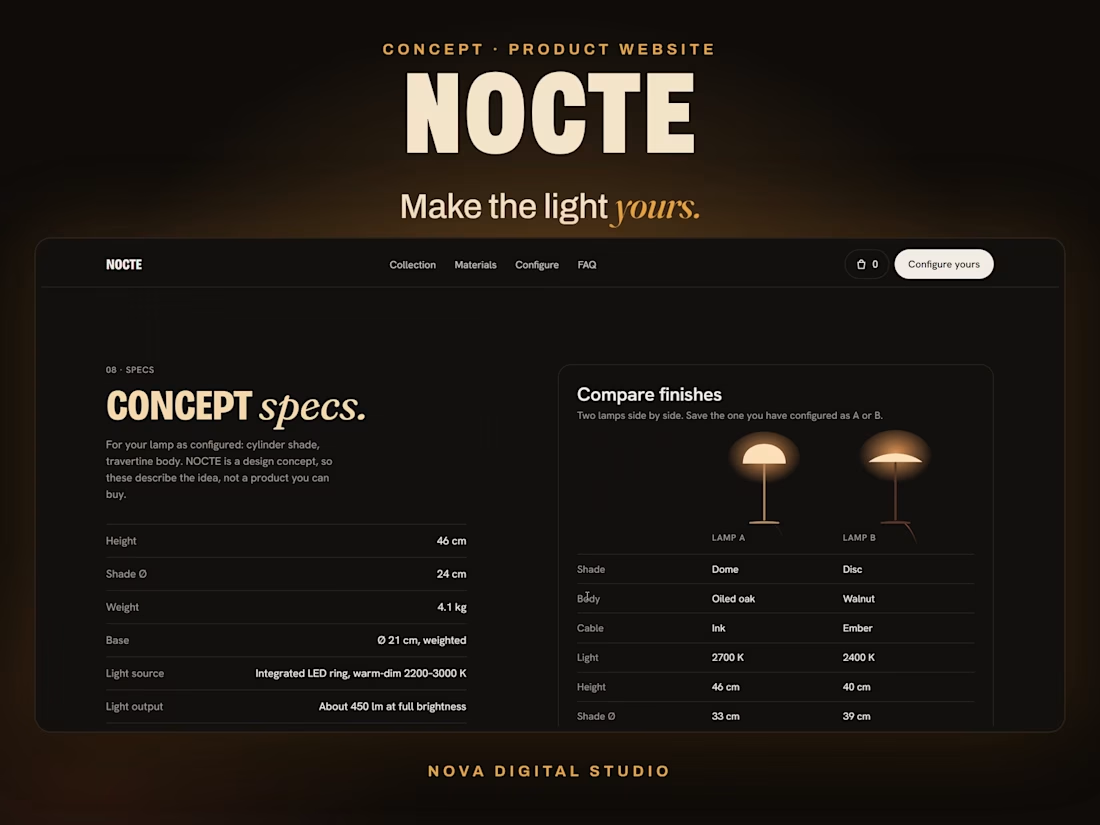
Pick the shade, body and cable, and every lamp gets its own link.
Built from code, with no 3D model files.
Which finish would you choose?

Looks amazing

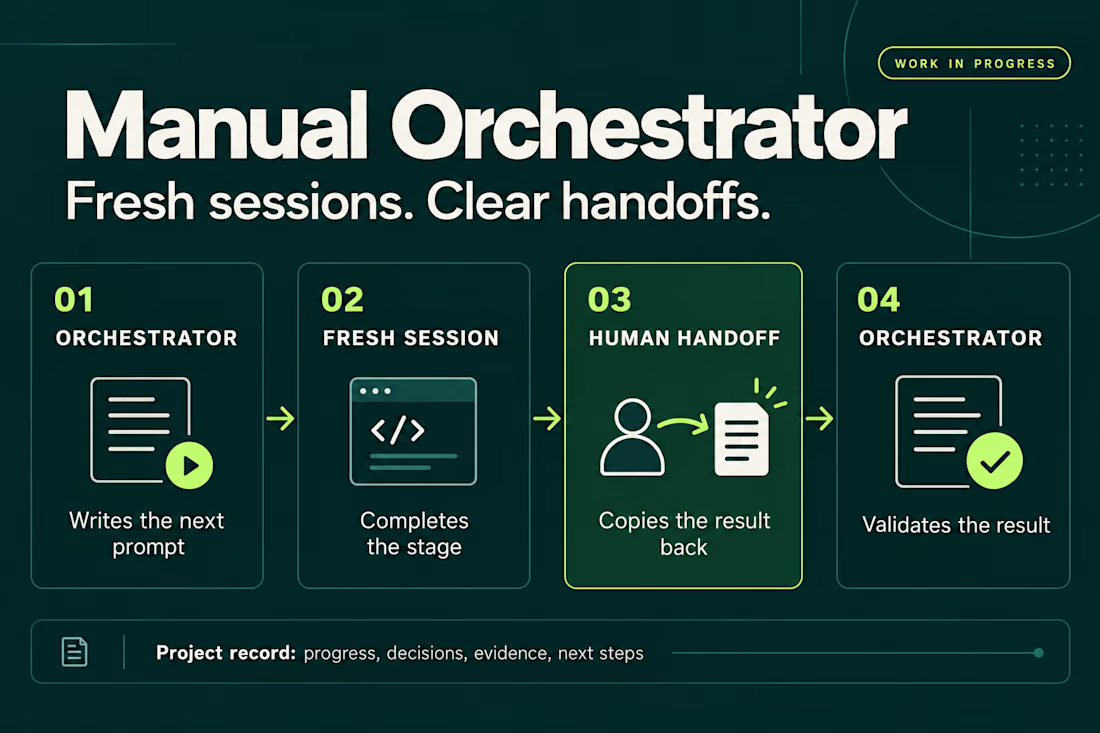
I’ve been working on a small skill called Manual Orchestrator to make longer projects with AI agents easier to manage.
The problem started with a familiar situation: one chat would accumulate plans, implementation details, corrections, and test results. By the time I was ready for the next phase, I wanted a fresh conversation without losing the decisions we’d already made.
Manual Orchestrator gives that process some structure. One chat acts as the orchestrator: it breaks the work into stages and writes a prompt for the next one. I run that prompt in a new session, then bring the result back. The orchestrator reviews it against the stage’s criteria before preparing the next prompt. If something needs fixing, I go back to the same worker session.
The skill also keeps a record in the project with the current stage, decisions, evidence, and next steps. That makes it easier to pause, resume, or hand the work to another session.
The handoff is manual. I choose when to open a session and carry the result back. The orchestrator and worker sessions can also use different agent CLIs, with the prompt adapted to the capabilities available.
It’s open source and still a work in progress. I’m using it to learn what helps in practice and where the workflow needs to improve. Installation has been checked for Codex, Claude Code, and Gemini CLI, but the full workflow hasn’t been tested across every CLI or version.
If you try it, I’d be interested in hearing what works and where it gets in your way.