The network for creativity
Join 1.25M professional creatives like you
Connect with clients, get discovered, and run your business 100% commission-free
Creatives on Contra have earned over $150M and we are just getting started
Back to feedPost


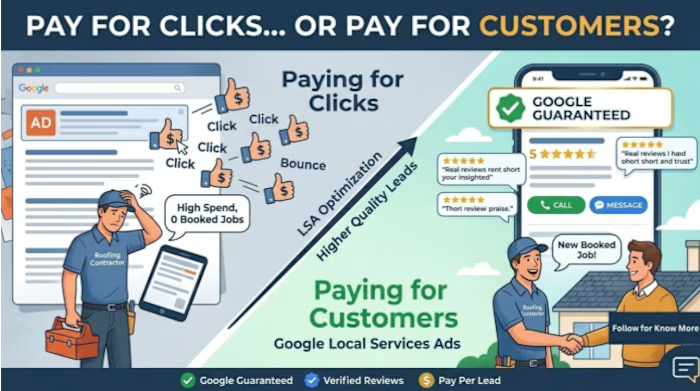
That's the question every local service business should ask before investing in Google Ads.
Many business owners assume that more clicks mean more jobs.
Unfortunately, that's not always true.
I've seen roofing, HVAC, plumbing, and electrical companies spend hundreds—or even thousands—of dollars on clicks that never turned into a single booked job.
That's where Google Local Services Ads (LSA) changes the game.
Instead of paying every time someone clicks your ad, you generally pay when a potential customer contacts your business. Your business can also appear at the very top of Google Search, helping you stand out when people are actively looking for a local service provider.
But here's what many people don't realize...
👉 Simply creating an LSA account doesn't guarantee more leads.
Google looks at more than your budget. Factors like your response time, customer reviews, business profile, service categories, and how well you manage your leads all play a role in your visibility.
In other words...
The businesses getting the most calls aren't always spending the most money—they're usually the ones with the best-optimized accounts.
If you're a local service business, ask yourself:
✔️ Are you responding to leads quickly? ✔️ Are your service categories set up correctly? ✔️ Are you consistently collecting new reviews? ✔️ Are you managing every lead inside your LSA dashboard?
Small improvements in these areas can make a big difference in the quality and volume of your leads.
💬 I'd love to hear from you.
Are you currently using Google Local Services Ads, or are you still relying only on traditional Google Ads? What's been your biggest challenge so far?
Let's discuss it in the comments.
#GoogleLocalServicesAds #GoogleLSA #GoogleAds #LeadGeneration #LocalMarketing #DigitalMarketing #RoofingMarketing #HVACMarketing #PlumbingMarketing #ElectricianMarketing #SmallBusiness #PPC


The network for creativity
Join 1.25M professional creatives like you
Connect with clients, get discovered, and run your business 100% commission-free
Creatives on Contra have earned over $150M and we are just getting started

Challenges
View all


Related posts

Sharing my UX/UI work for Lemonads, an AdTech platform designed to simplify Google Ads management. This case study explores how I turned complex advertising data into clear dashboards and intuitive workflows.
#ProductDesign #UXUI #AdTech #ui


Strong product-design thinking here—turning dense ad-management data into a calmer dashboard is no small task. The hierarchy and status cues make the workflow feel much more approachable.


Two years ago, I was charging less than a grand for a website. This year, I’ve shipped identity systems for companies at their most critical funding rounds.
Same hands. Same tools.
The only thing that changed is I stopped punishing myself for being fast. When you bill hourly, you’re literally charging less as you get better.
I stopped selling "time" and started pricing for what a successful launch or a successful rebrand is worth to the company. Positioning isn't just what you say to clients. It’s what you charge them.

Charging hourly only makes sense in two cases:
1. When you're starting out (can't properly scope a project)
2. For revisions

Here is what most people do when their website isn't converting.
They change the colors. They swap the hero image. They rewrite the headline three times. They add a new section. They move the CTA button.
And nothing changes.
Because the problem was never the design. It was the clarity.
Most small business homepages fail to convert not because they look bad, but because they don't answer the one question every visitor is silently asking in the first five seconds: is this for me?
I wrote a full guide on exactly why this happens and what to do instead. No design changes required.
Read it here: berniceebenezer.com/blog/the-real-reason-most-small-business-homepages-dont-convert


