The network for creativity
Join 1.25M professional creatives like you
Connect with clients, get discovered, and run your business 100% commission-free
Creatives on Contra have earned over $150M and we are just getting started
Back to feedPost

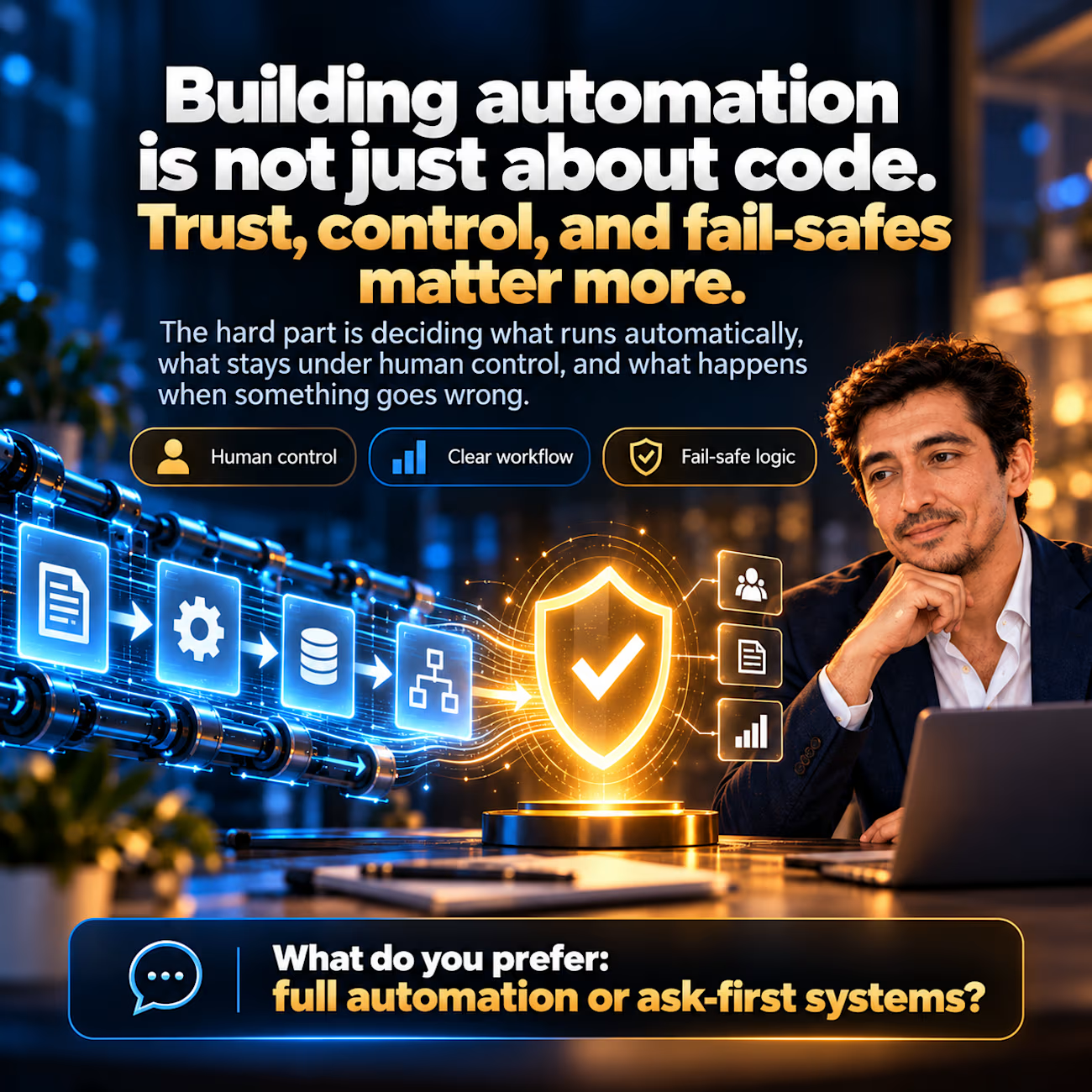
One thing I’ve learned from building automation tools:
Writing the code is often the easy part.
The harder part is deciding what the system should do on its own, what should stay under human control, and what should happen if something goes wrong.
A system can work perfectly and still be annoying or even risky if the workflow is badly designed.
These days I think more about reliability and user control than just adding more features.
What do you prefer: full automation, or a system that always asks before taking action?


I've seen the same tension: letting the bot run free saves time but a safety prompt catches edge cases that would otherwise bite us later.
The network for creativity
Join 1.25M professional creatives like you
Connect with clients, get discovered, and run your business 100% commission-free
Creatives on Contra have earned over $150M and we are just getting started
Related posts


We’re choosing the motion for an AI analytics product demo, and I can’t decide.
Both clips show the same flow. Someone asks a question in plain English. The agent checks permissions, plans the query, runs it past guardrails and builds the dashboard.
1. A walks you through each step as it happens.
2. B skips the steps and drops you straight onto the result.
A shows the work. B shows the speed. For a landing page I keep going back and forth.
Which one would make you trust the product more? Comment A or B, and tell me why.
3 voted
100%
0 voted
0%
3 votes
Closed

I think according to your query the output should consist on a list of clients with late invoices rather then showing charts etc,

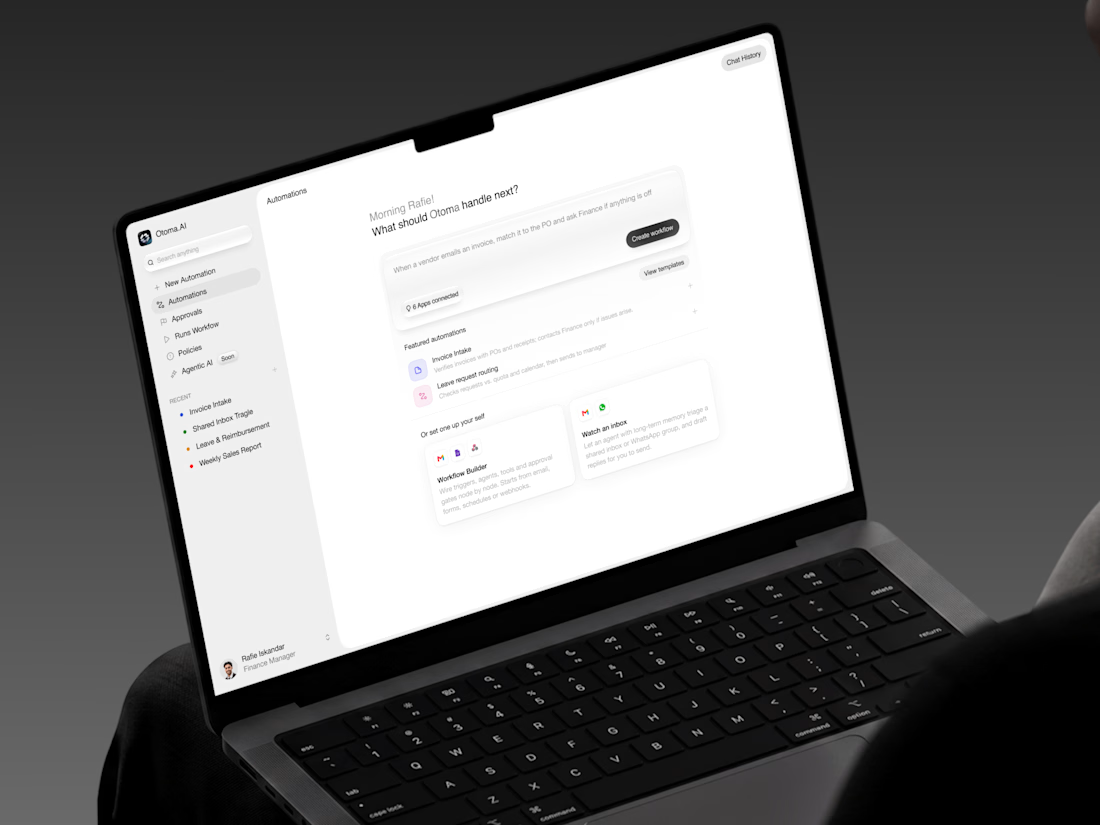
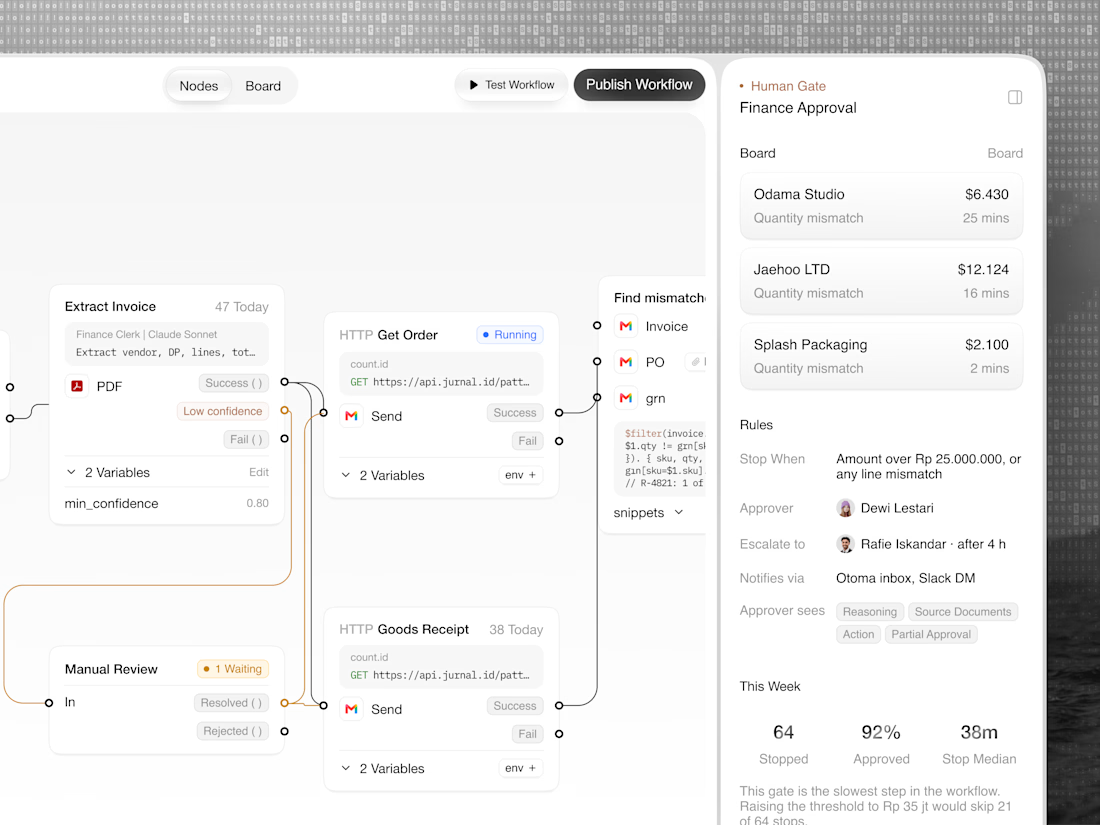
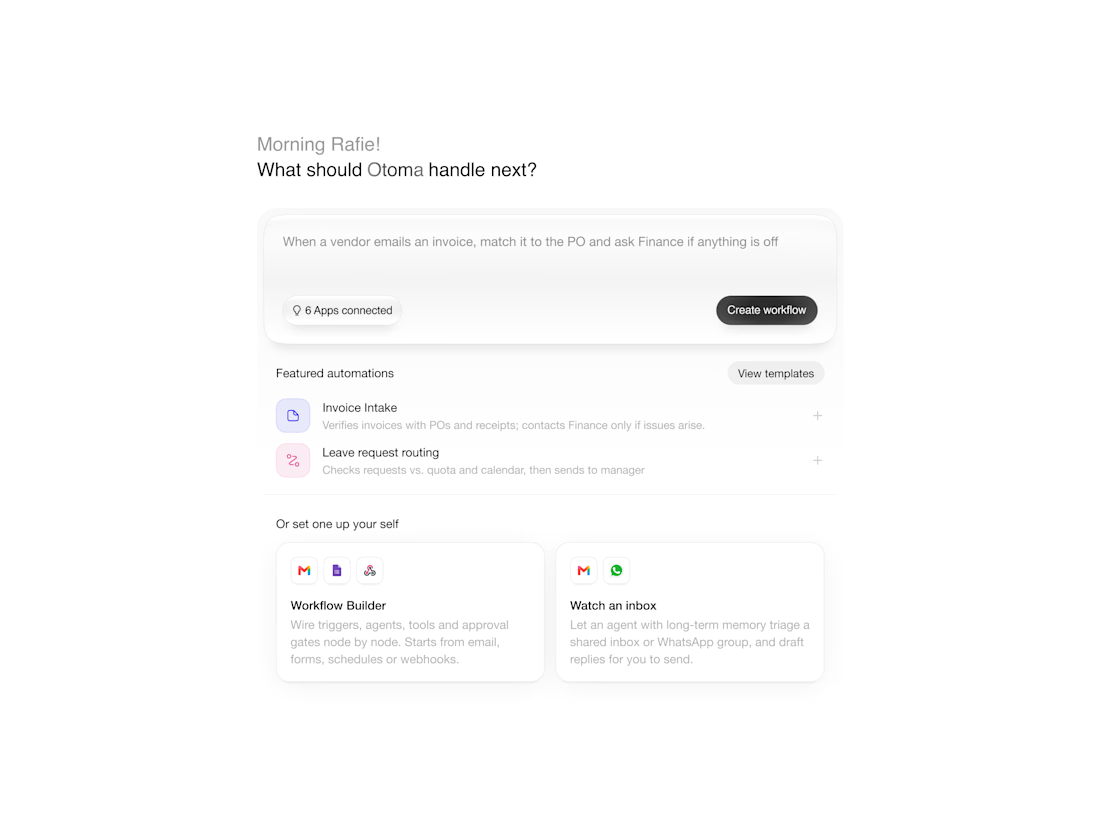
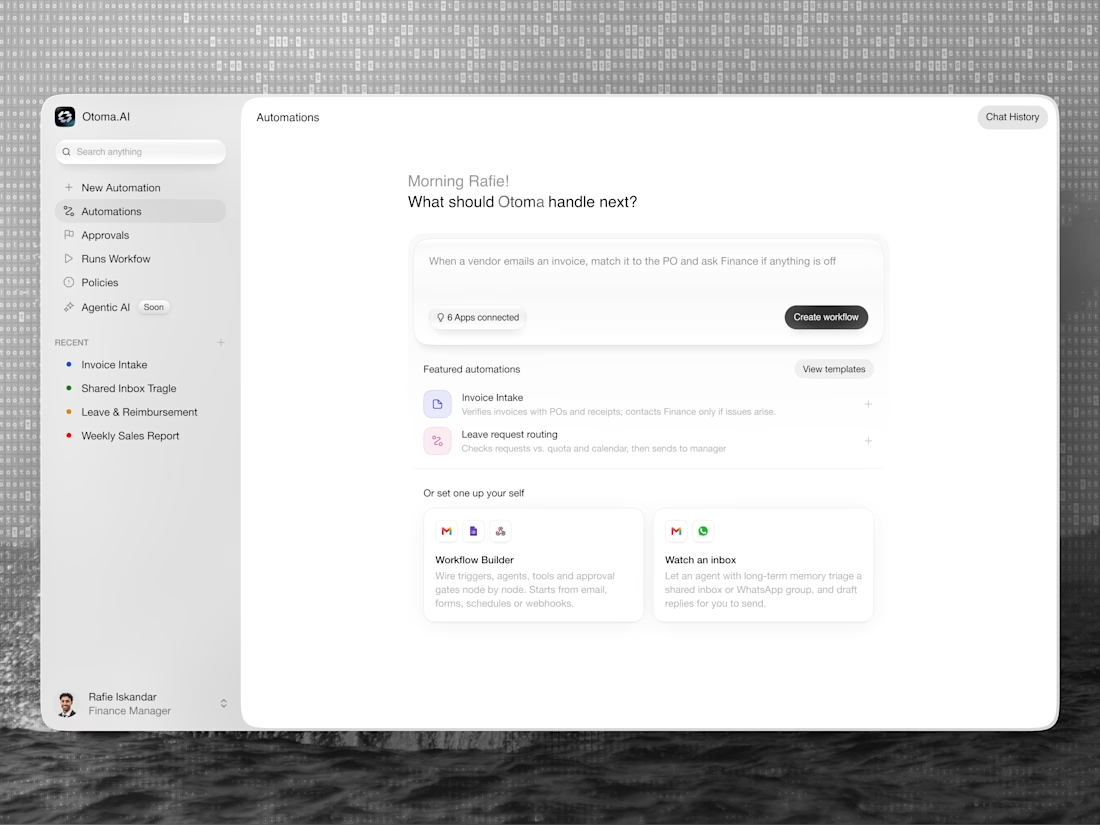
Otoma. AI — AI-Powered Workflow Automation Design
A simpler way to build workflows.
Otoma. AI turns plain-language instructions into working automations, helping finance and operations teams handle repetitive tasks while staying in control.

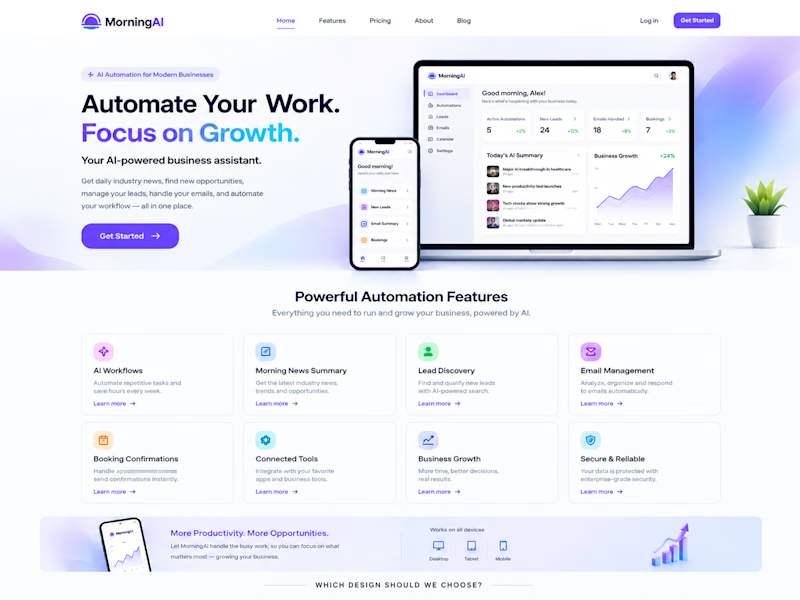
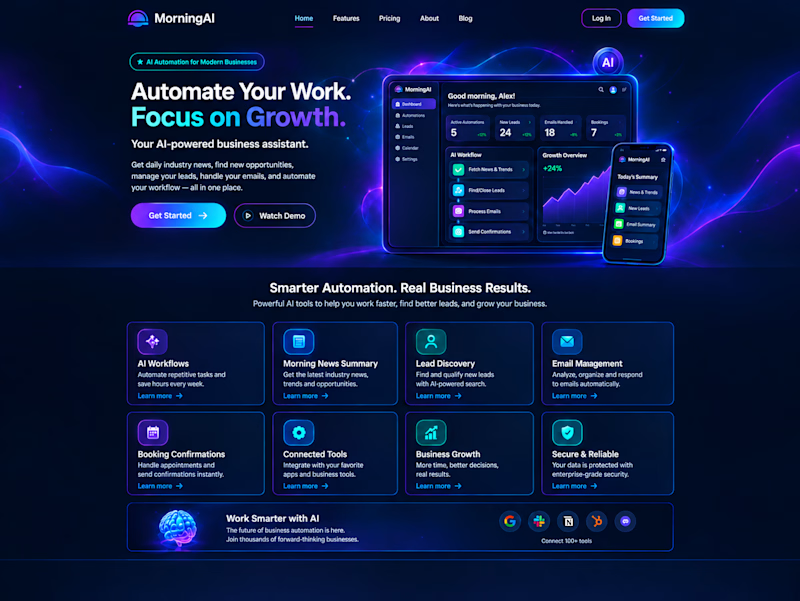
I'm building MorningAI — an AI automation platform designed to help businesses save time and work smarter.
I'm deciding on the website's visual direction, and I'd love your opinion!
🅰️ Design A: Light, clean & professional
🅱️ Design B: Dark, futuristic & premium
Which design should I choose for MorningAI — A or B?
Drop your choice in the comments! 👇
4 voted
57%
3 voted
43%
7 votes
Closed