The network for creativity
Join 1.25M professional creatives like you
Connect with clients, get discovered, and run your business 100% commission-free
Creatives on Contra have earned over $150M and we are just getting started
Back to feedPost

From 2.5 hours of research a week to 30 minutes of review.
Finding funding opportunities was a repetitive process: open a link, find the deadline and funding amount, check eligibility, and decide whether it was worth pursuing.
Around 5 minutes per opportunity. Across 30 opportunities a week, that adds up.
I automated the process using Make + OpenAI.
Here’s how it works:
Trigger: A user submits a link or screenshot.
Extract: The workflow fetches web pages and PDFs, or uses OCR for screenshots.
Process: Rules route each input to the right path.
Evaluate: OpenAI extracts key details and scores the opportunity against the user's profile.
Validate: Unreadable pages trigger a screenshot fallback. Invalid opportunities are rejected, and missing details are marked “not specified.”
The key design decision? Keep the AI in its lane.
Rules handle routing. AI handles extraction and fit scoring. Missing information stays missing instead of being guessed.
It’s not fully hands-off. Funding pages vary, and some results still need human review.
But the time spent went from roughly 2.5 hours to 30 minutes per week.
That’s what good automation should do: remove repetitive work without removing human judgment.
Want to see how the workflow is structured? Comment “wired” and I’ll share the workflow map.
#Automation #Make #OpenAI #LowCode

Love the decision to keep rules in control and use AI only where it adds value. Especially the part about not guessing missing information. That’s what makes automation reliable.
Exactly! The goal isn’t to make AI do everything, but to make the whole workflow more reliable.
The network for creativity
Join 1.25M professional creatives like you
Connect with clients, get discovered, and run your business 100% commission-free
Creatives on Contra have earned over $150M and we are just getting started



Related posts


TOP!!

Designed an AI research workspace where the agent plans the work and fills a sheet with cited sources as it goes.
Same screen, two modes. Which one would you work in all day? 👀


13 voted
72%
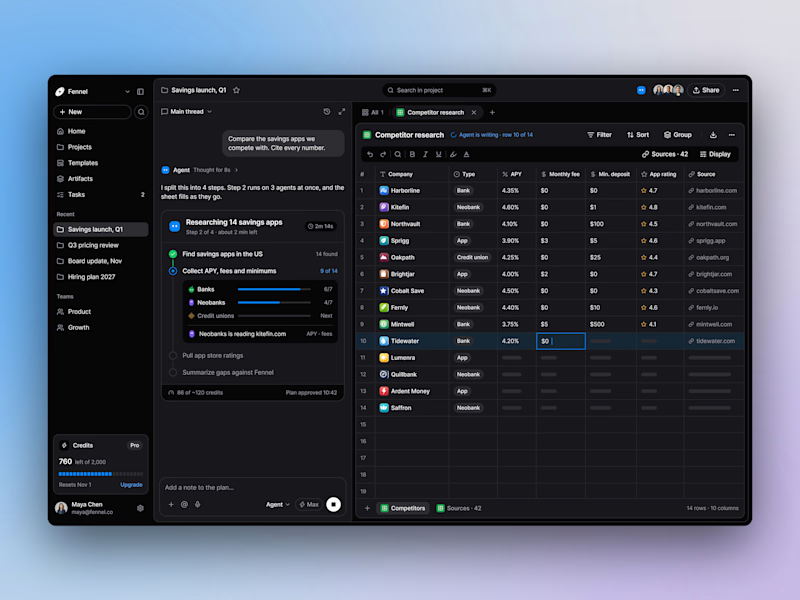
5 voted
28%
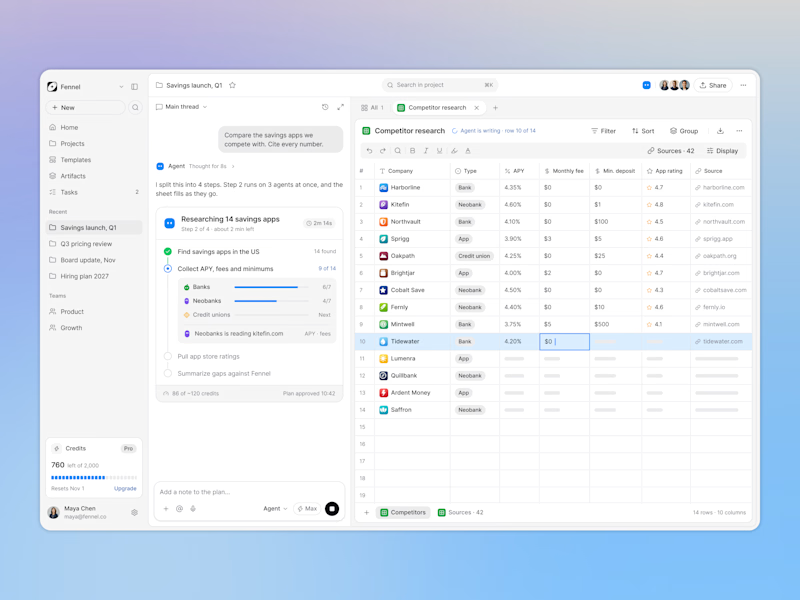
18 votes
Closed

Keeping the research plan and cited results side by side is a useful way to make the agent’s work easier to inspect. I’d lean toward light mode for reading the table in daylight. How do you distinguish a verified source from one that still needs review?

2nd variation of a landing page for a B2B search analytics platform
For this variation, I went with a lighter background where the CTA is visually focused instantly.
You might have 3~5 seconds to get the user's attention, so it's very important how the design looks and feels.
Full landing page coming tomorrow.

