The network for creativity
Join 1.25M professional creatives like you
Connect with clients, get discovered, and run your business 100% commission-free
Creatives on Contra have earned over $150M and we are just getting started
Back to feedPost

A founder told me last month: "I can't justify spending $20K on a website when I don't know the ROI."
I asked her how many deals she'd closed in the last year.
34. Average deal size: $8K
Every one of those prospects visited the website before signing.
The website didn't close those deals alone.
But it was in the room for every single one.
The ROI of a website is not really a campaign metric. It's the cost of not having one that works when everything else in your business depends on it.
The network for creativity
Join 1.25M professional creatives like you
Connect with clients, get discovered, and run your business 100% commission-free
Creatives on Contra have earned over $150M and we are just getting started

Challenges
View all


Related posts


Happy Monday!
A business can be doing great work behind the scenes and still struggle to communicate its value online.
Think about it.
You may have an excellent service.
You may deliver real results for your clients.
You may even get referrals from satisfied customers.
But when someone hears about your business and visits your website, can they see why you're worth considering?
Can they understand the value you offer without speaking to you first?
Can they find the information they need to feel confident about taking the next step?
Your website is an opportunity to communicate your business's value, even when you're busy doing the actual work.
It shouldn't just tell people that your business exists.
It should help them understand why your business matters.
As we begin a new week, take a moment to look at your website from the perspective of someone who has never worked with you before.
Does it communicate the value you bring, or does it leave visitors to figure it out themselves?
What is the one thing you want a potential customer to understand about your business within the first few seconds of visiting your website?
I am Michael Adetayo, a Kajabi Expert and course creator who helps startups, organizations, and service-based businesses build and strengthen their online presence through website design, redesign, development, and optimization.
I create clear, responsive, and user-friendly websites that communicate what a business does, build credibility, improve the user experience, and guide visitors to take action. My goal is to help businesses turn their websites into valuable tools that support growth.

Your customer owes you $20K. Is that really an asset? 🤔
Yes… but only for what you can realistically collect.
An unpaid invoice sits on your balance sheet as Accounts Receivable. But if it’s 90+ days late and you only expect to collect 60%, the honest number is $12K, not $20K. 💸
📌 Book the sale: profit goes up, cash doesn’t
📌 Estimate the risk with an allowance for doubtful debts (IFRS 9 expected credit loss)
📌 Show net receivables, not wishful thinking
Profit ≠ Cash. A business can look profitable and still run out of money.
Anything above what you expect to collect is a hope, not an asset.
👉 Follow for Episode 5: Revenue went up 40%—but your profit went down. Why?

A compelling value proposition can make users want to know more about your product.
Let's take a look at these two examples.
"We help you manage your finances."
"Know where your money goes and take control of your spending."
Which one grabs your attention more?
The second one works better because it focuses on what the customer actually cares about, not just what the product does.
Here are some questions every value proposition should answer:
Why should customers choose you over your competitors?
What makes your product different?
How does it solve your customers' problems?
You can only answer these questions by understanding your customers' pain points and thinking from their perspective.
If you don't understand your customers, no amount of design or advertising will help you build lasting customer relationships.
Instead of constantly adding more features, startups should focus on what makes their product different.
And communicate that value clearly through their landing pages.

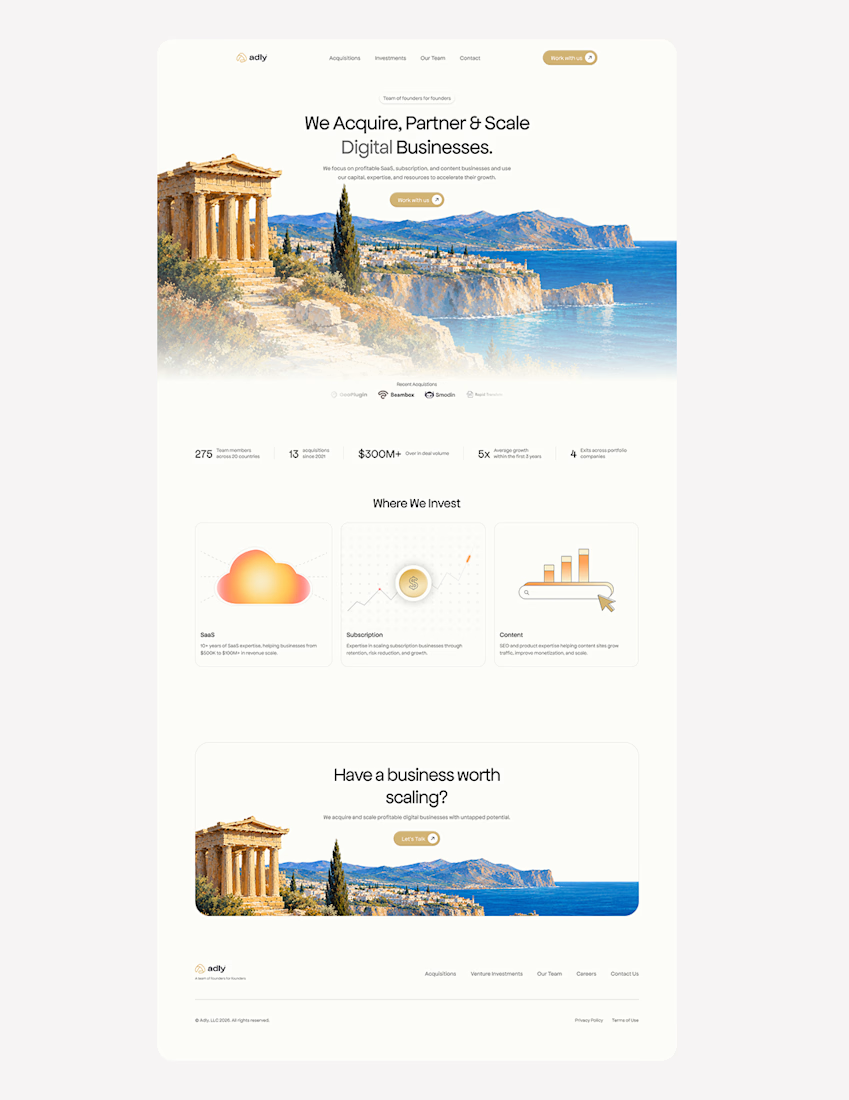
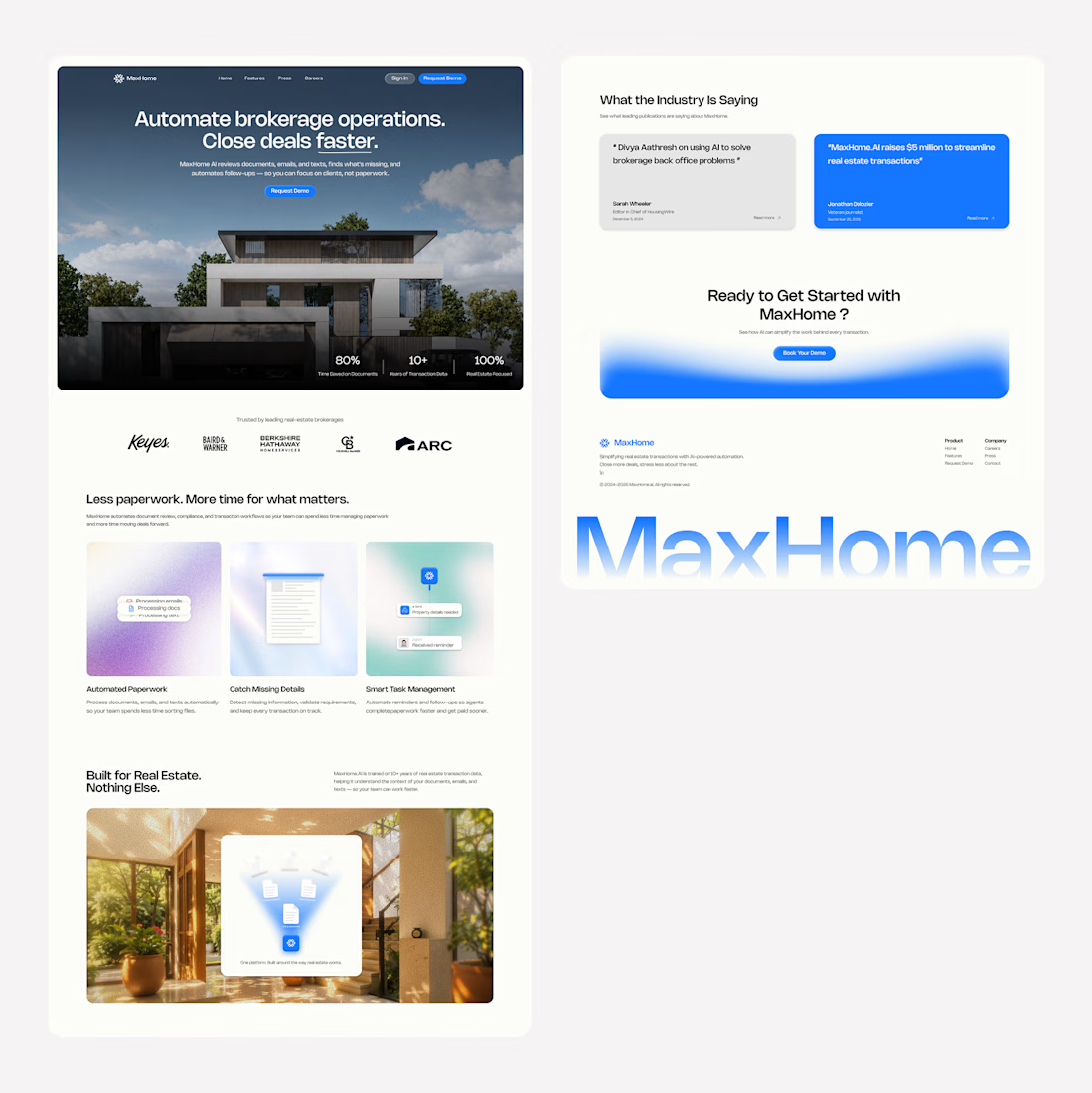
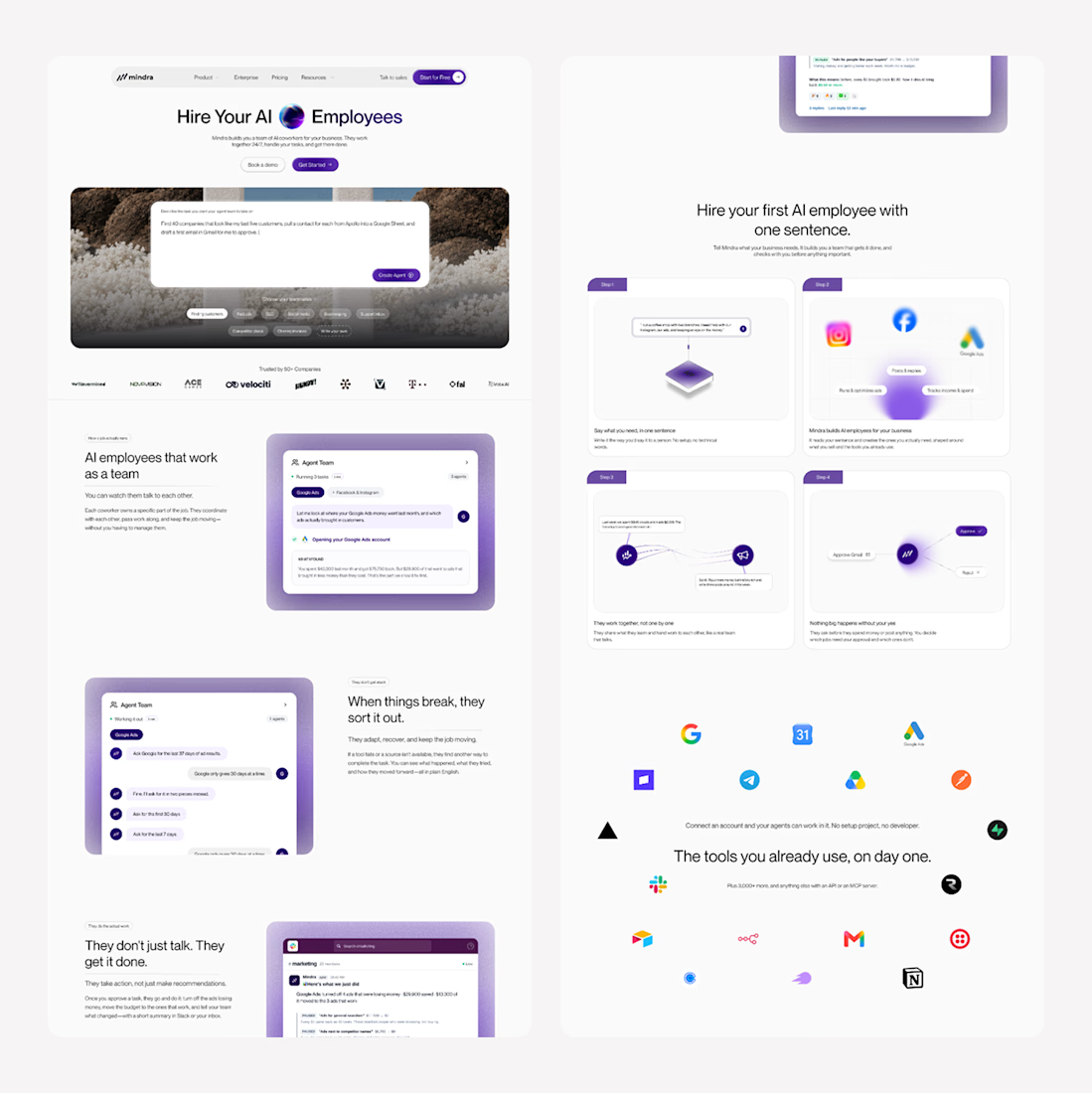

Brilliant execution!