The network for creativity
Join 1.25M professional creatives like you
Connect with clients, get discovered, and run your business 100% commission-free
Creatives on Contra have earned over $150M and we are just getting started
Back to feedPost

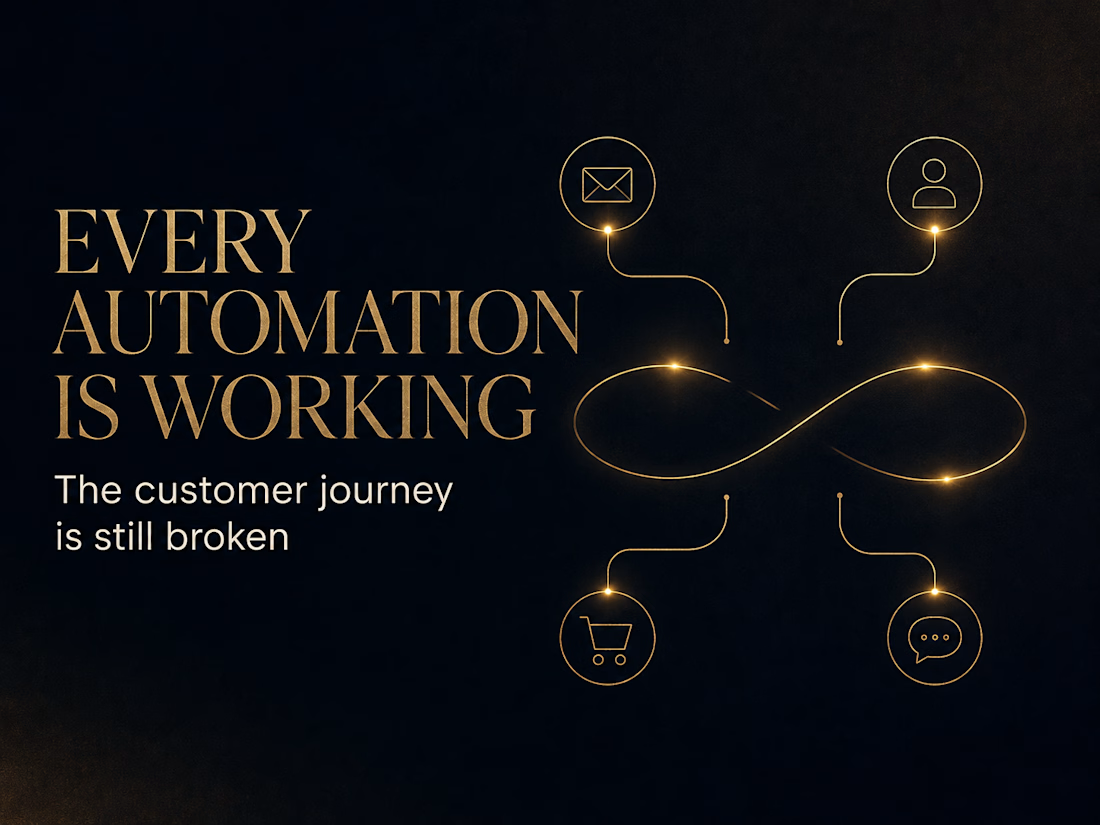
Every Automation Is Working — and the Customer Journey Is Still Broken
A welcome flow is converting. Abandoned cart emails are generating revenue. Post-purchase messages are delivered on time, and reactivation campaigns continue to bring customers back.
The dashboard suggests that the system is working.
The customer may experience something very different.
They might receive a welcome email after already placing an order, a cart reminder for a product they no longer need, and a promotional campaign that ignores their recent purchase.
Each message is technically correct according to the automation that sent it. Together, they create a disconnected customer journey.
This is one of the most common problems I find in established lifecycle programs: individual flows have been optimized, but the relationships between them have not.
A collection of flows is not a lifecycle system
Automation programs usually grow incrementally. A brand adds welcome, abandoned cart, browse abandonment, post-purchase, cross-sell, review request, and win-back flows as new needs appear.
Each flow may have a valid trigger and produce measurable results. But customers do not experience these automations separately. They experience every email, promotion, and reminder as communication from one brand.
The platform sees a subscriber entering several eligible flows.
The subscriber sees a brand sending several messages that appear unaware of one another.
The missing layer is coordination
A coordinated lifecycle system needs rules that determine which customer state takes priority and how communication should change when that state changes.
For example:
What happens to the welcome journey after a purchase?
Should a recent customer receive the standard promotional cadence?
Can someone enter browse abandonment while already in abandoned checkout?
Which messages should be suppressed when several automations become eligible?
These decisions do not belong to one flow. They belong to the architecture connecting all flows.
When performance slows, adding another automation is not always the answer. Sometimes the system needs clearer entry and exit conditions, better suppression rules, and a shared understanding of the customer’s current state.
A healthy lifecycle program should not feel like independent campaigns triggered by database events. It should feel like one brand responding coherently as the customer relationship changes.
This is the perspective I bring to lifecycle marketing audits: identifying the gaps between otherwise functional automations and turning them into a coordinated customer journey.
The network for creativity
Join 1.25M professional creatives like you
Connect with clients, get discovered, and run your business 100% commission-free
Creatives on Contra have earned over $150M and we are just getting started








Related posts

Sending the same email to everyone isn't always the best approach.
People can be at very different stages of the customer journey.
For example:
→ New subscribers may need a welcome email
→ Interested prospects may need more education
→ Existing customers may need follow ups
→ Inactive customers may need re-engagement
→ Recent buyers may need helpful post purchase content
That's where email segmentation becomes useful.
Instead of sending one message to everyone, you can make the message more relevant to each audience.
Better segmentation can lead to better communication.
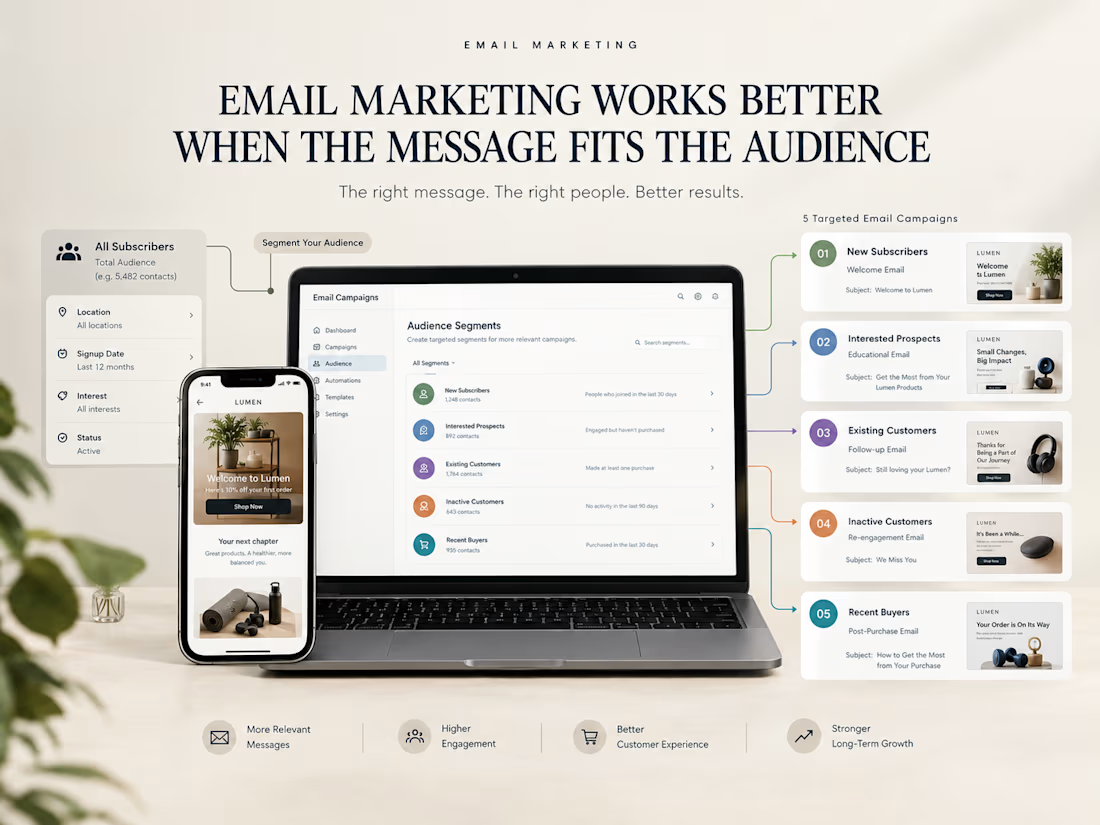

Exactly. Segmentation helps turn one generic message into more relevant communication for each audience.

Lead Conversion & Engagement System for Real Estate (GoHighLevel)
I built an automated follow-up workflow inside GoHighLevel for a real estate open house, designed to turn attendees into engaged leads without any manual follow-up.
THE PROBLEM
Open house attendees often show interest in the moment, then go quiet. Without fast, consistent follow-up, agents lose touch with warm leads who were ready to engage.
WHAT I BUILT
A dual trigger setup: the workflow starts when a contact is created OR tagged "open-house-attendee," so no lead slips through either entry point
A 1-hour wait before the first message, so it feels timely but not pushy
An automatic welcome SMS introducing the agent and thanking them for attending
A 1-day wait, followed by a Property Highlights Email showcasing the listing's key features
A further 3-day wait, followed by a final follow-up SMS to re-engage the lead
Clean, labeled steps built in GoHighLevel's Advanced Builder for easy editing later
WHAT THIS WORKFLOW DELIVERS
Instant acknowledgment for every open house attendee
A multi-channel touchpoint sequence (SMS and email) that keeps the property top of mind
Properly spaced timing, so leads get timely contact without feeling spammed
Zero manual follow-up needed from the agent
TOOLS USED
GoHighLevel, Workflow Automation, SMS, Email Automation, Contact Tagging
RESULT
A fully automated nurture sequence that keeps open house leads engaged for days after the event, increasing the chances they reach out or book a showing.

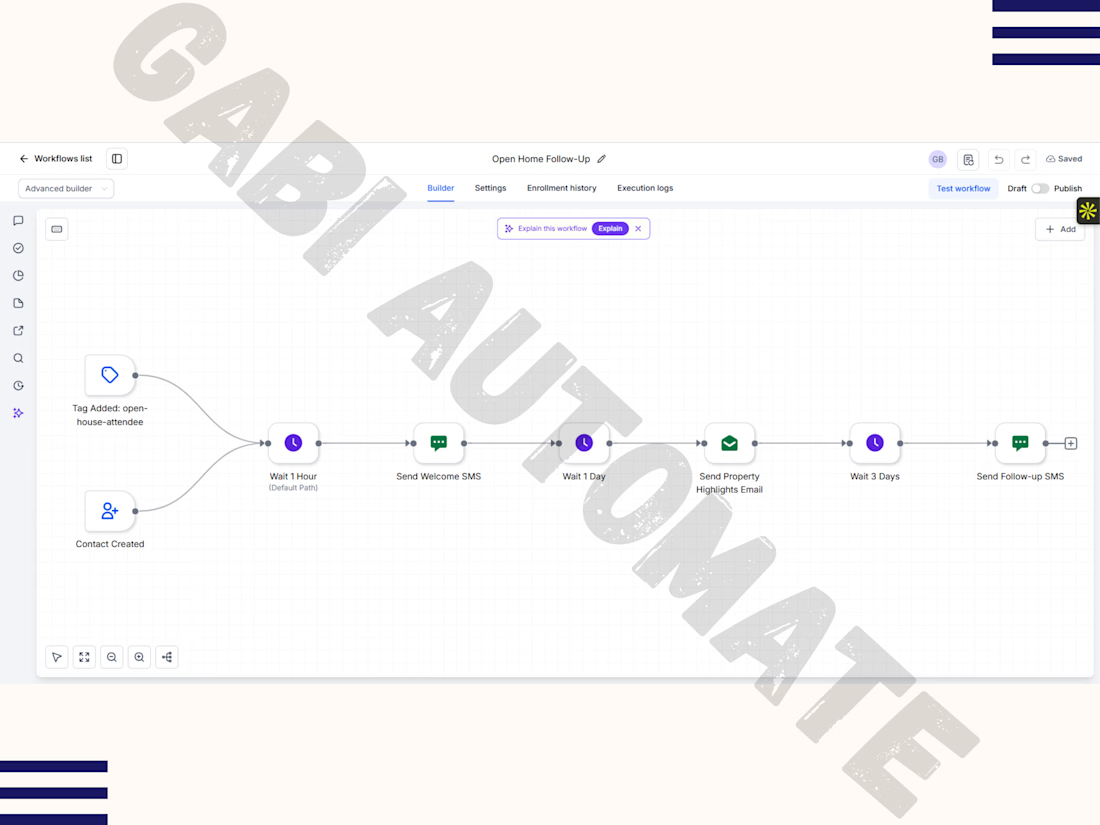

I'd recheck the contact's status before the final follow-up SMS. Does a reply or booked showing take them out of the nurture sequence immediately, including messages already waiting to send?

EMAIL 1 — The problem
Subject: Your business might not have a visibility problem
You’re posting.
You’re showing up.
You’re talking about what you do.
But somehow, people still don’t seem to understand why they should choose you.
That can feel like a visibility problem.
Sometimes, it isn’t.
Sometimes, the real problem is that your message isn’t making the value of your business clear enough.
When someone lands on your website or sees your content, they should be able to quickly understand:
What do you help with?
Who is it for?
And why should they care?
If those answers aren’t clear, posting more won’t necessarily fix the problem.
The message comes first.
Tomorrow, I’ll show you one simple way to check whether your current messaging is doing its job.
[Brand Strategist]
EMAIL 2 — The insight
Subject: Try this before creating another post
Open your website.
Now imagine you’ve never heard of your business before.
Give yourself 10 seconds.
Can you answer these three questions?
What does this business help me do?
Is this actually for someone like me?
Why should I trust them?
If you have to search for the answers, your potential customer probably has to as well.
And when people have to work too hard to understand an offer, they often leave.
Your copy doesn’t need to say everything.
It needs to make the right things clear.
That’s where strong positioning and messaging can change the way people experience your business.
If your message feels harder to explain than your service should be, that’s worth looking at.
[Brand Strategist]
EMAIL 3 — The next step
Subject: Your offer shouldn’t need a decoder
You already know how good your service is.
The challenge is making a stranger understand that quickly.
If your website, content, or offer currently feels like it’s saying a lot without making the main value obvious, it may be time to simplify.
Not by making your business smaller.
By making the message clearer.
If you’d like help figuring out where your messaging is losing clarity, book a consultation here — [CTA]
No complicated pitch.
Just a conversation about what’s working, what’s unclear, and what could be stronger.
[Brand Strategist]
Project description
Brief:
Create a 3 email nurture sequence for a fictional brand strategist whose prospects have shown interest but haven’t taken the next step.
Approach:
The sequence moves from identifying a messaging problem, to providing a useful insight, to presenting a low pressure next step. The copy focuses on clarity and relevance rather than aggressive selling.
Skills demonstrated:
Email copywriting, persuasive writing, audience awareness, nurture strategy, CTA writing.
Project note:
This is a speculative practice project created to demonstrate my email copywriting and strategic thinking. No client performance results are being claimed.

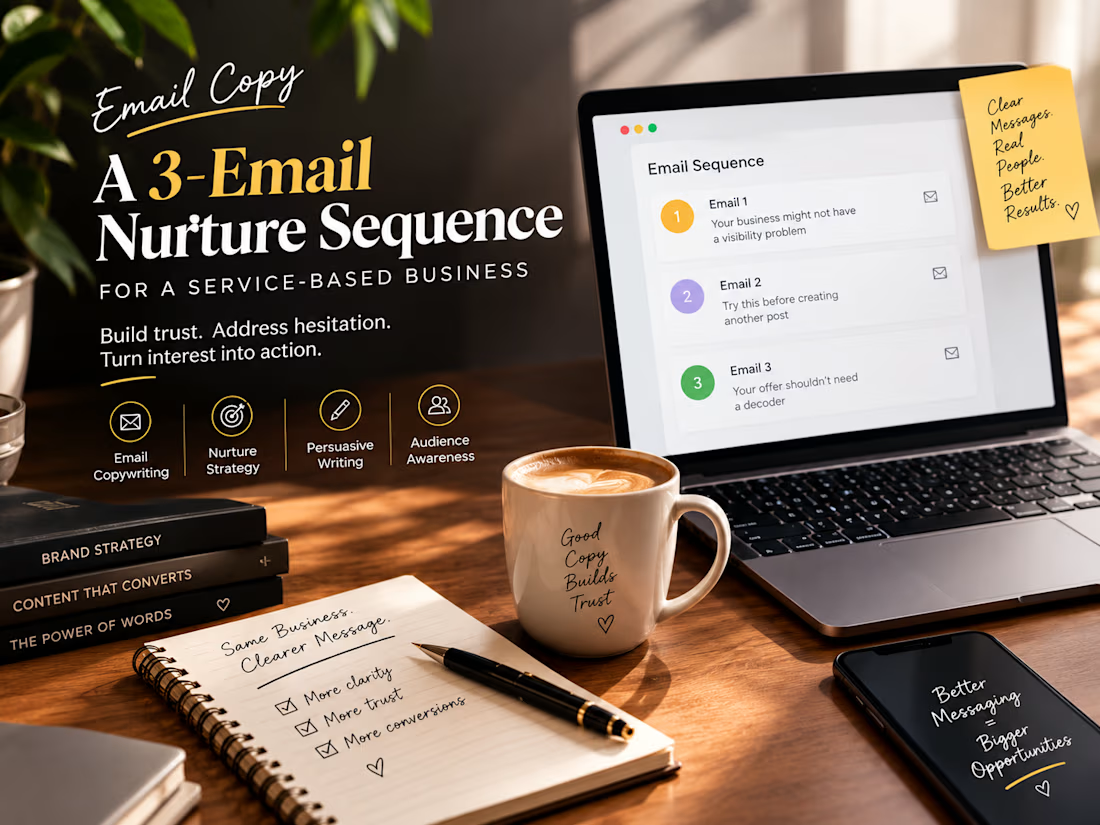
Great nurture sequence. Each email builds trust naturally and makes the next step feel easy.