The network for creativity
Join 1.25M professional creatives like you
Connect with clients, get discovered, and run your business 100% commission-free
Creatives on Contra have earned over $150M and we are just getting started
Back to feedPost

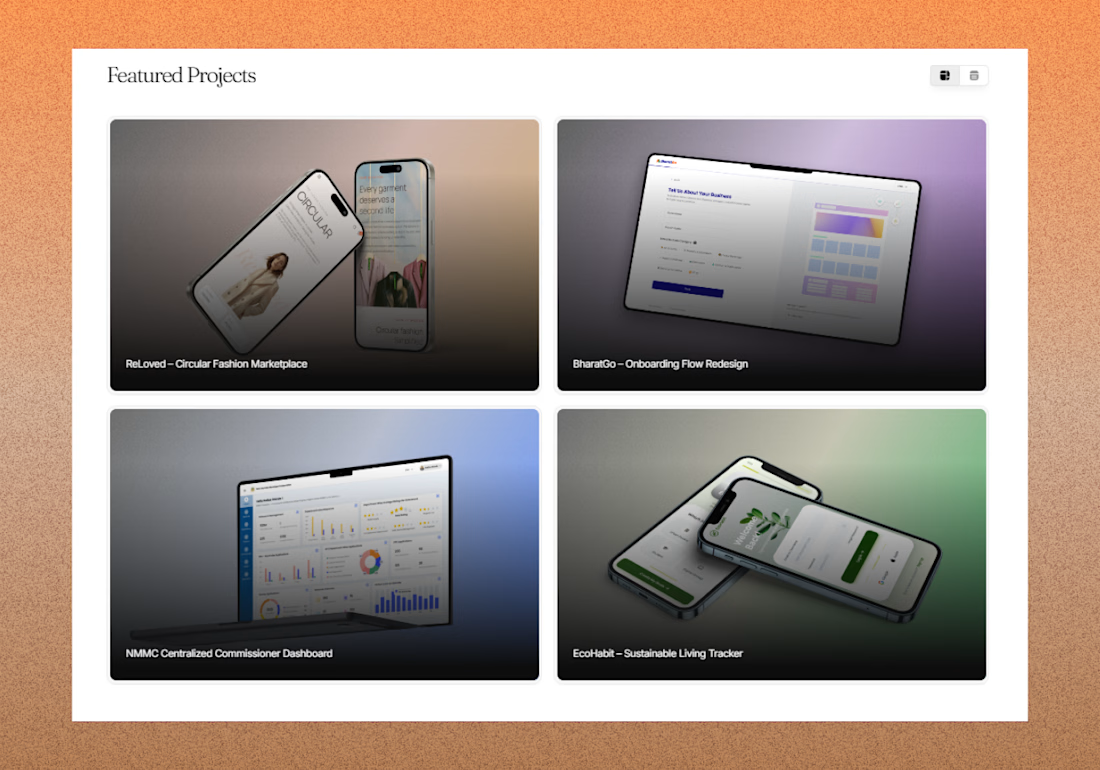
Personal Portfolio Website — Designed & Built End-to-End in Framer. Designed and developed my own portfolio site entirely in Framer — from layout and typography decisions in Figma through to a fully responsive, live published site with smooth page transitions and CMS-ready structure. Built to demonstrate end-to-end Framer capability: design thinking, component structure, responsive execution, and clean visual hierarchy.


The network for creativity
Join 1.25M professional creatives like you
Connect with clients, get discovered, and run your business 100% commission-free
Creatives on Contra have earned over $150M and we are just getting started

Challenges
View all


Related posts

Designed a dashboard concept for tracking net worth across every asset type — stocks, crypto, property, pensions, funds, cash, and liabilities — all in one place.
Instead of the usual pie chart or bar graph, the centerpiece is a dial: a single, glanceable gauge showing where your wealth actually sits. Behind it, a quiet grid of every asset category fades in and out of visibility, reinforcing that everything's accounted for even when it's not the focus.
Dark UI, a single confident green accent, and a lot of negative space — built to make a genuinely overwhelming task (seeing your entire financial picture at once) feel calm instead of cluttered.


wow the animation feels super smooth, what is this animation for?

Building Reverie — a luxury Framer template + AI automation system for high-end event planners 🥂
I’m experimenting with something I don’t see enough in website projects: combining the website with the workflow behind it.
Event planners can receive inquiries while they’re busy running an event, traveling, or working with clients. A beautiful website doesn’t solve much if those leads sit unanswered.
So I’m building Reverie around both sides:
🌿 The website
A high-fashion, editorial Framer 3.0 experience with warm cream tones, cinematic imagery, editorial typography, and interactive portfolio storytelling.
⚙️ The workflow
An n8n automation that can qualify incoming leads, generate AI responses, score leads in Airtable, and instantly notify the planner through Telegram.
The goal is simple: the website attracts the right inquiry, and the workflow makes sure it doesn’t get forgotten.
Here’s a walkthrough of the homepage design so far.
I’m curious about this approach: when you build a client website, do you think the workflow behind it should be part of the deliverable too?

The n8n workflow scoring and routing leads through Telegram is doing the actual retention work here - the editorial homepage gets someone to inquire, but it's the notification the moment they're free that gets the booking.


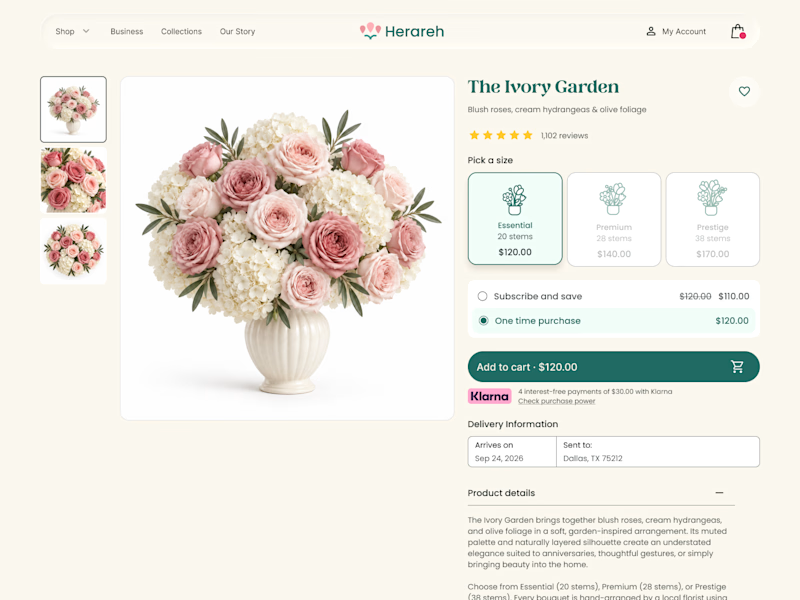
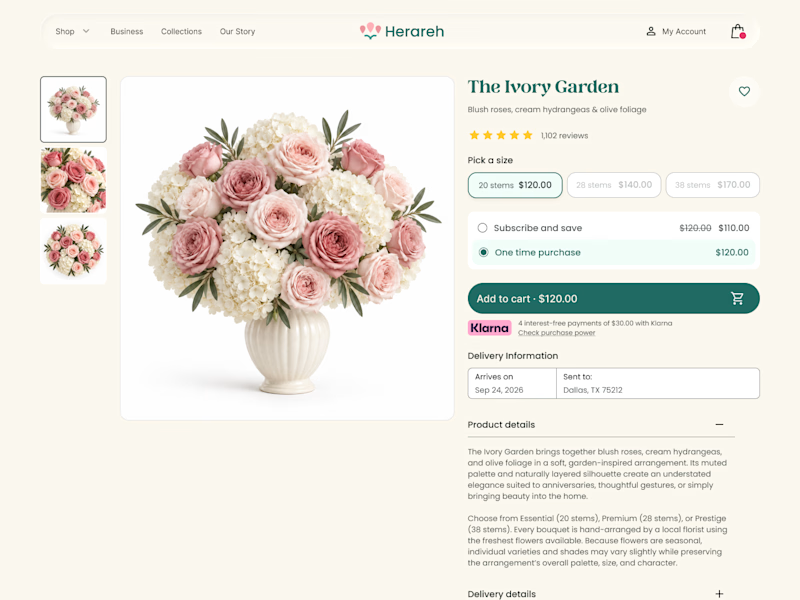

Icon cards for me, bouquets are such a visual purchase that a scannable icon beats reading "small/medium/large" every time. Did the compact chips version convert worse in testing, or are you still gathering data on that?