The network for creativity
Join 1.25M professional creatives like you
Connect with clients, get discovered, and run your business 100% commission-free
Creatives on Contra have earned over $150M and we are just getting started
Back to feedPost

The Invisible Hand in the Room: Power, Trust, and Clarity in Corporate Negotiation
In corporate life, negotiations are rarely about what is said openly. They are shaped quietly,by influence, by structure, and by the unseen currents of incentive that move beneath the surface. The most costly mistake professionals make is not a lack of intelligence or preparation. It is walking into a room without understanding who truly controls it.
A negotiation does not begin when two parties sit across a table. It begins long before, when the environment is designed, when intermediaries are chosen, and when financial interests are aligned behind the scenes. By the time discussions start, the outcome may already be leaning in one direction. The unaware participant becomes reactive. The aware participant becomes strategic.
The Myth of Neutral Ground
Corporate culture often promotes the idea of neutrality, conference rooms, facilitators, advisors, all presented as impartial. But neutrality in business is rarely pure. Every room has a sponsor. Every mediator has a source of compensation. Every process carries the subtle fingerprint of those who funded it.
This does not mean distrust everyone. It means understand everyone.
A broker paid by the opposing side is not necessarily dishonest, but their incentives are not aligned with yours. A mediator may speak the language of fairness, yet operate within boundaries defined by those who empowered them. When money enters the equation, influence follows closely behind.
Clarity about incentives is not cynicism. It is professional maturity.
Control of the Room vs Control of the Outcome
There is truth in the idea that the person who controls the room holds power. Environment shapes psychology. Seating arrangements, timing, agenda flow, even the tone of conversation, these influence decisions more than most realize.
But control of the room is not the same as control of the outcome.
Real power lies in preparation. It lies in knowing your alternatives, understanding your walk-away point, and carrying the quiet confidence that you are not dependent on a single outcome. When you possess options, the room loses its grip over you.
A well prepared mind can neutralize an unfavorable environment. A poorly prepared one will lose even in a favorable setting.
Corporate Culture and the Illusion of Alignment
Modern organizations often speak of collaboration, partnership, and alignment. These are valuable ideals, but they can also create a false sense of security. In many corporate negotiations, whether internal promotions, vendor contracts, or strategic partnerships, interests are only partially aligned.
Departments compete for resources. Vendors seek maximum margins. Executives balance performance metrics against long term stability. Beneath polite conversation, each party is protecting something.
Understanding this does not damage relationships. It strengthens them.
When you recognize that others are driven by their own pressures and incentives, you stop taking positions personally. You begin to engage with clarity instead of emotion. You negotiate the reality, not the illusion.
Reconciling Relationships Without Losing Position
There is a delicate balance between protecting your interests and preserving relationships. Many professionals fear that being too firm may harm long term trust. Others become overly aggressive and damage goodwill that could have created future value.
The answer lies in disciplined transparency.
Be clear about your position without being confrontational. Ask direct questions about structure and incentives without accusation. Seek alignment where it exists, and respectfully acknowledge where it does not.
Strong relationships are not built on blind trust. They are built on mutual understanding.
When both sides know the boundaries, respect increases. When intentions are clear, cooperation becomes genuine rather than forced.
The Discipline of Entering the Room
Before stepping into any negotiation, a few questions define your strength:
Who designed this environment, and why?
Who is compensating the intermediaries involved?
What pressures is the other side facing?
What alternatives do I have if this fails?
These questions shift you from participant to strategist.
If you can influence the room, do so, shape the agenda, redefine the setting, bring your own data, your own narrative, your own pace.
If you cannot, then strengthen yourself instead. Preparation becomes your leverage. Silence becomes your control. Clarity becomes your advantage.
A Principle for Professionals
Never enter a negotiation without understanding who controls the environment, who pays the intermediaries, and where the real incentives lie.
Influence the room if you can.
If you cannot, strengthen your position through preparation, alternatives, and clarity of intent.
Because in the end, negotiations are not won by dominance of space, but by mastery of awareness.
zocomputerchallengenegotiationstrategycorporateleadershipCaption WritingPixel ArtCapCutGrammarlyPixAI


Your writing concept are outclass and very interesting👏👏👍👍👏👏

I love how smooth this is! You did an amazing job

Mind blowing Video and concept:))))💯 :👍 🔥
The network for creativity
Join 1.25M professional creatives like you
Connect with clients, get discovered, and run your business 100% commission-free
Creatives on Contra have earned over $150M and we are just getting started
Trending
retrofuturism
Share your favorite designs from the past exploring the distant future. Or your own take on the aesthetic 🚀
halftone
Dots. Texture. Grain. Let's see your designs using the halftone technique.

Midjourney
Creatives are showing off what they're making with Midjourney.
colorgrade
Video editors sound off: How do you enhance the mood of your video in color grading?





Related posts

Team collaboration: Mobile app interface, Illustrations
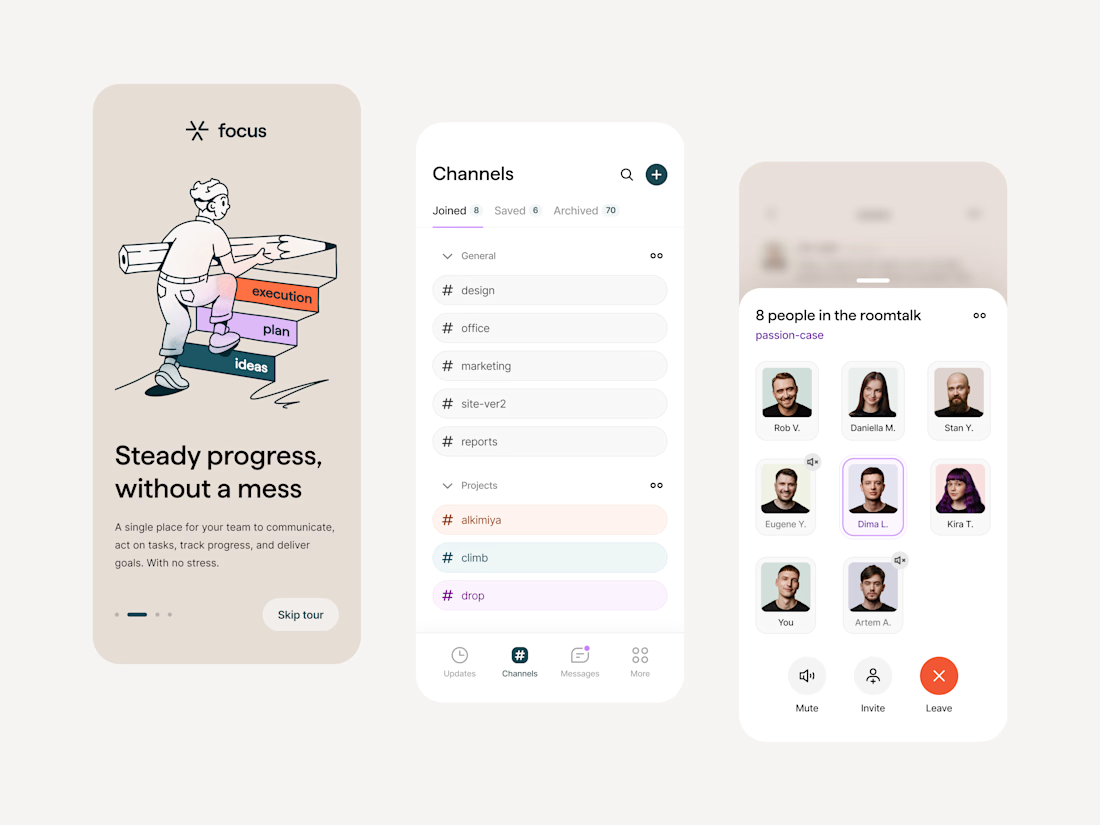
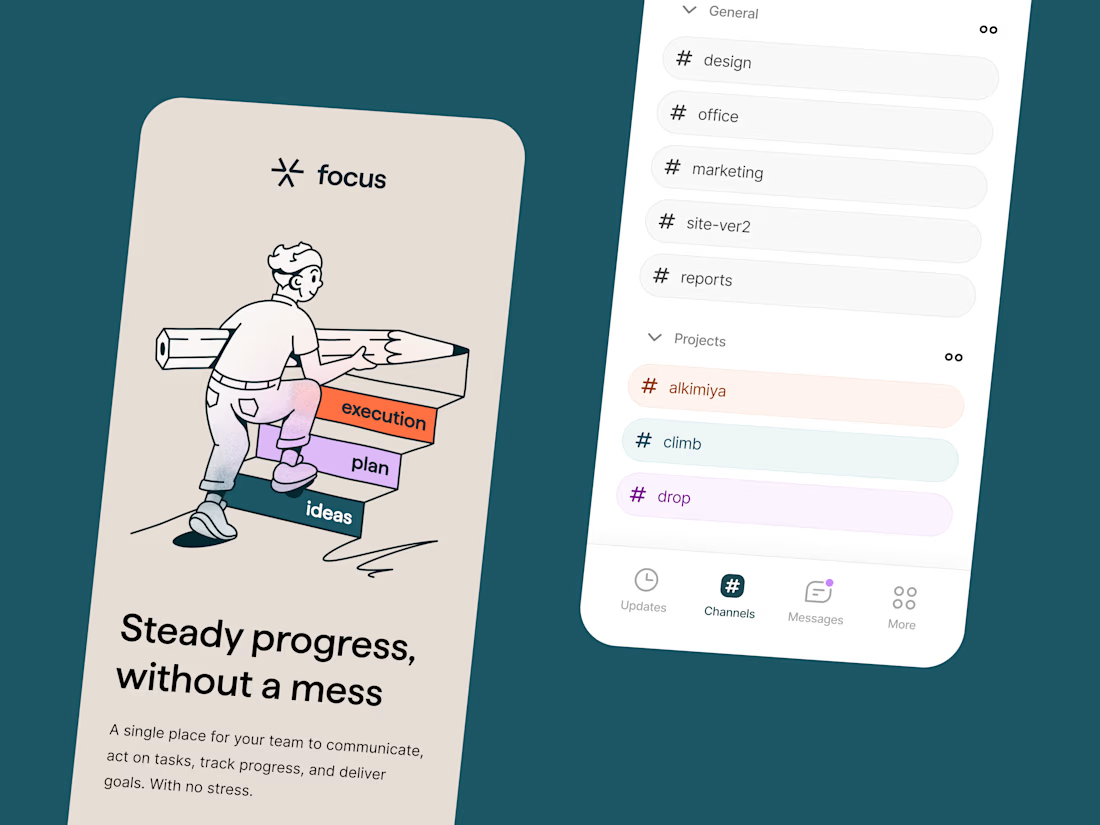
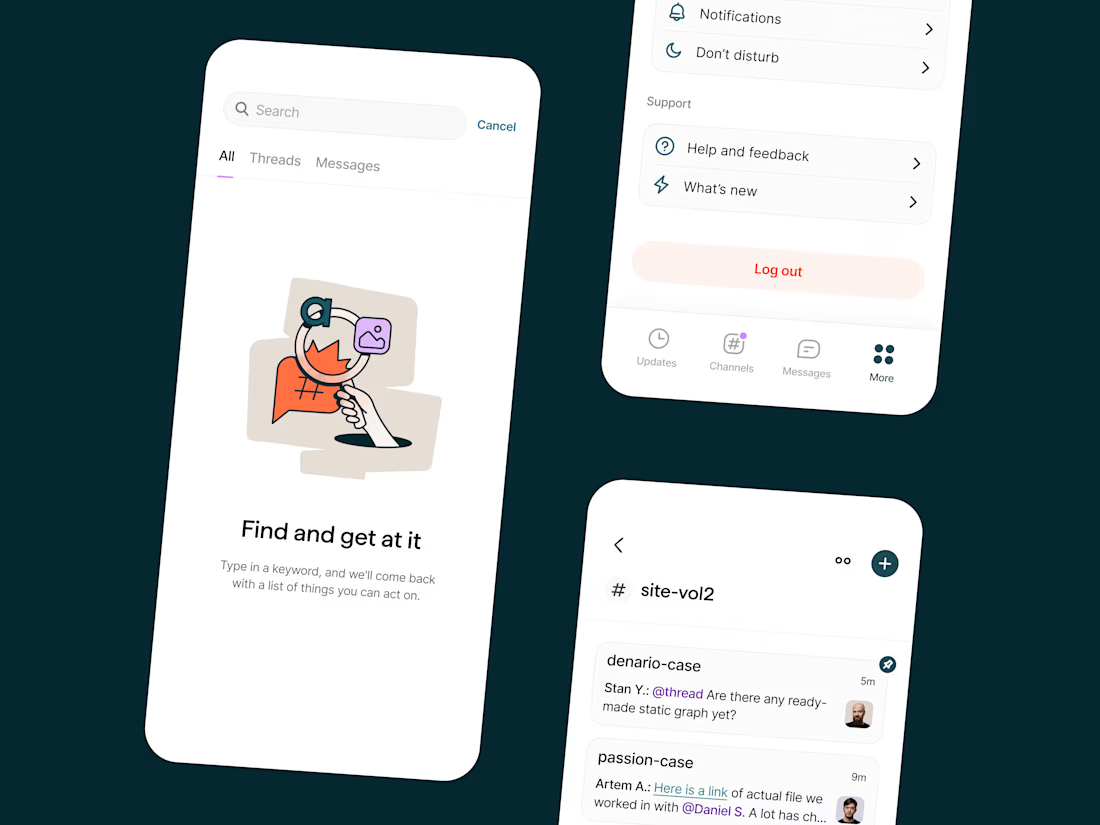
A mobile app design exploration for team communication, built around one problem: threads bury important info, and people end up pinging each other just hoping for a reply, with no clarity on what actually needs attention. I solved it by sorting threads by priority and progress, so the screen only shows what matters right now. I also made the illustrations friendly on purpose, since async communication already feels distant enough without a cold interface making it worse.



Love the illustrations!


What actually creates activation in a focus product?
🛡️ A - Protection-first
The user immediately sees what the system will remove from their path: notifications, Slack, calendar conflicts & other likely interruptions
⚡ B -Preparation-first
The product first creates a sense of readiness for deep work: conditions are set, the focus window is clear, & the goal is defined
I’m less interested in which screen looks better
The real question is:
At what point does the user think, “Okay, this product can actually help me do better work”?
What creates a stronger activation moment — and potentially stronger retention?
🛡️A or⚡B
And one level deeper:
Should a productivity product sell users control over distractions, or confidence that they are entering the right conditions to do meaningful work?
23 voted
53%

20 voted
47%

43 votes
Closed

My gut says B wins on activation but A wins on retention. Protection feels urgent right in the moment, preparation is what actually makes someone open the app again tomorrow. Curious if your testing points the other way.
Web3 platform: Web design, Branding, Illustrations
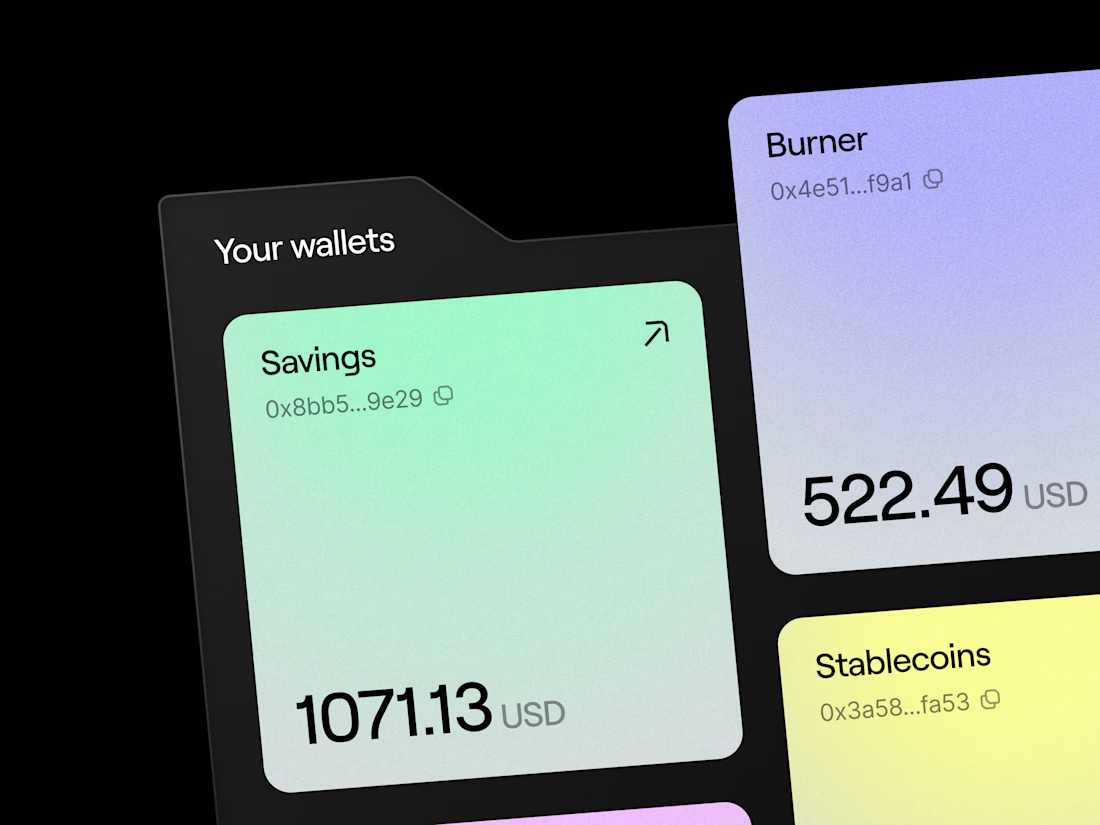
A messenger, a browser, and a wallet, built around one idea: that people should own their conversations and their data. The visuals reflect that split, where clean digital color for the system, and hand-drawn touches for the human note passed between two people, still the most private way to say something that matters.