The network for creativity
Join 1.25M professional creatives like you
Connect with clients, get discovered, and run your business 100% commission-free
Creatives on Contra have earned over $150M and we are just getting started
Back to feedPost

The network for creativity
Join 1.25M professional creatives like you
Connect with clients, get discovered, and run your business 100% commission-free
Creatives on Contra have earned over $150M and we are just getting started


Related posts


A premium website isn’t about adding more.
It’s about knowing what to remove.
You can have the most expensive fonts, beautiful photography and a carefully chosen color palette and still end up with a website that feels… ordinary.
So what actually makes a website feel premium?
1. Less noise
2. Strong typography
3. Intentional hierarchy
4. Details that don’t ask for attention
5. Confidence
Premium websites don’t try to prove they’re premium. They simply look like they know exactly what they’re doing.
The goal isn’t to make a website look expensive. It’s to make it feel intentional.
Both versions of the Hero section are created for a premium website. Which one do you like better?


26 votes
Ends in 1d

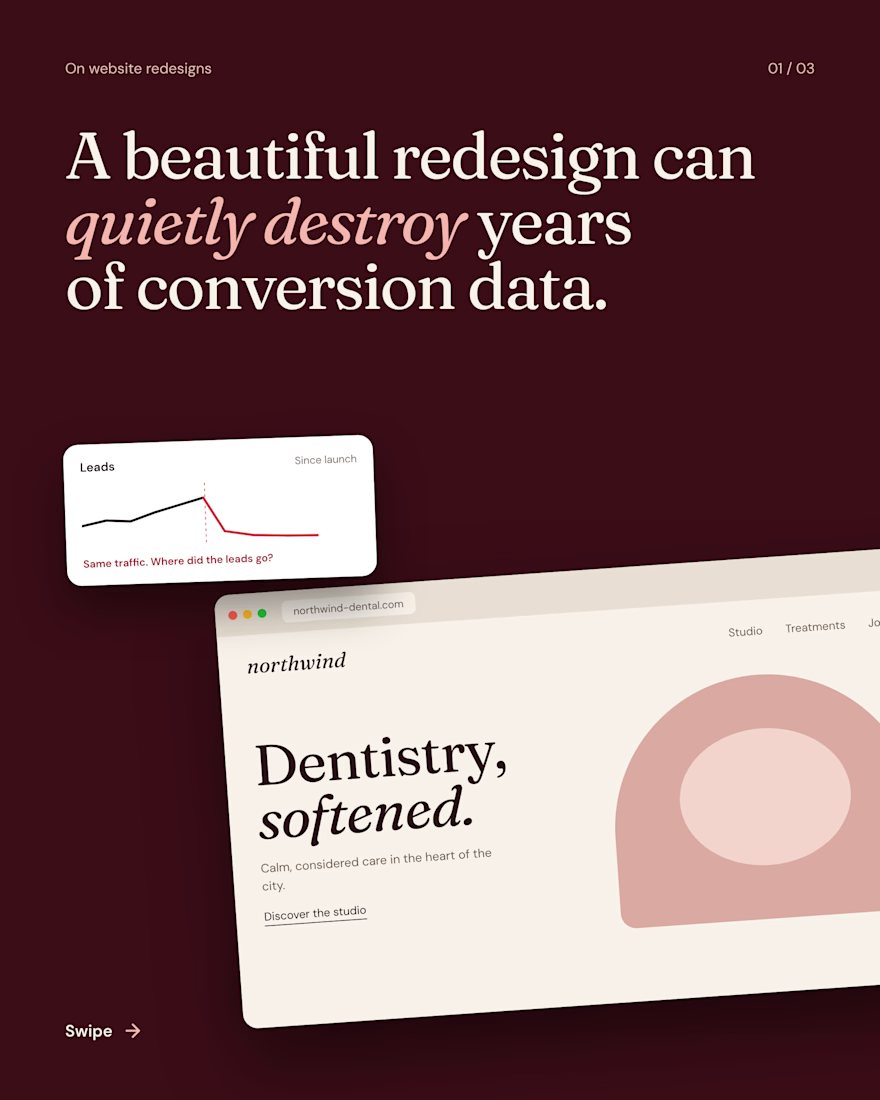
A beautiful redesign can quietly destroy years of conversion data.
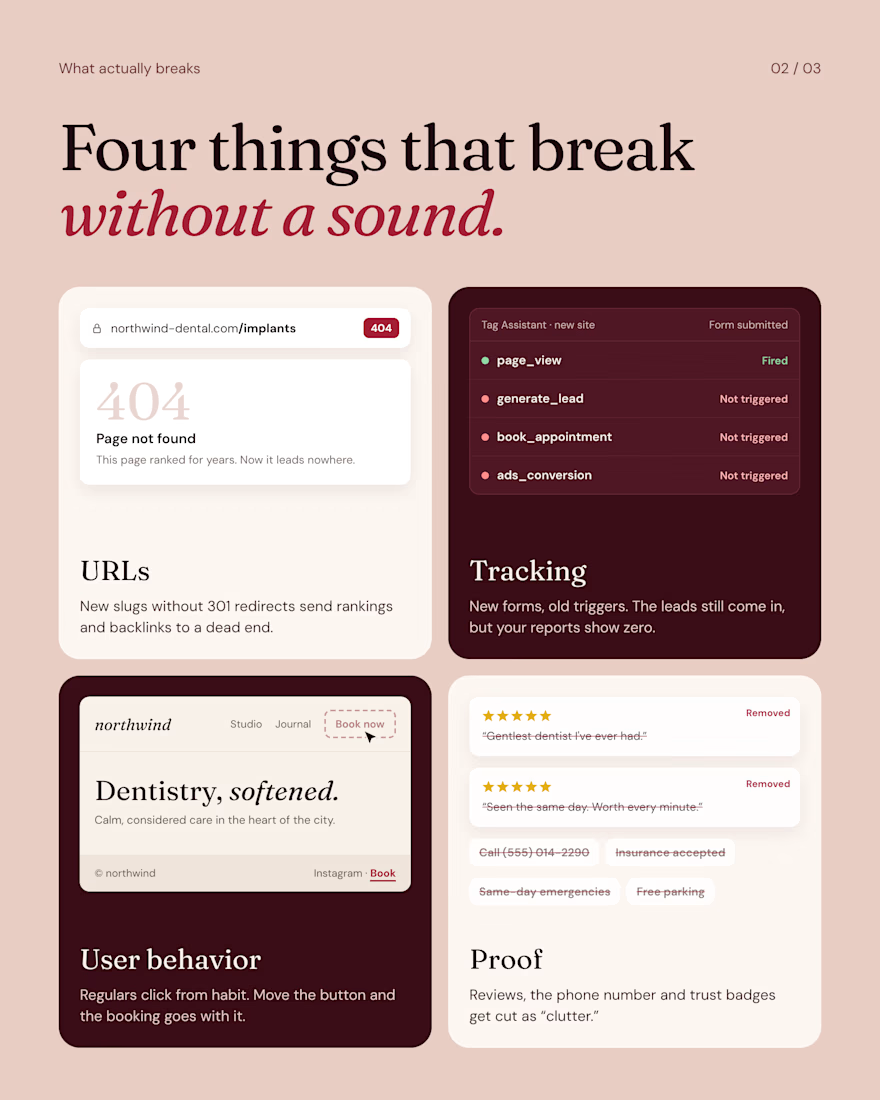
The new site launches, traffic holds, and leads seem to disappear. Usually nothing changed with demand. Four things broke without a sound:
URLs changed with no redirects.
Lead events stopped firing on the new forms.
The booking button moved where regulars never look.
Reviews and the phone number were cut as clutter.
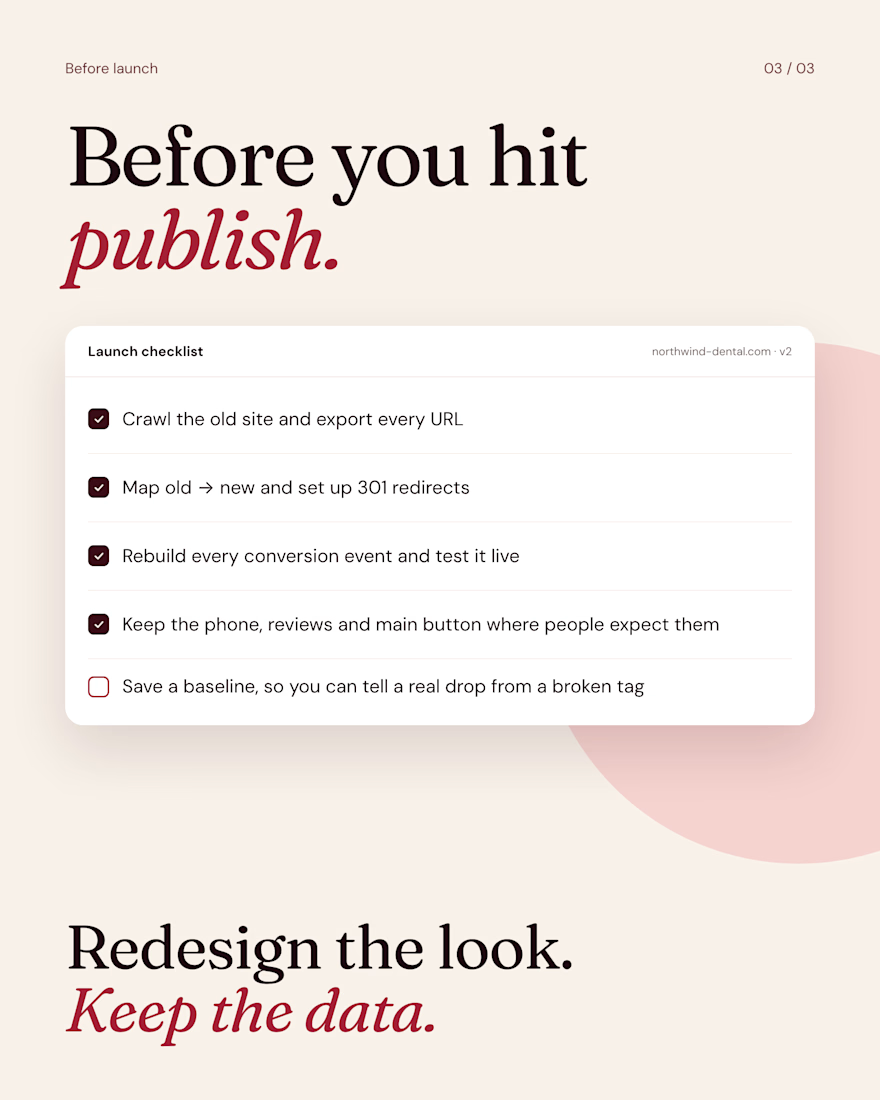
Before you hit publish, map every URL, test every event, and keep what was converting.


Lead events going silent is the one that hurts longest, because the site still looks fine. The same thing happens on the email side when a new form isn't connected to the list: signups drop to zero and nobody notices until a campaign goes out to fewer people. One test submission before launch catches both.

Don't Be Funny in Your Copy
While in his Scientific Advertising Hopkins demands us never to be funny in our advertising efforts, many copywriters have embraced humor as a way to stand out, attract more attention, and make more sales.
Although being funny is not always a bad strategy in your copy, I'm here to tell you that you should never be funny.
And I'm not saying this because I'm a grumpy guy, but for two important reasons why it is better long-term to be sober, focused, and factual in your copywriting efforts.
You Don't Know Each and Every Prospect of Your Copy
That means that you don't know how each and every individual will react to your humor.
Humor is something personal & subjective. While some--if not most of them--of your readers will enjoy a laugh and maybe even be persuaded to make a purchase by your humor, others will get offended.
Not only will they not understand your humor, but they will also close the page, get offended, and even tell others not to buy from you.
Don't take the risk, even if these prospects are in the minority.
Slippery Slopes in Advertising
The second reason for you to stay away from humor has to do with the long-term tendency of becoming a copywriting clown. What do I mean by that?
You may end up in a slippery slope of jokes & humor. You may end up focusing on being funny & witty so much that you forget that you as a copywriter must inform & persuade potential clients.
You end up writing stuff to sound funny for the sake of being funny. That is a recipe for disaster.
Do you use humor in your copy? In that case, you should be careful when, why, and how you go about being funny.