The network for creativity
Join 1.25M professional creatives like you
Connect with clients, get discovered, and run your business 100% commission-free
Creatives on Contra have earned over $150M and we are just getting started
Back to feedPost

I recently launched a mobile app that allows new mothers be able to get their babies to sleep. I was watching some tiktok videos and saw the struggles and decided to make a solution for it.
Hush: Baby Sleep Coach: https://apps.apple.com/ng/app/hush-baby-sleep-coach/id6808129230
apps.apple.com
Hush: Baby Sleep Coach App - App Store
Download Hush: Baby Sleep Coach by Habib Adebisi on the App Store. See screenshots, ratings and reviews, user tips and more games like Hush: Baby Sleep Coach.
The network for creativity
Join 1.25M professional creatives like you
Connect with clients, get discovered, and run your business 100% commission-free
Creatives on Contra have earned over $150M and we are just getting started





Related posts

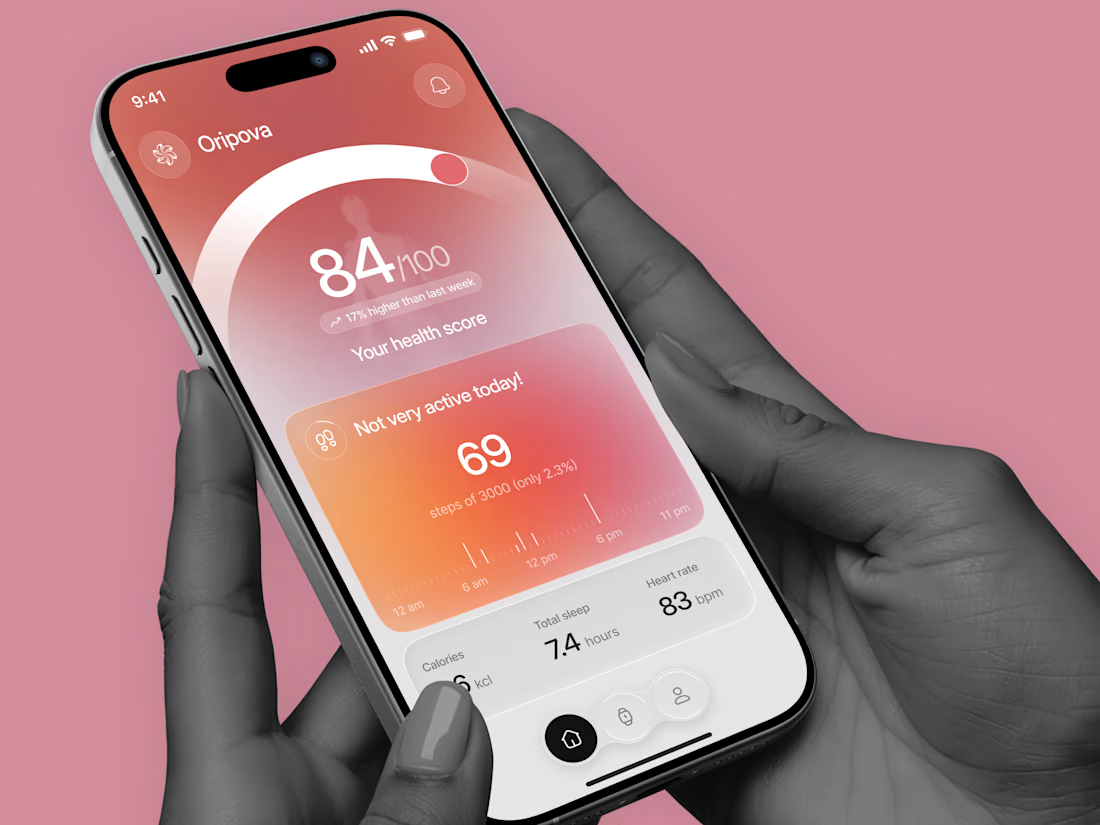
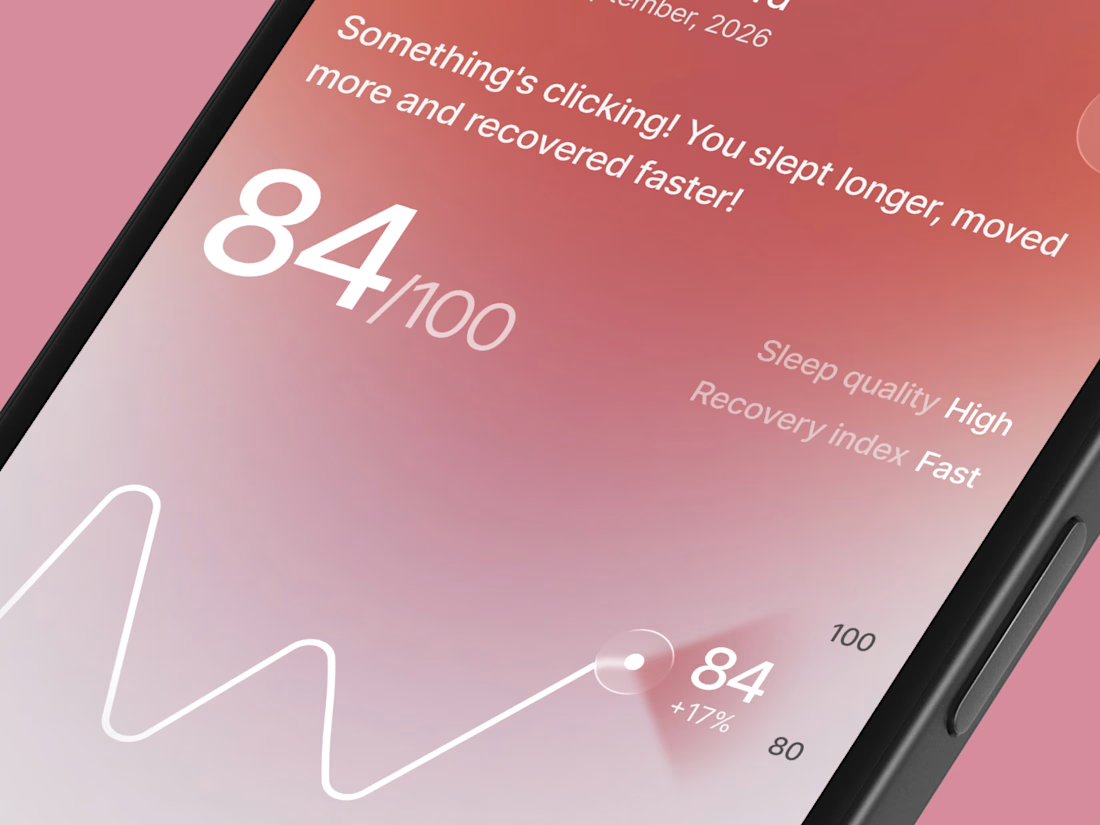
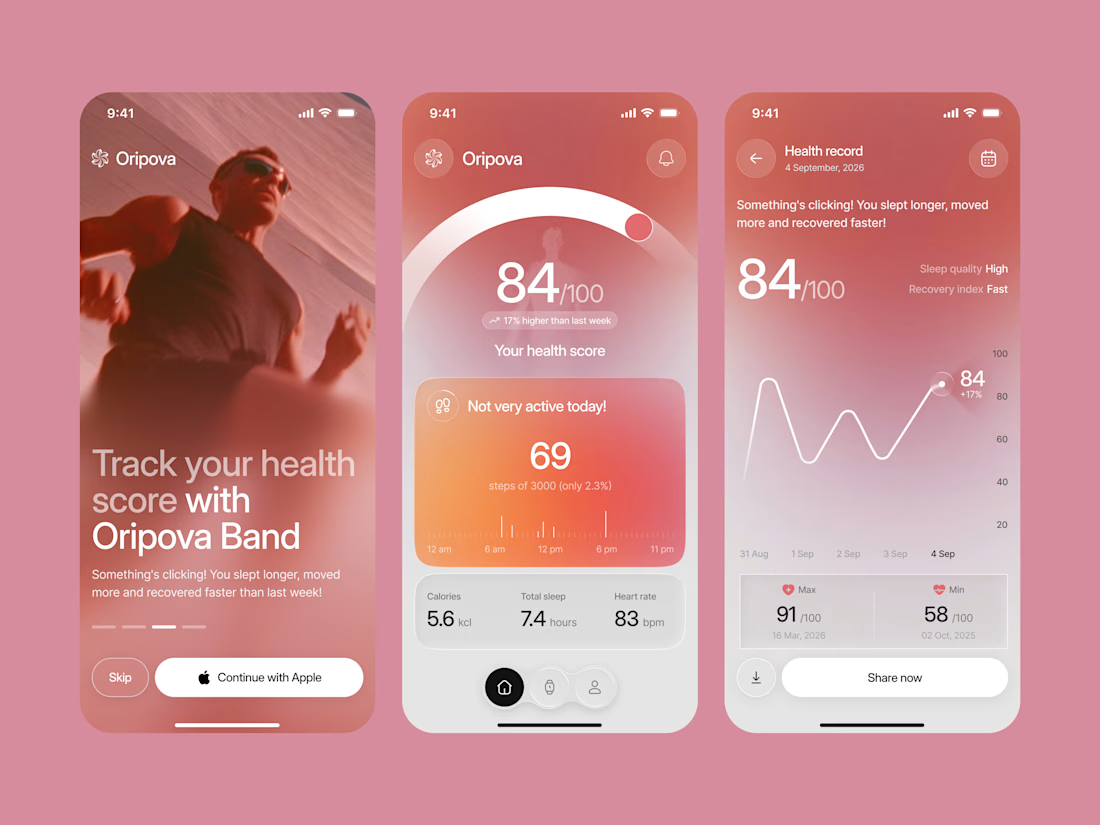
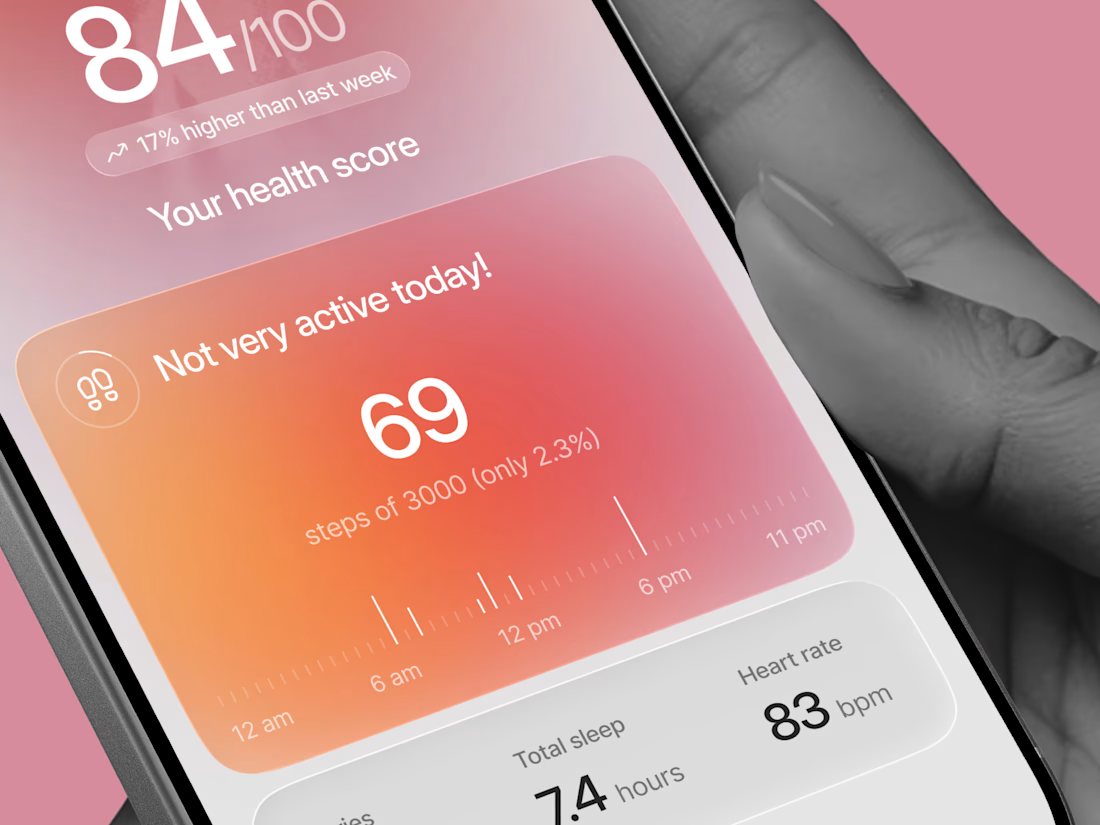
Designed a modern Health Tracking Mobile App for Oripova.
Clean and vibrant UI that helps users track their overall health score, daily activity, sleep quality, recovery, calories, and heart rate in one beautiful interface. Soft gradients, clear progress indicators, and insightful health records make staying healthy simple and motivating.



Best best 👍

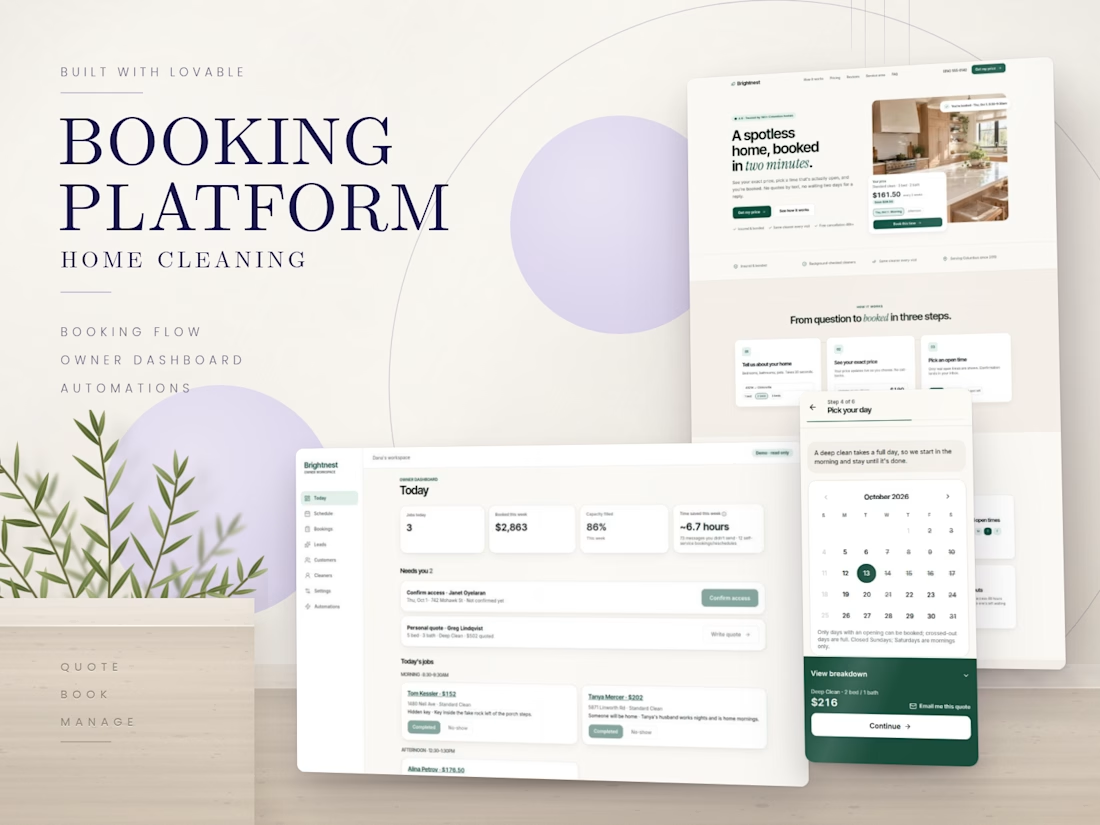
I built a full booking app in 2 days with @Lovable. Here are 4 things I learned.
The project: Brightnest Cleaning Co., a booking app for a (fictional) two-person cleaning team in Columbus, Ohio, built for the #lovablechallenge by @Lovable and @Contra.
Write the first prompt like a client brief.
I didn't write "build a booking app." I described the owner, her problem (8 texts and 2 days per booking), her prices and her quirks: new clients book a Deep Clean first, a locked door costs half a day, and far suburbs pay a travel fee. The more real the brief, the more real the app.
Change one thing at a time.
Almost every fix prompt ended with "Don't change anything else." Small, focused prompts kept working parts working.
Design takes rounds.
The look went black-and-white, then bold green and lime, then calm and premium. Each round showed me what the brand should not be.
Test it like launch day.
I tested the live site as a customer and as the owner, on phone and laptop. 4 rounds found 27 issues, and 25 were fixed before launch.
The result: customers see an exact price, pick a real opening and book in about two minutes, while confirmations, access checks and follow-ups run on their own.
#lovablechallenge #Lovable #BuildInPublic #WebDevelopment

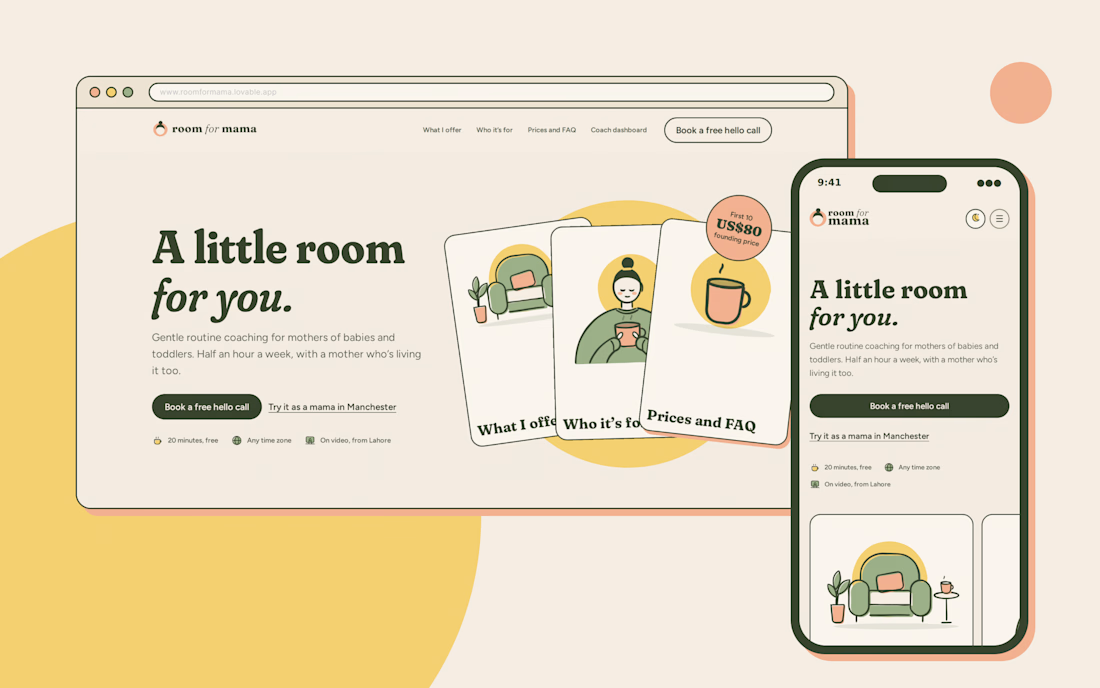
Project Link: https://roomformama.lovable.app/
I’m a brand identity designer in the wellness space. I wanted a real case study in my niche, taken from a blank page to a live business, and I wanted to see how far AI could go as a working partner in design.
The case study was at home. My wife is a mother of an eleven-month-old and a gentle routine coach for other mothers of babies and toddlers. Half an hour a week on video, from a mother who is living it too. She wanted to run it remotely, from Lahore, for mothers anywhere. What she did not have was a way to run it around a baby.
Her work happens in the gaps between naps. Bookings lived in messages. Calls were missed when a baby woke, on either side. Every mother was in a different time zone. Some days it felt like choosing between her baby and her business.
We started with pencil. Then Claude and I built the brand: the name, the voice, the colours, five drawings, twenty-three icons, and the rules the product would live by. Claude and Figma turned the sketches into a prototype. Lovable built the whole thing in two days: the website, the booking flow, the database, the coach app, the emails and the automations.
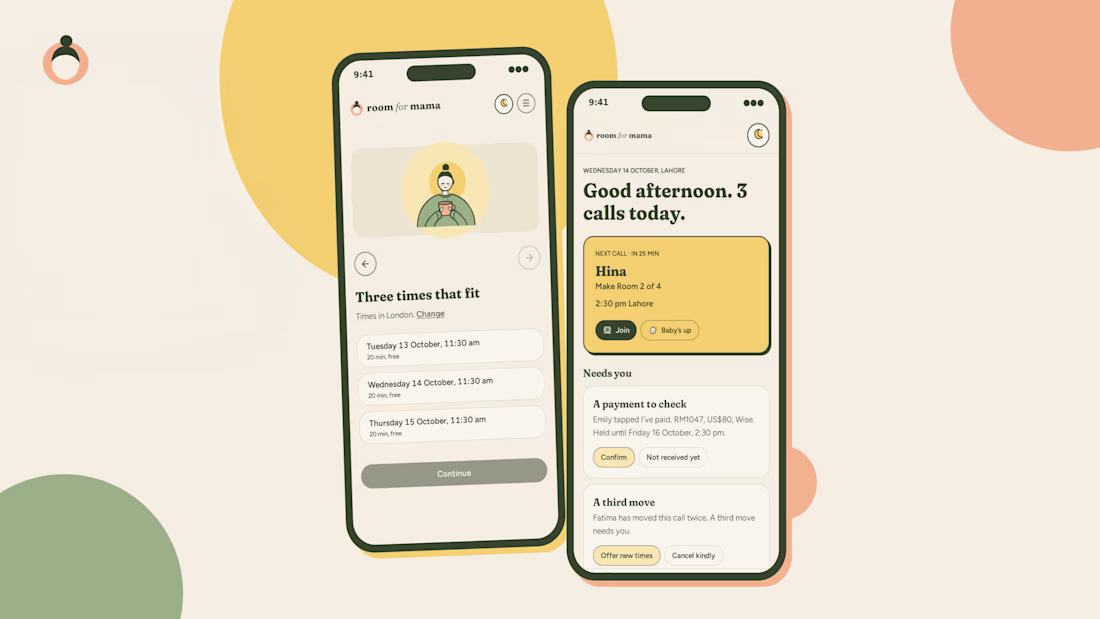
The heart of it is a small time engine. A mother says when she gets a quiet moment. Behind the scenes it checks the coach’s calendar, the buffers and the daily limit, handles clock changes, and offers three times on three different days in her time zone. Twenty-three unit tests cover the awkward cases. Around it: Baby’s up, one button for either side when a baby wakes. A video link and calendar invite with every booking. Four quick questions before the free hello call. A safety note and local helplines everywhere. A Today view where the coach sees only what needs her.
Claude reviewed every build against the brief, caught bugs, animated the drawings, and audited the contrast, tap targets and button states. About sixty percent of this happened on a phone, including in the Lovable app. We are camera shy, so even the video was made by AI, drawn like a storybook by our eleven-month-old.
Most of the talk about AI is about what it takes away. This is the other side. A mother now has a business that bends around the naps, from home, in her own hours, without a nine-to-five or a physical shop. AI did not replace her. It gave her time back. Room for Mama becomes a real business in the coming days.
Explore the Coach dashboard and dark mode as well.