The network for creativity
Join 1.25M professional creatives like you
Connect with clients, get discovered, and run your business 100% commission-free
Creatives on Contra have earned over $150M and we are just getting started
Back to feedPost

A production multi-tenant AI customer-engagement platform I designed and built end to end. A chatbot answers customer questions 24/7 from each business's own knowledge base (RAG), captures leads, sends instant Telegram alerts, and hands off to a human in real time. Includes a voice assistant and a per-client analytics dashboard.
Self-hosted — each business fully owns its instance, code, and data, with no SaaS lock-in.
Built solo: architecture, backend, AI integration, infrastructure, deployment, and security.
Stack: Next.js, Directus, PostgreSQL (pgvector), Redis, n8n, Twilio, OpenAI / Claude / Gemini, Docker.


The network for creativity
Join 1.25M professional creatives like you
Connect with clients, get discovered, and run your business 100% commission-free
Creatives on Contra have earned over $150M and we are just getting started





Related posts

Full-Stack Developer & AI Automation Engineer
I build scalable web applications, SaaS platforms, mobile apps, custom dashboards, and AI-powered automation systems that turn complex business workflows into reliable digital products.
My core stack includes Next.js, React, Node.js, NestJS, Python, PostgreSQL, MongoDB, and AI APIs.
I specialize in turning ideas into production-ready systems—from architecture and development to deployment, automation, and optimization.
Available for:
AI Automation • SaaS Development • Web Development • Mobile Apps • Custom Dashboards • API Development • Business Automation


Seeing how you stitch AI APIs into custom dashboards really cuts the manual data wrangling. The stack choice keeps the deployment pipeline smooth.

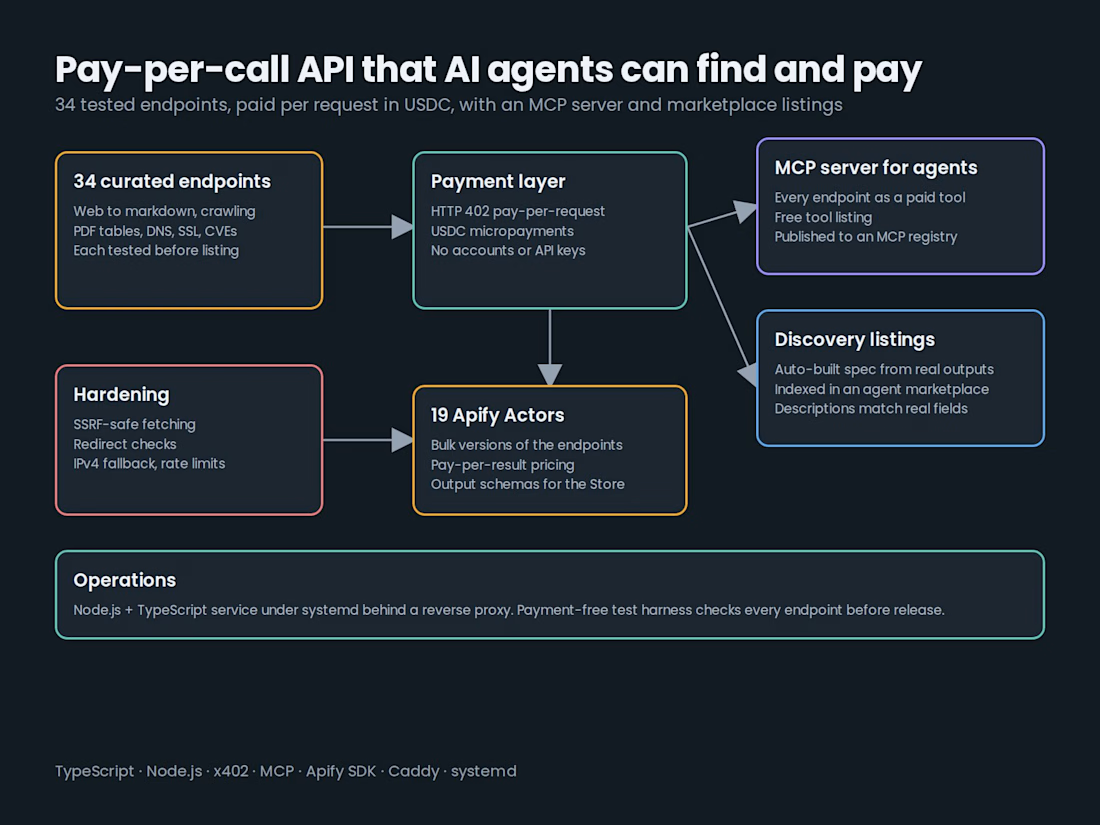
34 tested API endpoints that AI agents can discover and pay for per request in USDC, with no accounts or API keys. It includes a paid MCP server, marketplace listings generated from real outputs, SSRF-safe fetching, and 19 Apify Actors that offer bulk versions of the endpoints.



agents paying per request in USDC with no API keys is lowkey the future

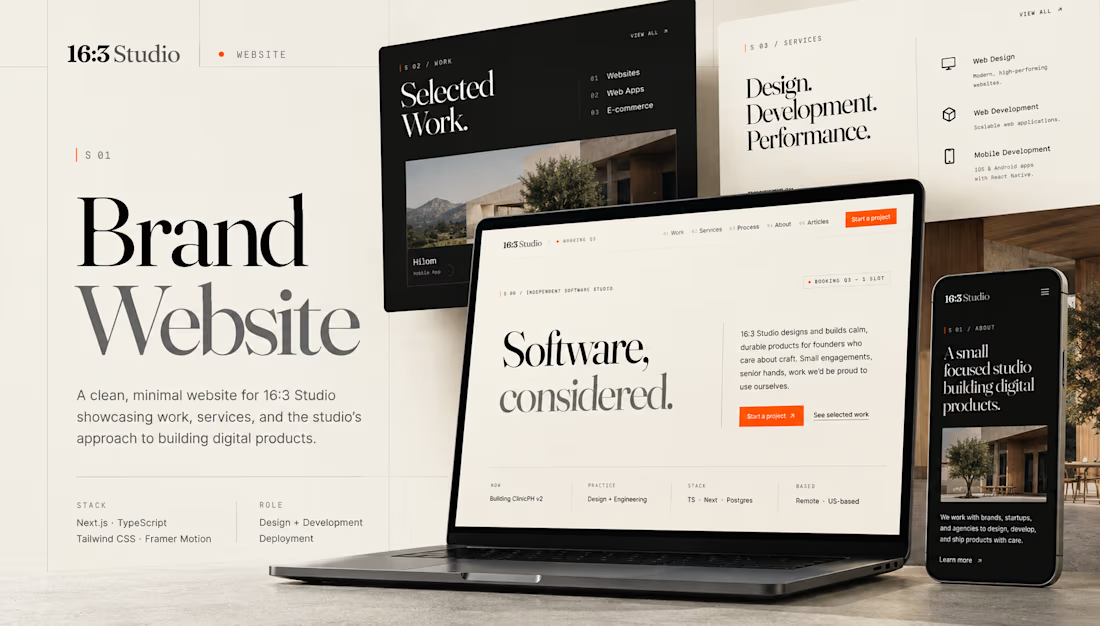
16:3 Studio is my independent software studio website, designed and developed from the ground up to showcase selected work, services, and my approach to building digital products.
The site combines an editorial-inspired visual system with a clean, structured layout, subtle interactions, and responsive design. I focused on creating a distinct studio identity while keeping the experience fast, accessible, and easy to navigate across devices.
Built with Next.js, TypeScript, Tailwind CSS, and Framer Motion, with an emphasis on reusable components, performance, responsive behavior, and polished frontend details.
My role: Design, Frontend Development & Engineering
Stack: Next.js · TypeScript · Tailwind CSS · Framer Motion



The studio site has a clear way to show both the work and how you build it. I like that you kept the motion subtle. Did you have to make any tradeoffs to keep it fast on mobile?