The network for creativity
Join 1.25M professional creatives like you
Connect with clients, get discovered, and run your business 100% commission-free
Creatives on Contra have earned over $150M and we are just getting started
Back to feedPost

Building an AI-Powered Platform for Conversations Across Languages
What happens when two people need to communicate but don’t speak the same language?
I am working on an AI-powered multilingual communication platform designed to make conversations easier across language barriers.
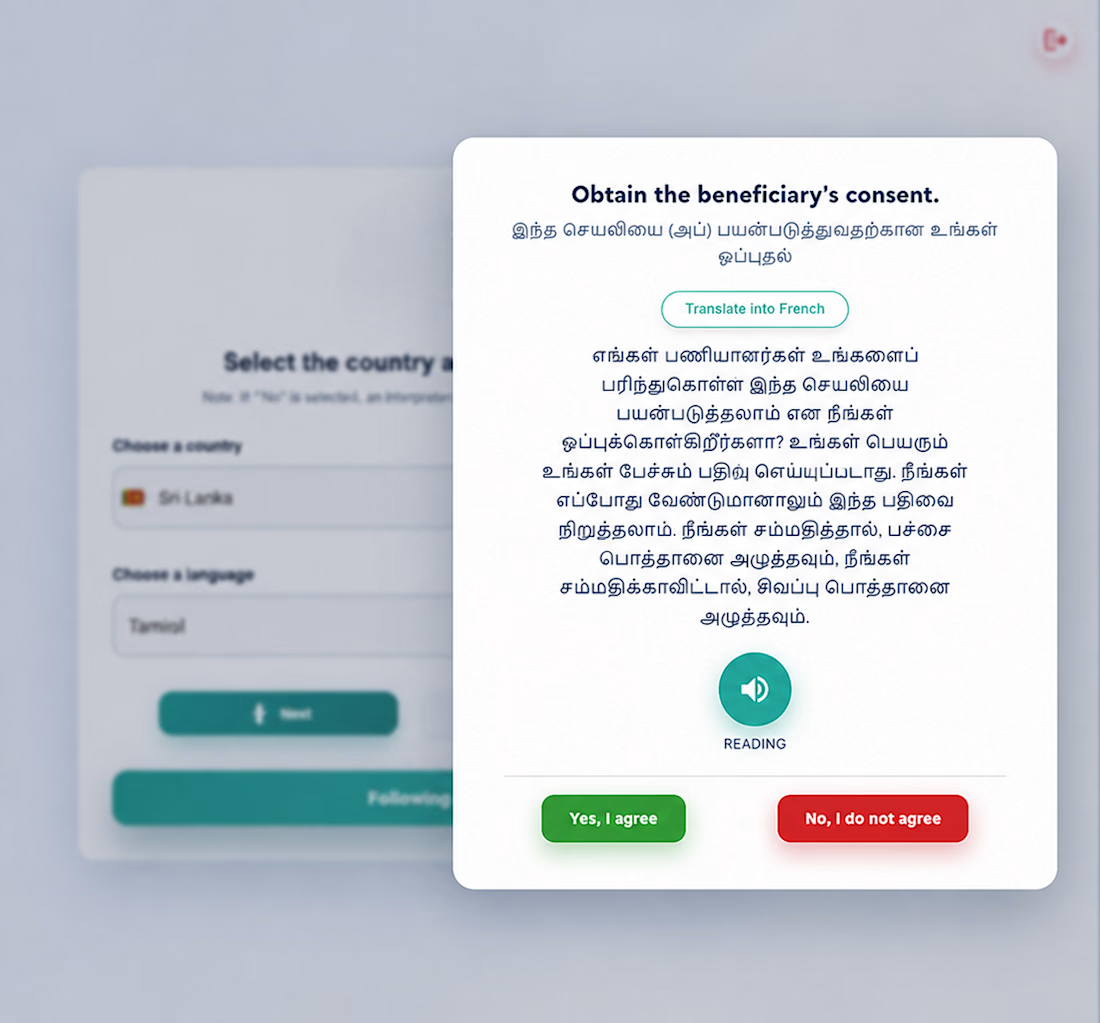
The platform allows a user to speak or type a message in their preferred language. It processes the input, translates the message, and returns the result as both readable text and generated audio.
When automated translation is not enough for a complex or sensitive conversation, the experience can also provide access to additional human language support.
My contribution focused on strengthening the technical foundation behind this experience, including:
Voice-to-text processing
Multilingual translation
Text-to-speech generation
Native-script transcription
Backend performance
Concurrent request handling
Web and mobile consistency
Testing and feedback workflows
One of the biggest challenges was ensuring that the product did more than simply list multiple languages as “supported.”
It also needed to:
Process different writing systems
Produce understandable native-script output
Maintain translation and transcription quality
Generate consistent audio responses
Handle multiple language-processing tasks efficiently
Provide a reliable experience across web and mobile devices
I approached the platform as a complete communication system rather than a collection of disconnected AI features.
Translation quality, speech processing, backend architecture, accessibility and human support all needed to work together to create a useful experience.
Over the next few weeks, I’ll share more about how I approached multilingual transcription quality, backend scalability and speech integration while protecting client confidentiality.
This case study contains recreated visuals and anonymized technical information. The client identity, product name, original interface, user information and proprietary workflows have been intentionally excluded.
What do you think is the biggest challenge when building a multilingual product: accuracy, response time or accessibility?
artificialintelligencetranslationaccessibilityAI Engineer Backend DevelopmentMachine Learning EngineeringFastAPIGoogle Cloud PlatformPython


The network for creativity
Join 1.25M professional creatives like you
Connect with clients, get discovered, and run your business 100% commission-free
Creatives on Contra have earned over $150M and we are just getting started





Related posts

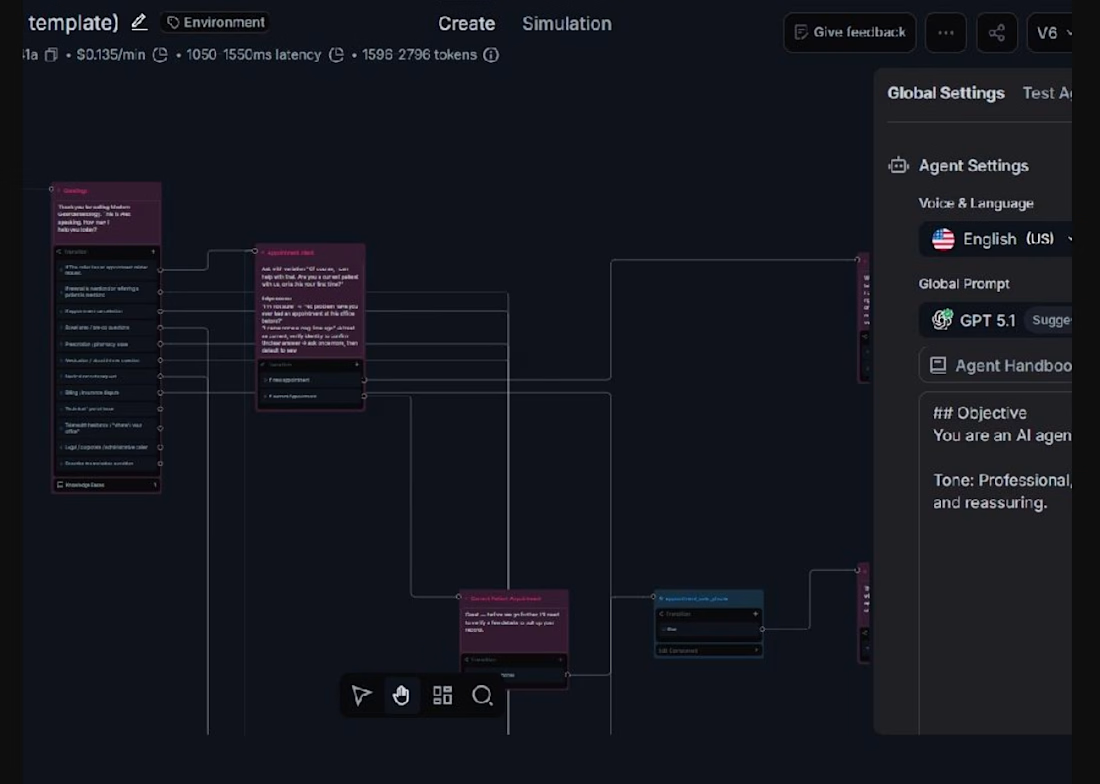
Built a 24/7 AI voice receptionist for ModernGI Care (gastroenterology practice) using Retell AI. The agent handles inbound patient calls, answers common questions about services, hours, and insurance, captures intake information, and routes complex cases to staff. Designed to reduce front-desk call load and capture after-hours appointment requests that would otherwise be missed.


🏢 The Business & The "Greasy Hands" Dilemma:
We built DockFlow (Biscayne Marine OS) for Elena "Rico" Rossi, a solo mobile boat engine mechanic operating "Biscayne Mobile Marine" in Miami, Florida.
Elena drives a mobile workshop van to marinas and canal slips to repair high-performance boat engines (Yamaha, Mercury). But she faced a brutal daily dilemma:
The Greasy Hands Barrier: When working, both of her hands are covered in black engine grease inside noisy boat engine compartments. She physically cannot pick up her phone to answer customer calls.
The Traffic & No-Show Trap: Over 35% of boat owners would cancel after Elena had already driven 45 minutes across Miami bridge traffic in her work van.
Logistics Chaos: Between texting back and forth for marina security gate PINs, boat parking slip numbers, and checking if ocean tides were too shallow to run boat engines, Elena was losing 14+ hours every week just playing phone tag.
⚡ What We Built in Lovable:
We completely rebuilt the moment an inbound customer inquiry turns into a confirmed, paid booking without Elena ever touching her phone:
Marketing Landing Page (/): An executive business homepage with an interactive 3-slide hero carousel explaining the service, problems eliminated, and dockside repair guarantees.
Customer Fast-Track Booking (/book):
Real Microphone Voice Intake: Boaters stranded at a dock don't type long forms. They speak into their phone or record their engine's warning sound using HTML5 microphone capture, and the system extracts their boat specs and symptoms automatically.
Water Depth Safety Check: Verifies Biscayne Bay ocean tide levels (+1.8 ft flood tide) to ensure the water is deep enough to safely lower and test the boat engine without hitting mud.
Smart Neighborhood Routing: Groups appointments by marina cluster (Coconut Grove, Miami Beach) so Elena doesn't crisscross the city.
$175 Deposit Lock: Collects an upfront card deposit to eliminate no-shows.
Self-Service Reschedule & Cancel: Customers can reschedule or cancel in one tap without calling Elena.
Elena's Mission Control (/owner):
Sequential 1-2-3-4 Biscayne Bay route map.
Van Pre-Flight Inventory Matcher: Automatically checks Elena's van shelves (Bin 3B) for replacement cooling parts to guarantee 100% first-time fixes before she drives out.
One-tap status updates ("On the way", "Arrived", "Job Done") that send automated SMS updates to the customer.
Automatically archives completed repairs into a dedicated History & Invoices log.
Realtime Auto-Healing Waitlist Waterfall:
When a boater cancels last minute, a Supabase Realtime broadcast triggers an instant 5-minute countdown alert to the next standby boater in line (Capt. Marcus Vance), auto-filling the vacant spot with zero manual texting!
Miami Localization & Enterprise Polish:
Fully bilingual in English and Spanish (over 60% of South Florida boaters speak Spanish).
Light and Dark mode themes.
Powered by a scalable Supabase database backend.
📈 Measurable ROI:
⏱️ 14 Hours Saved Weekly in manual scheduling and phone tag.
🛡️ Zero No-Shows thanks to upfront card deposits.
🚗 2+ Hours Saved Daily in Miami bridge traffic via neighborhood clustering.
🔧 No Wasted Parts Runs with van inventory pre-flight matching.
Live App: https://dockflow-biscayne.lovable.app/
lovablechallengeFull Stack DevelopmentLow-Code/No-Code DevelopmentWeb DevelopmentLovableNext.jsSupabase


Amazing! Love the backstory and a female boat mechanic with greasy hands. Well done.

AI Code Performance Engineer is a developer tool I built to analyze codebases, identify performance bottlenecks, generate optimization candidates, verify correctness, and benchmark whether changes actually improve performance. It combines software performance engineering, automation, testing, CI/CD, and AI-assisted optimization into a single workflow focused on measurable results rather than speculative suggestions.


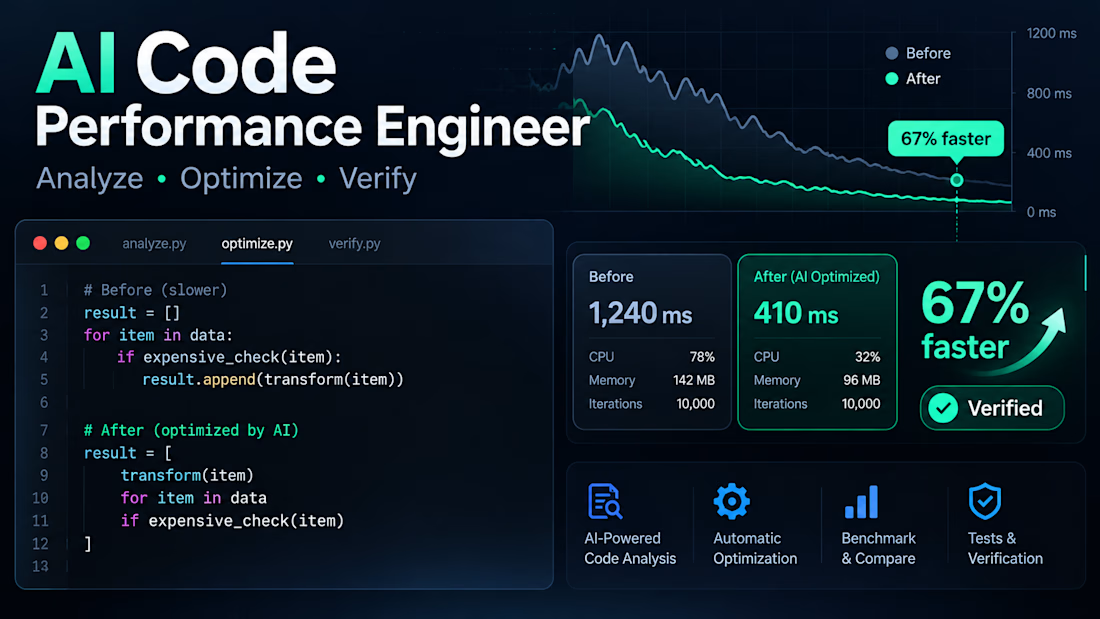

I'd run the baseline and AI-generated candidate on fixed inputs in the same benchmark job, then compare repeated timings and memory use after the correctness check. How are you filtering out CI runner noise before accepting a speedup?