The network for creativity
Join 1.25M professional creatives like you
Connect with clients, get discovered, and run your business 100% commission-free
Creatives on Contra have earned over $150M and we are just getting started
Back to feedPost

Your e-commerce business spend thousands driving traffic to your store & website while ignoring the page elements that determine whether visitors buy or leave.
I redevelop product catalog section with focus on the metrics that directly influence revenue.
The original version lacked critical conversion drivers such as:
✅ Social proof
💰 Pricing psychology
⚙️ Brand visibility
📦 Strong calls to action.
The redeveloped version introduces
🎯 Review counts
✨ Star ratings
✔️ Anchored pricing
💫 Stronger brand hierarchy
🛒 Conversion-focused CTAs
while maintaining a clean, modern user experience.
The impact of these improvements is supported by industry benchmarks:
📈 Product reviews can increase conversion rates by more than 20%
📈 User engagement with reviews can increase conversions by up to 128%
📈 Products with strong ratings frequently convert nearly twice as well as products without visible social proof
📈 Mobile-first optimization is essential in a market where mobile traffic exceeds 70% of e-commerce visits
This isn’t simply a UI redesign & development.
It’s conversion-focused frontend engineering designed to reduce:
👉🏻 Friction
⭐️ Increase trust
🔥 Improve click-through rates
🚀 Generate more revenue
from existing traffic.
Built with Next.js, React.js, TypeScript, HTML, and CSS.
—————————
I specialize in UI development, landing pages, dashboards & pixel-perfect frontend.
If you need a frontend developer partner to bring your next project to life → Then let’s hop on a call 🎧.
Link in bio.


The network for creativity
Join 1.25M professional creatives like you
Connect with clients, get discovered, and run your business 100% commission-free
Creatives on Contra have earned over $150M and we are just getting started





Related posts


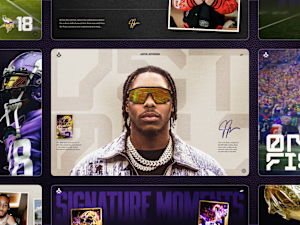

Congrats on the Awwwards nomination. Which part of the build was the toughest to get right?

I just released FAR ENOUGH, a free Framer template for luxury travel. 🌴
Minimal on the surface, a lot of motion underneath:
→ an endless drag-to-explore masonry grid
→ a 3D Instagram carousel
→ a scroll-driven curtain gallery
→ an image trail that follows your cursor
→ light and dark mode with one click
10 pages, 4 CMS collections, fully responsive, with a reduced-motion fallback. Every animation is editable in the properties panel, no code needed.
Made for travel studios, villas, retreats and anyone who wants a site that feels far away in the best way.
Free on the Framer Marketplace: https://www.framer.com/marketplace/templates/far-enough/
Live preview: https://farenough.framer.website
#Framer #FramerTemplate #WebDesign #FreeTemplate


Nice website bro

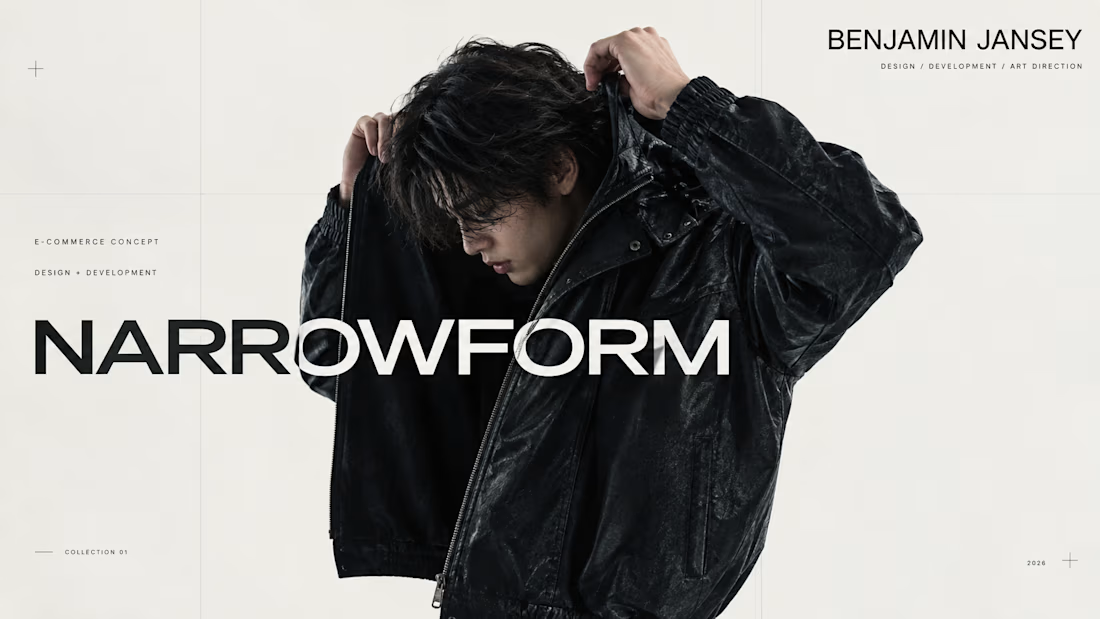
I wanted to create something that felt like a real fashion brand had already existed for years.
Not just a homepage. Not a collection of pretty screens. An actual store, with its own identity, imagery, products, interactions and all the small details that make a website feel complete.
That idea became NARROWFORM.
I created the brand and name, developed the art direction, produced the fashion and product imagery, designed the entire interface and shopping experience, and built the website myself.
I wanted the concept to hold up beyond the first impression, so I built the experience all the way through:
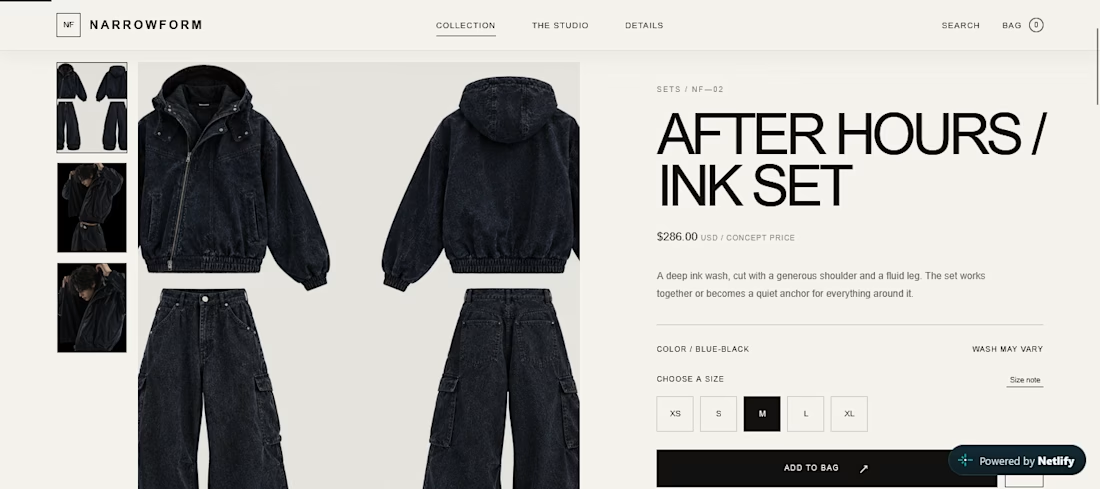
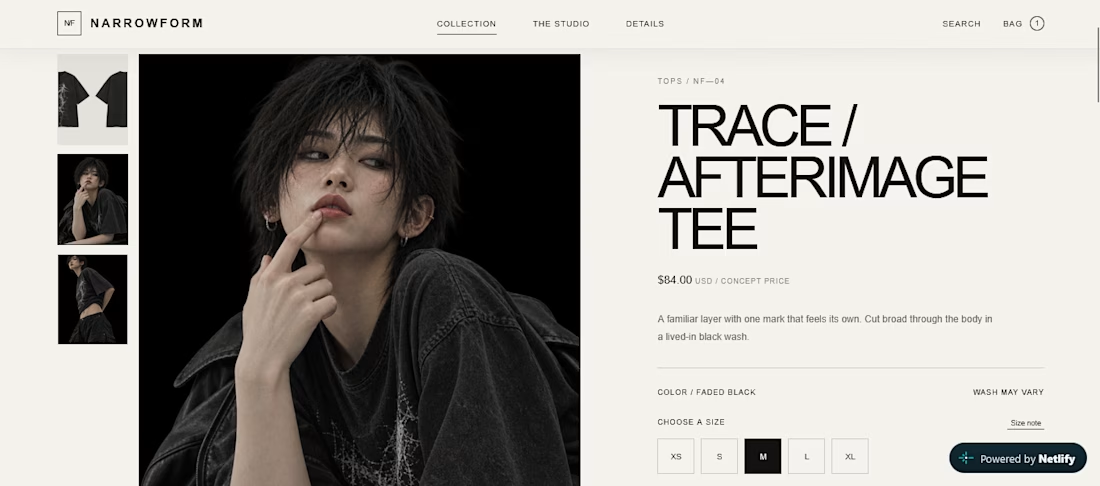
Product discovery
Product pages
Cart interactions
Checkout
Simulated payment
Cookie consent
Responsive layouts
Mobile interactions
And the smaller interface states throughout the experience
The imagery was created specifically for NARROWFORM using generative tools, then refined and directed to fit the same visual language as the website.
The result is a complete fashion e-commerce concept that you can actually explore.
This is probably the most involved project I've made so far, because I wasn't trying to design a website around an existing brand.
I wanted to create the brand, then build the website that belonged to it.



Creative work