The network for creativity
Join 1.25M professional creatives like you
Connect with clients, get discovered, and run your business 100% commission-free
Creatives on Contra have earned over $150M and we are just getting started
Back to feedPost

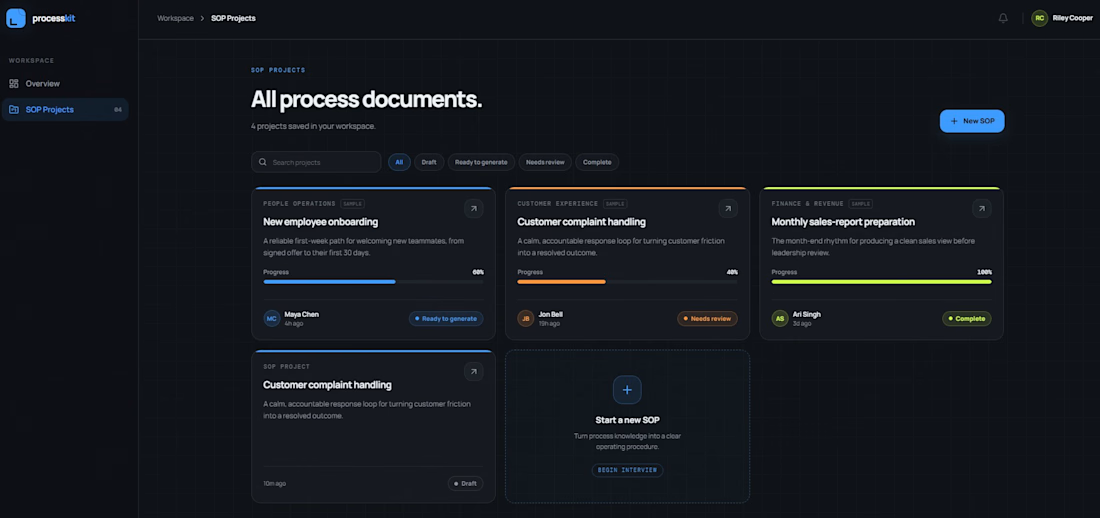
Built something different this week: ProcessKit, an AI-assisted SOP builder.
It guides users through a structured process interview, captures roles, steps, decisions, exceptions and controls, then turns that information into an editable, branded SOP that can be saved as a professional PDF.
What started as a fun Replit Buildathon experiment became a surprisingly useful little business tool — and a great reminder that AI is most useful when it sits inside a clear process rather than replacing one.
The network for creativity
Join 1.25M professional creatives like you
Connect with clients, get discovered, and run your business 100% commission-free
Creatives on Contra have earned over $150M and we are just getting started
Related posts

What does practical, agentic AI look like in a real business workflow?
Our new TechFoundry IMS case study walks through seven demos—from purchase-order intake and catalog conflict resolution to vendor orders, shipments, client shipping, and invoice reconciliation.
It shows how AI agents, document processing, and software integrations work together, with human review where judgment matters. I’ve also included the technology stack behind the platform.
Explore the case study:
https://contra.com/p/oWU3ssF3-tech-foundry-ims-ai-procurement-and-fulfillment-in-seven-demos
Building an agentic AI solution? Book a free initial consultation with me on Contra. We’d love to work with you.
#PracticalAI #AgenticAI #Automation #SoftwareDevelopment

This is exactly the agentic AI discussion we need more of — moving from chatbots to actual Ops: PO intake, vendor orders, shipments, invoice reconciliation. That's where ROI is.
Loved the TechFoundry IMS visual — that IMS AI Agent as the central orchestrator with Review & Approve...

Otoma. AI — AI-Powered Workflow Automation Design
A simpler way to build workflows.
Otoma. AI turns plain-language instructions into working automations, helping finance and operations teams handle repetitive tasks while staying in control.
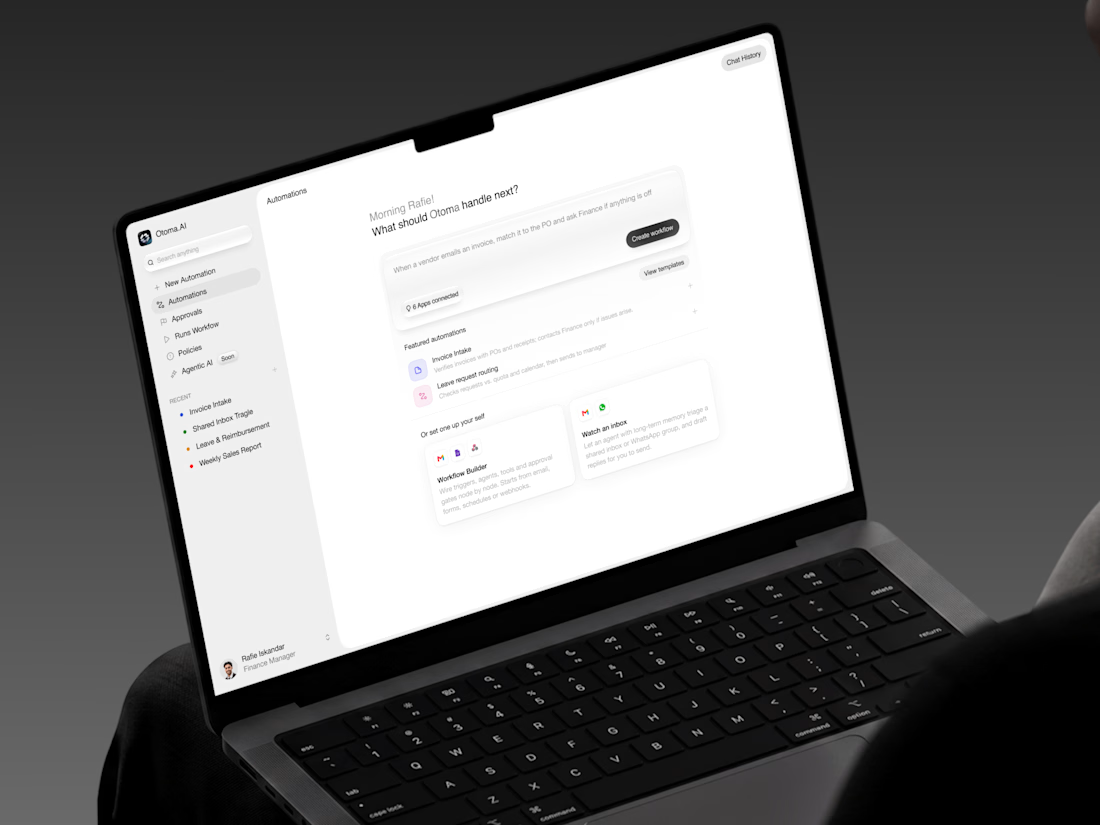
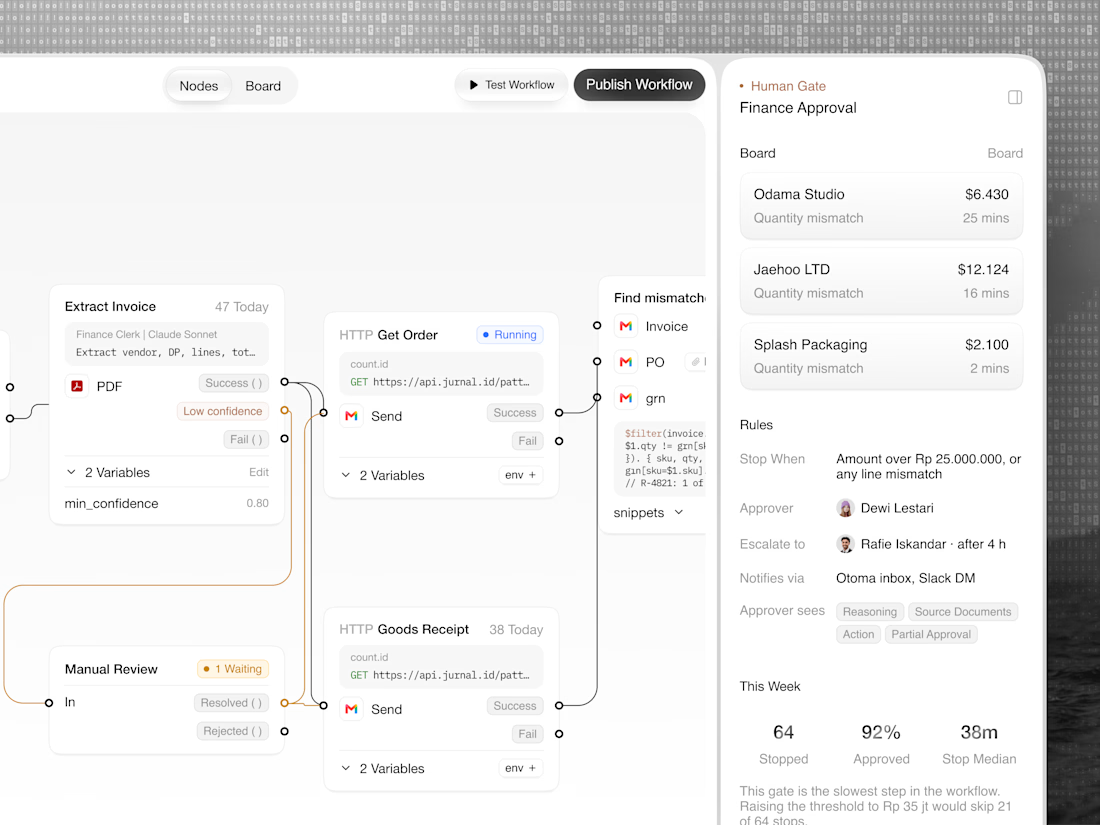
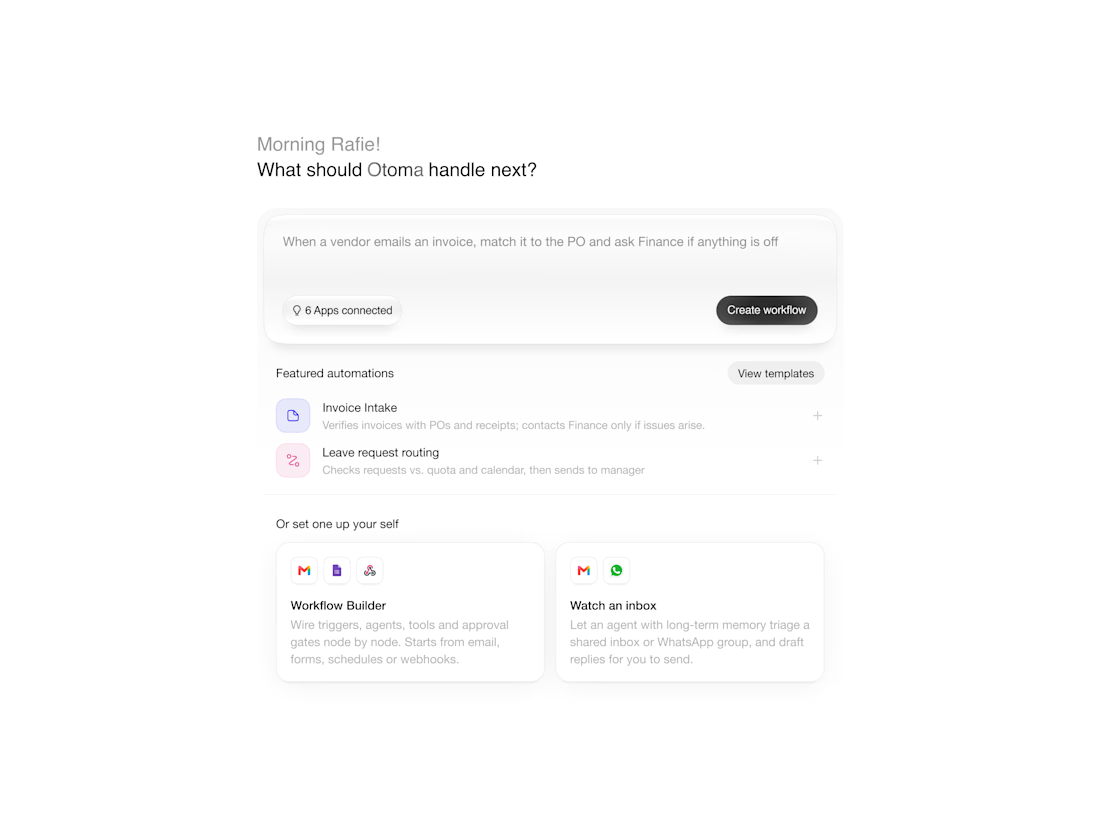
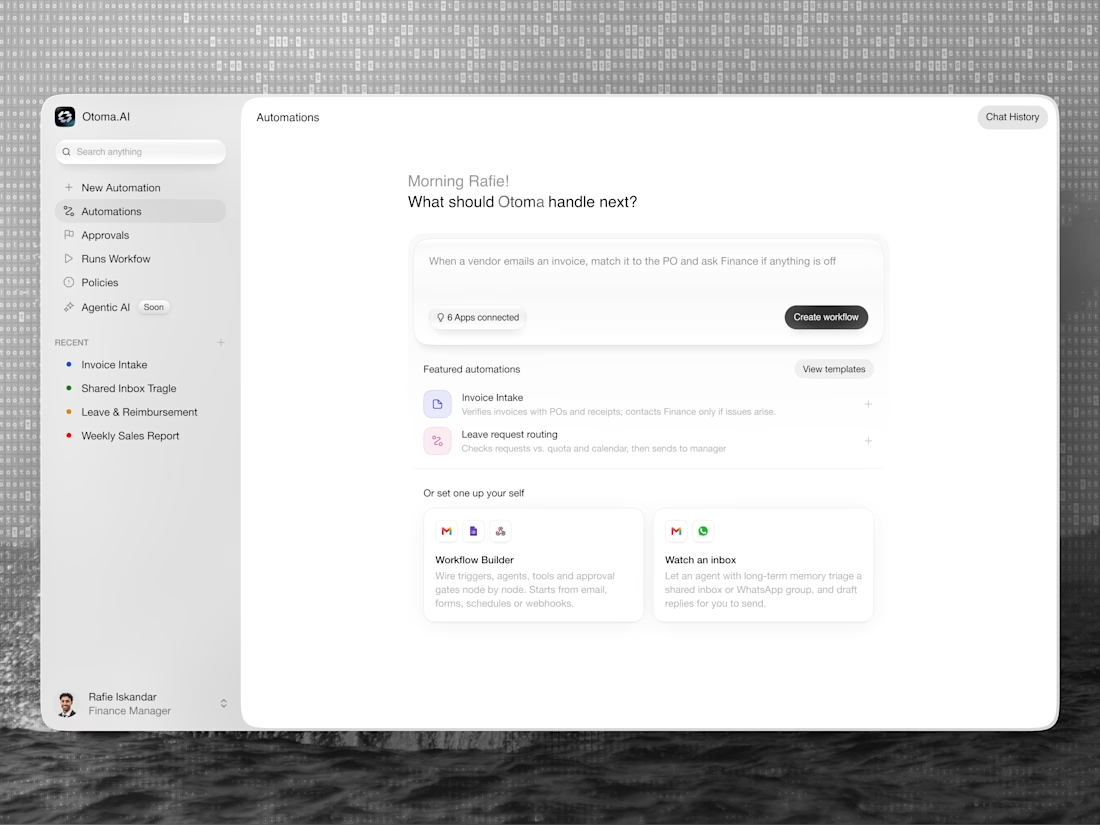
Really clean work Odama Studio! Otoma AI concept is so relevant - turning plain-language into working automations is exactly what finance and ops teams need. Love the workflow builder visuals, that node-based flow looks intuitive and the overall UI feels simple yet powerful. Great job making automation feel approachable!


We’re choosing the motion for an AI analytics product demo, and I can’t decide.
Both clips show the same flow. Someone asks a question in plain English. The agent checks permissions, plans the query, runs it past guardrails and builds the dashboard.
1. A walks you through each step as it happens.
2. B skips the steps and drops you straight onto the result.
A shows the work. B shows the speed. For a landing page I keep going back and forth.
Which one would make you trust the product more? Comment A or B, and tell me why.
3 voted
100%
0 voted
0%
3 votes
Closed

I think according to your query the output should consist on a list of clients with late invoices rather then showing charts etc,