The network for creativity
Join 1.25M professional creatives like you
Connect with clients, get discovered, and run your business 100% commission-free
Creatives on Contra have earned over $150M and we are just getting started
Back to feedPost

Something funny happened to me recently.
Have you ever asked someone for something, and the person told you, “I’ll get back to you,” only for you to become the one chasing them? 😂
Imagine messaging someone to make an enquiry about a product.
You ask for the price.
They reply.
You ask if it is available.
They say yes.
You ask how to place an order.
They explain the process.
Everything is going smoothly.
You are ready to pay.
Then you ask one final question.
Silence.
You wait.
Nothing.
You check again after some hours.
Still nothing.
The next day, you send another message.
No reply.
At this point, you start wondering if you are the one trying to sell something to them. 😂
Meanwhile, this business owner might be somewhere complaining that customers are not buying.
Oga, how will they buy when you have abandoned them at the point of payment?
😂😂
But on a serious note, this is something many businesses overlook.
Getting someone's attention is one thing.
Getting them interested is another.
But following up properly can make a real difference.
Someone might genuinely want your service but get distracted.
Someone might need a little clarification before making a decision.
Someone might be waiting for you to send the invoice, proposal or payment details.
And because you forgot to follow up, the opportunity goes cold.
Not every enquiry will become a sale, of course.
But you shouldn't lose a potential customer simply because your follow-up process is scattered.
This is why organisation matters in business.
Keep track of your enquiries.
Know who you need to respond to.
Record pending tasks.
Set reminders.
And make sure interested customers don't get forgotten in the middle of your busy schedule.
You don't have to keep everything in your head.
At Techyflare Digitals, I help busy business owners with social media management, administrative support and organising everyday workflows so they can focus on growing their businesses.
You bring the business vision. Let's organise the work behind it.
Send me a DM if you need help managing your content, tasks and daily business activities.
Techyflare Digitals
#TechyflareDigitals #VirtualAssistance #SocialMediaManagement #BusinessGrowth

The network for creativity
Join 1.25M professional creatives like you
Connect with clients, get discovered, and run your business 100% commission-free
Creatives on Contra have earned over $150M and we are just getting started





Related posts

on Saturday i got to speak on social media & content strategy at my first IRL event 🥹
i'm still processing all the emotions but it was amazing to speak at The Retreat by FWDHer.
in my session i talked to the women founders about building a content strategy you can actually sustain.
we went through an exercise to help them ideate content ideas by starting with a "thesis" that helps ground their useful content & then commit to a repeatable practice rhythm
then we moved on to how to execute that useful content using different production levels in mind:
🌱high effort: think an edited video or designed carousel)
🌱medium effort: think a one-take video, repurposed video, picture carousel/photo dump or text or graphic photo + caption)
🌱low effort: think photo with caption, short text post or simple story)
your content shouldn't be built on high-effort posts alone. a mix of effort levels and repurposing is what keeps it sustainable.
the takeaway i left them with: you don't need to post every day. you need one idea, three ways to use it (teach, prove, invite), and a rhythm you can return to when the week gets busy.
this was my first time speaking/teaching like this IRL, and it reinforced what i believe about content: it works best as a practice, not a pressure. 🌻
if you're planning a retreat, workshop, or event and want a speaker on social media & content strategy, i'd love to talk.
and if you're a founder or brand that needs a strategist to build a content practice you can actually sustain, you can book time with me here: https://contra.com/s/m6ZFFBev-the-consult-a-single-strategy-session

A content calendar can tell you what to post.
But good social media management goes beyond that.
You also need to know:
→ When to publish
→ How to respond to your audience
→ What content is performing
→ What needs to be improved
→ What should be created next
That's why I see social media management as an ongoing process, not just scheduling posts.
Plan the content. Manage the platform. Learn from the data. Improve the next post.
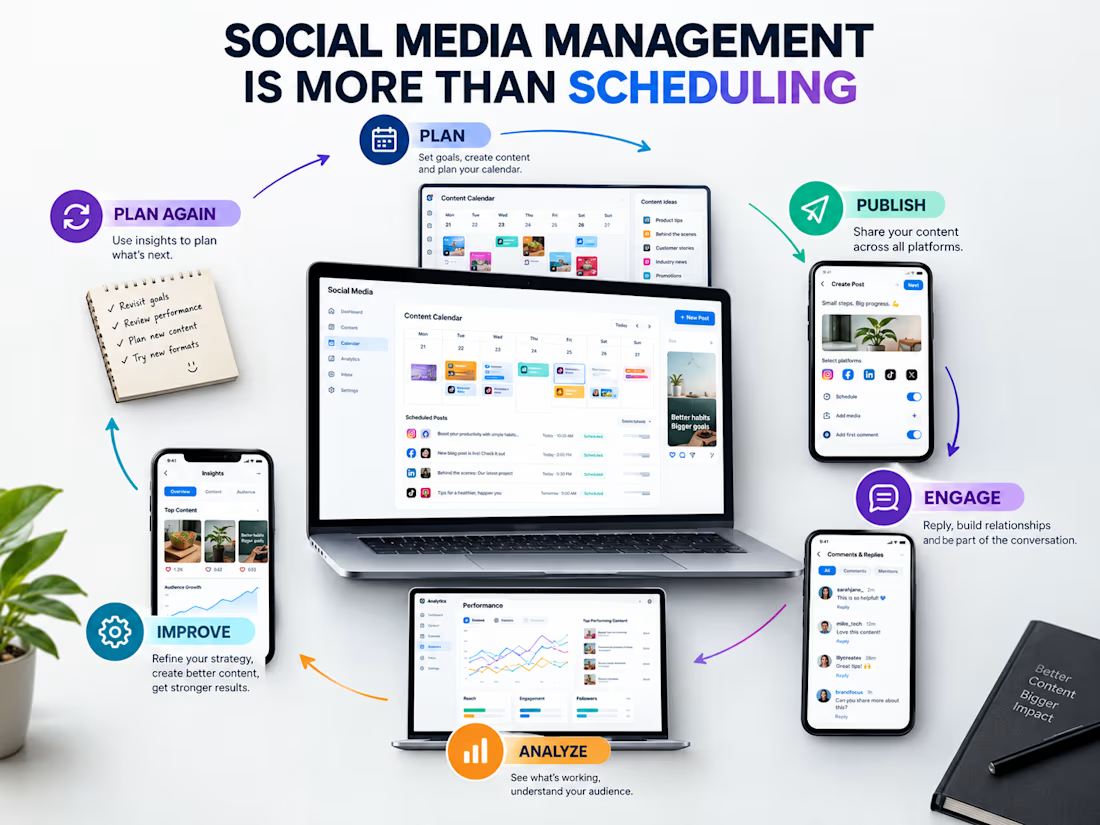

Exactly. Good social media management is about constantly learning from the data and improving the next move.
what does a social media strategist do that differs from a social media manager? i'm so glad you asked!
i just shared what scope of work looked like for the 3isfor team when I served as their social media strategist working alongside their social media manager & creative director.

Good work

