The network for creativity
Join 1.25M professional creatives like you
Connect with clients, get discovered, and run your business 100% commission-free
Creatives on Contra have earned over $150M and we are just getting started
Back to feedPost

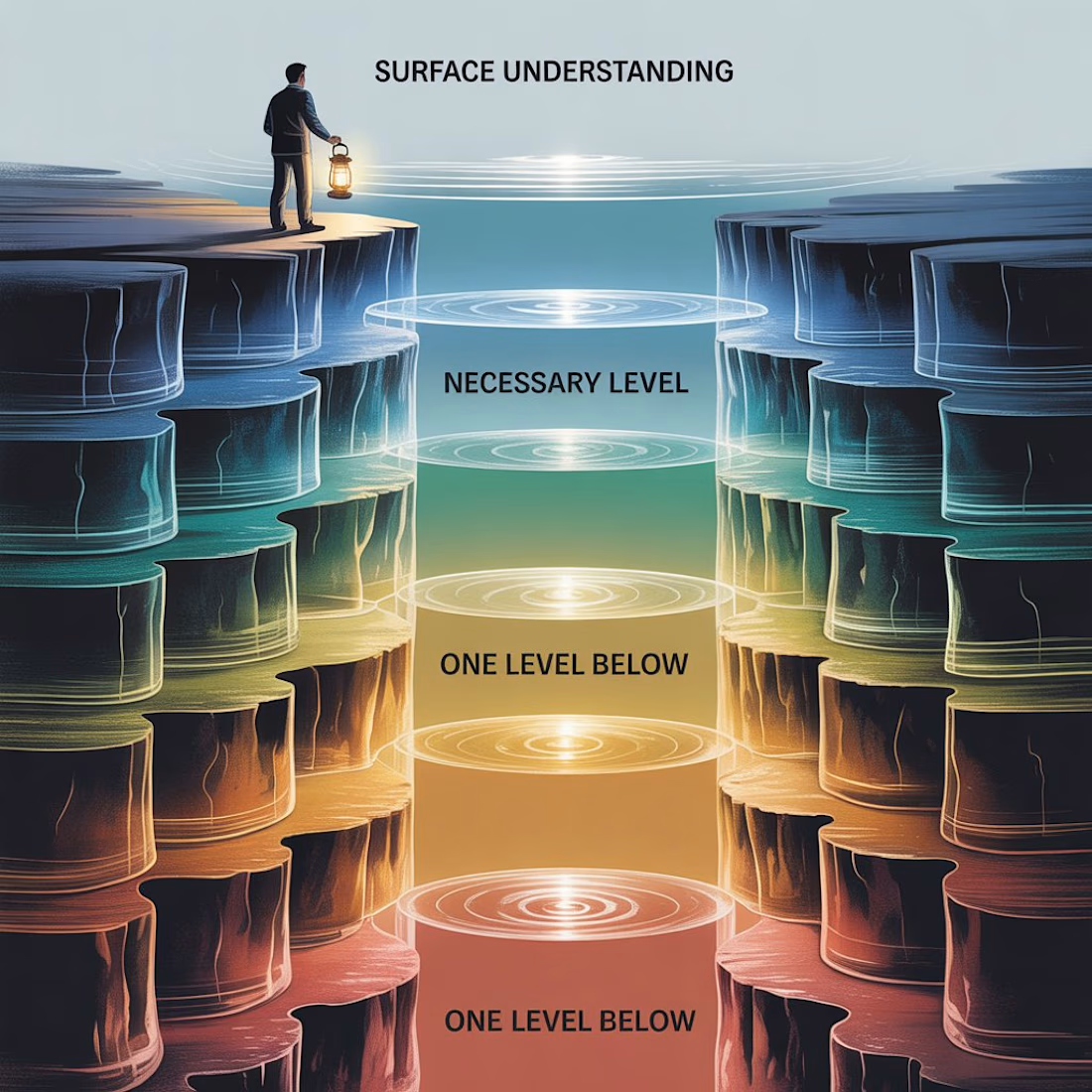
If you really want to understand something, you want to understand it to level that's necessary and then one level below that
The network for creativity
Join 1.25M professional creatives like you
Connect with clients, get discovered, and run your business 100% commission-free
Creatives on Contra have earned over $150M and we are just getting started











Related posts

UNLEARN THE VIEW | A critical thinking experiment
This is the first website I've built from scratch. I've worked on websites before, including edits and customizations, but I'd never built one myself. I'd also never used AI quite like this before. I've been wanting to participate in one of Contra's Challenges for a while, and I'd been saving this idea for the right opportunity.
Over the past four days, I (and the machines) have brought UNLEARN THE VIEW to life: an interactive experience exploring perception, recognition, and possibility through historical references and decolonial thought.
The timing feels especially significant. Today, in my country, we're making decisions about our future and our democracy. Election days can bring hope, fear, exhaustion, and difficult conversations. In moments like these, I keep coming back to how important critical thinking is: understanding where our beliefs come from and whose stories we've been taught not to see.
Decolonial thinking is still new to me, and I'm learning as I go. It's a way of questioning what we've accepted as natural or inevitable. It's not comfortable, but I believe it's necessary, and that kind of questioning is something we all need.
I'm still learning how to build this experience, both technically and conceptually. This is my first time creating a website from the ground up, and part of the process is embracing the learning process instead of waiting until I know everything.
Visually, the project draws from two different places: old political and revolutionary posters, and the experimental personal websites many of us grew up exploring in the early internet era. I was drawn to that feeling of discovery, when following a link could lead you somewhere unexpected. Today, we're surrounded by too much information, yet it can feel harder to know where to look and what to trust. My experiment brings these references together to explore that tension.
UNLEARN THE VIEW isn't meant to give answers. It's an invitation to look closer, question what feels familiar, and make room for what we've overlooked.
There's no login, nothing to buy, and no personal data to hand over. Just an experience to explore, questions to sit with, and maybe something to take with you. What you do with it is your choice.
What we choose to do with what we see is up to us.
I also made my debut on X with this project, and I think it could be a great platform to keep sharing ideas and resources around critical thinking, questioning dominant narratives, and making room for perspectives we don't often hear.
Explore UNLEARN THE VIEW:
https://unlearn-the-view.base44.app
Built as part of the Contra Challenge, with Base44.
#ContraChallenge #InteractiveDesign #DecolonialThinking #CreativeCoding #Base44


first site built from scratch and it already has a point of view, thats rarer than clean code

A pile of information can still tell a good story.
Twelve observations.
Three patterns.
One clear direction.
For PROOF, I wanted the movement to help the idea click. The scattered pieces come together, so each beat feels a little clearer than the last.
Have a product or an idea that’s tricky to explain? Let’s turn it into a short animation.
Motion design study using illustrative data.

The convergence of scattered elements makes the insight feel earned.

Your customer doesn't care how innovative your technology is until they understand what it does for them.

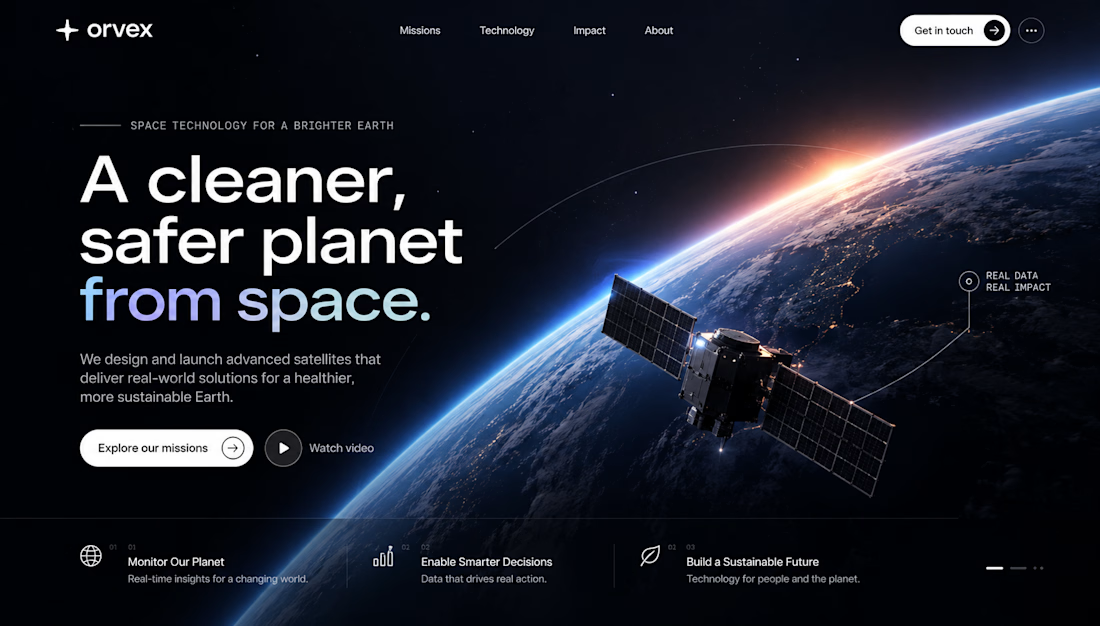

Spot-on hook and sharp dark-mode execution—makes satellite tech communication feel grounded and impactful.