The network for creativity
Join 1.25M professional creatives like you
Connect with clients, get discovered, and run your business 100% commission-free
Creatives on Contra have earned over $150M and we are just getting started
Back to feedPost

For a local service business, the first reply often matters more than the best reply.
This is the speed-to-lead setup I build in GoHighLevel:
• Trigger: Form Submitted (or Facebook Lead Form Submitted)
• Create or update the opportunity in the New Lead stage
• Send an SMS with the calendar link straight away
• Internal notification to the owner, so a person can call too
• Appointment Status trigger moves the card to Booked
• When the job is Won, a review request goes out
The pipeline is what makes it useful. Every lead has a stage, so nobody asks "did anyone call them?". The board answers it.
One thing to sort before switching on SMS for US numbers: A2P 10DLC registration, or the messages may not be delivered.
How fast does a new lead hear back from your business today?
🎬 A new website build every day. Follow @sellwrightstudio so you catch the next one.
Follow for more videos: instagram.com/sellwrightstudio · youtube.com/@sellwrightstudio

The first reply beating the best reply is so true for local services. What speed-to-lead window do you aim for in GoHighLevel, under 5 minutes?
Thanks Ivan! Yes, under 5 minutes is the goal. The workflow sends an instant SMS and email the second the form lands, then creates a call task so someone actually phones the lead inside that window. The automated first touch buys time, but the call is what wins the job.
The network for creativity
Join 1.25M professional creatives like you
Connect with clients, get discovered, and run your business 100% commission-free
Creatives on Contra have earned over $150M and we are just getting started
Related posts

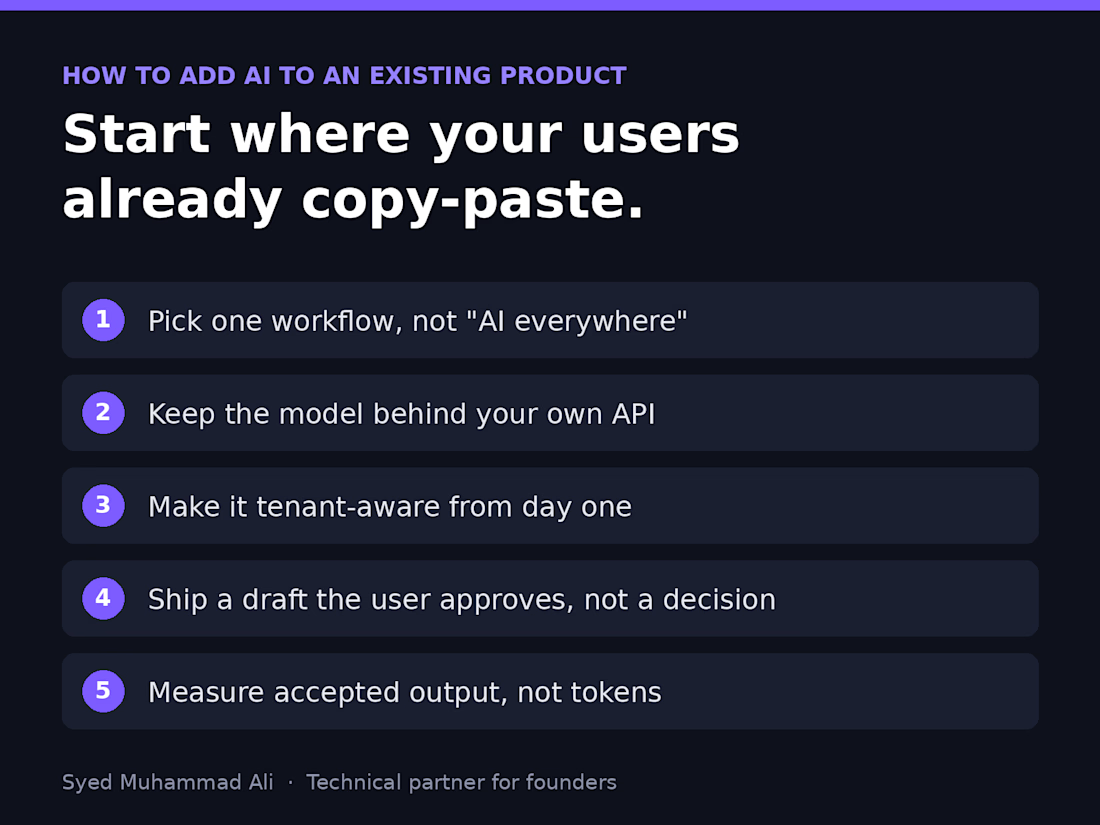
Before you add AI to your product, find the screen where your users already copy and paste.
That's usually where the real AI feature lives. Not a chatbot in the corner, but a step people already do by hand: summarising a ticket, drafting a reply, tagging an upload, pulling fields out of a PDF.
Here's the order I follow when a founder asks me to add AI to an existing SaaS:
1. Pick one workflow, not "AI everywhere." Watch where users leave your app to paste something into ChatGPT and come back. That round trip is your feature.
2. Keep the model behind your own API. One service owns prompts, retries, logging and cost limits, so you can switch providers without touching the frontend.
3. Make it tenant-aware from day one. Each customer's data, prompts and usage stay scoped to their account, or the first enterprise security review will stop you.
4. Ship a draft, not a decision. Let the AI suggest and the user approve. You earn trust and get real feedback before you automate anything.
5. Measure accepted output, not tokens. If users rewrite most of what it produces, the prompt or the context is wrong, and that's your real roadmap.
Most AI features that flop didn't fail because of the model. They were bolted onto the wrong step.
What's the one task your users still copy into ChatGPT?

Watching where users paste into ChatGPT and come back is such a practical way to find the real feature. Most teams start with the chatbot instead.

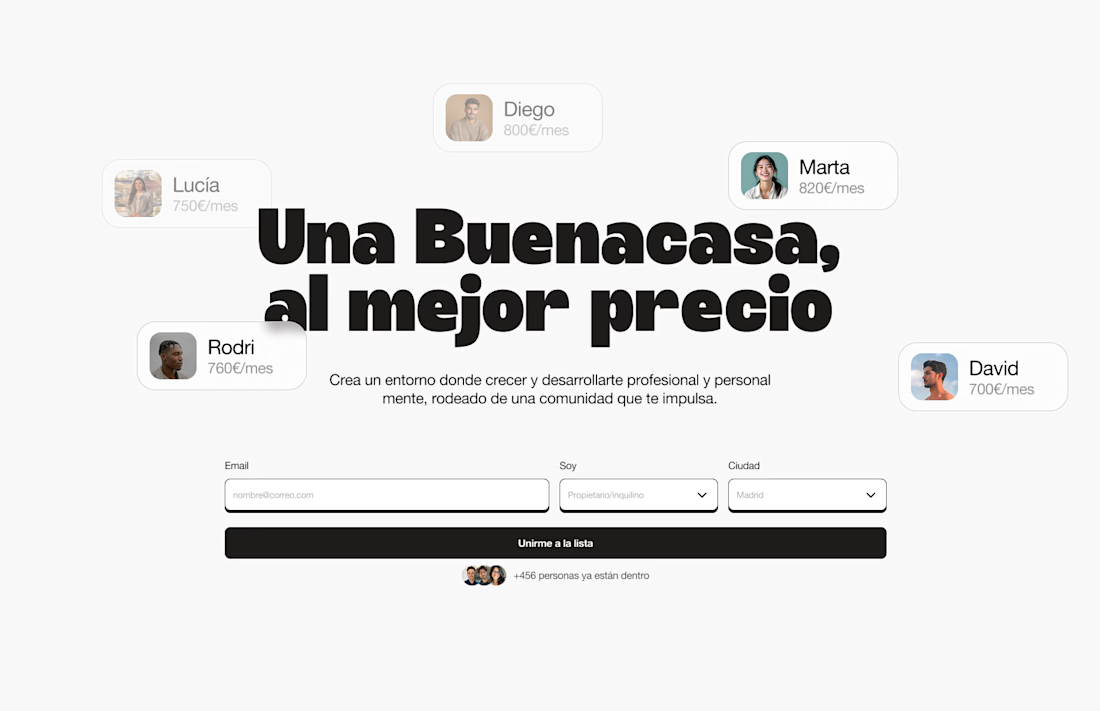
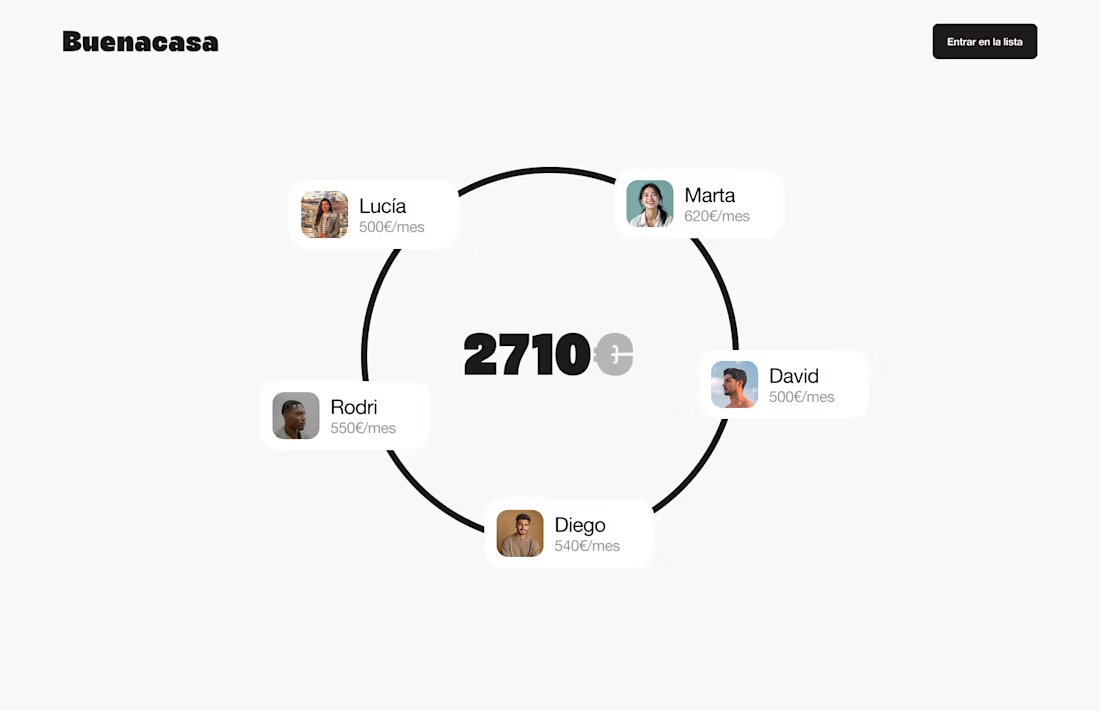
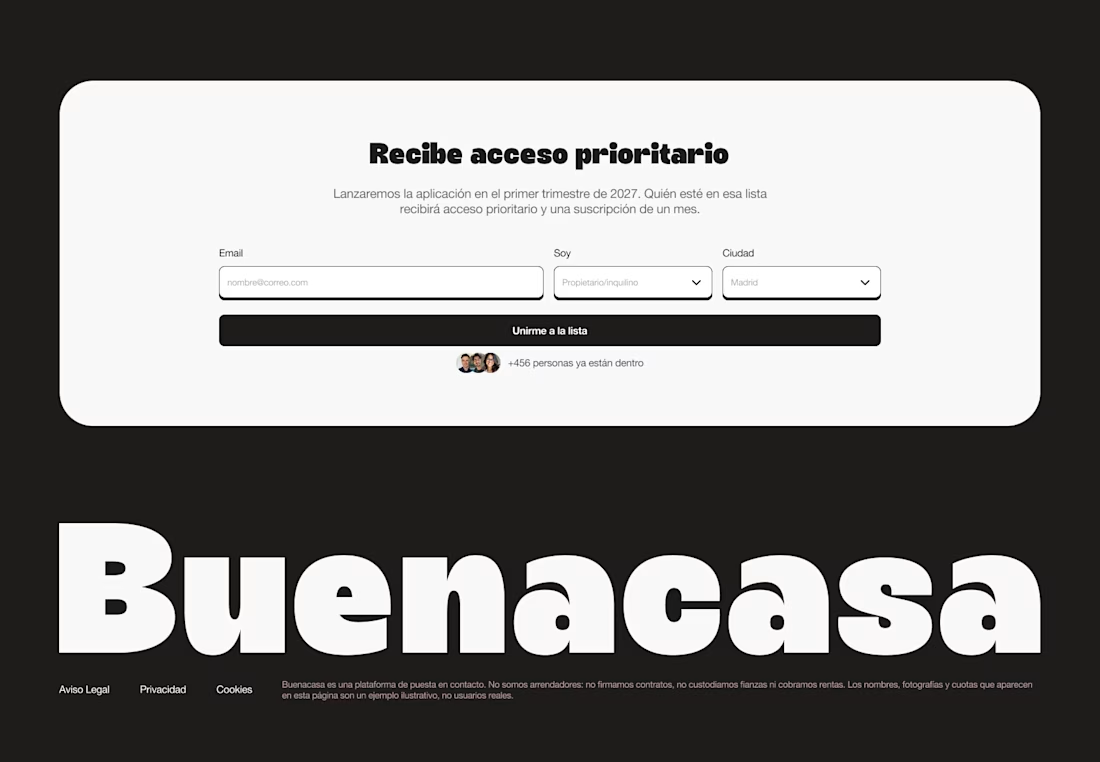
Quick experiment with Claude for a lead generation landing page with a waitlist.
Getting to a usable first version was fast. What still takes a designer is hierarchy, spacing and interaction details, which is what decides whether the page conversion.



Most inbound bottlenecks aren't caused by low lead volume—they happen during triage.
When inquiries roll into a Google Sheet or CRM, operations teams often waste 10–15 minutes per submission reading through messy paragraphs, deciphering budget mismatch, and manually deciding who gets an immediate call vs. a standard rate sheet.
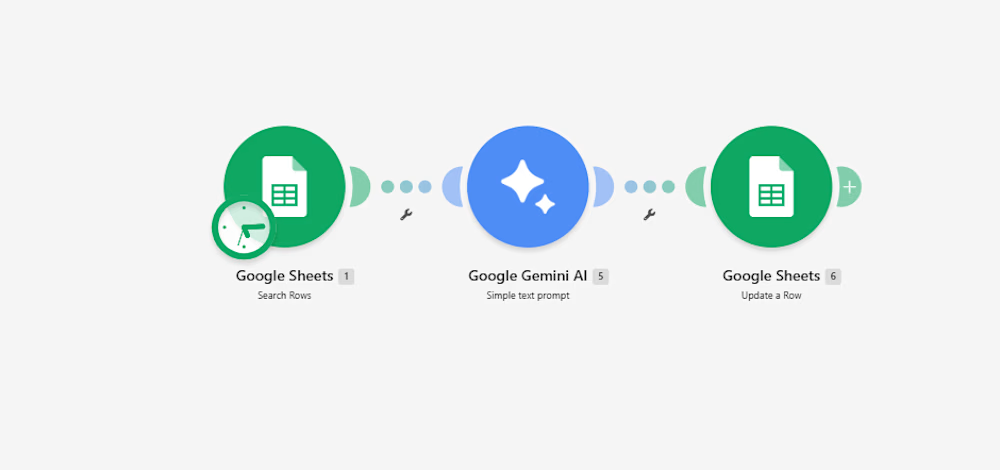
Instead of adding a bulky CRM add-on, I documented a lightweight 3-step automation pipeline built inside Make:
Intake & Extraction: An active listener triggers immediately upon a new submission, extracting core variables: client scope, target deliverables, timeline, and stated budget.
Context-Aware Evaluation (Gemini 2.5 Flash): The payload passes through an AI evaluation node with strict guardrails:
Evaluates budget against minimum agency criteria.
Assigns a triage score: Hot (immediate priority), Warm (nurture), or Cold (disqualified/template reply).
Generates a strict 15-word operational summary—no long paragraphs.
Determines an automated next step (e.g., routing to an account lead or flagging for asynchronous follow-up).
Data Return & Clean Pipeline: Appends the structured classification directly back to the master operational tracker, keeping the sheet filterable and clean.
The outcome: The sales and operations team can filter the entire board by priority status in two clicks, cutting first-touch response time to minutes without manually reading every single submission.
I’ve documented the full scenario map, execution logic, and data schemas below.
Curious how other agency operators and automation leads here handle their lead enrichment layer—are you doing AI scoring at the form level, or later in the CRM pipeline?:


For the budget gate, I'd keep an unstated budget separate from one explicitly below your minimum. Does the Make route ask for clarification when the amount or currency is missing, so a potentially suitable lead doesn't fall into Cold by default?