The network for creativity
Join 1.25M professional creatives like you
Connect with clients, get discovered, and run your business 100% commission-free
Creatives on Contra have earned over $150M and we are just getting started
Back to feedPost

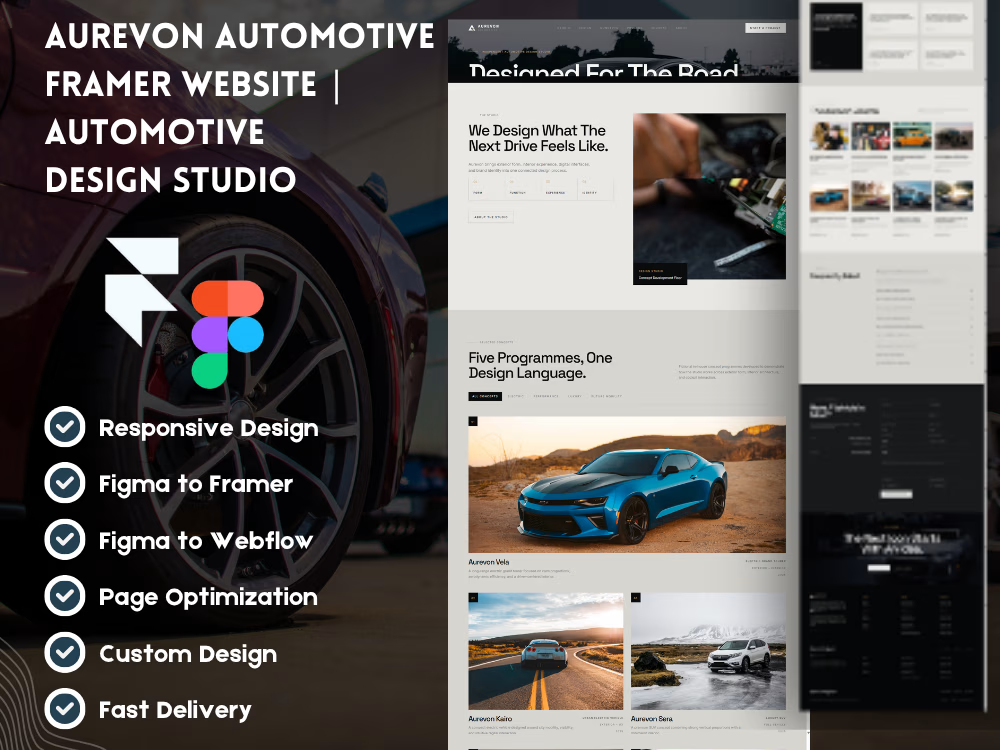
Aurevon Automotive is a Framer Website designed for an independent automotive design studio developing vehicle concepts, interiors, mobility systems, and digital cockpit experiences.
The project transforms the studio’s capabilities, philosophy, process, concepts, materials, team, and journal into a cohesive digital experience. The visual direction combines editorial art direction, large automotive imagery, restrained typography, generous spacing, and immersive case study moments. This balance of Web Design and Graphic Design creates a distinctive identity.
The homepage establishes the studio’s positioning across vehicle design, automotive UX, mobility concepts, and future programmes, with clear calls to action supporting discovery and conversion.
The Selected Concepts section presents five fictional programmes across electric, performance, luxury, and future mobility categories. Each concept includes its vehicle type, scope, year, imagery, and dedicated case study pathway, creating a scalable portfolio structure.
The featured Aurevon Vela case study presents the design challenge, direction, proportion, aerodynamics, surface development, lighting signature, interior architecture, digital cockpit, material strategy, and final concept. This approach uses User Experience Design to make the portfolio more persuasive by explaining the thinking behind the work.
The design process is structured around Discover, Define, Explore, Refine, and Present, supported by sketching, modelling, material studies, lighting studies, interior mockups, and visualization. Automotive UX covers navigation, vehicle status, climate, media, drive modes, and charging, with a focus on contextual information and clear interaction.
A Material Library presents premium metals, carbon fiber, leather, recycled textile, glass, titanium, natural wood, and technical fabric with their textures and applications, adding depth to the brand story.
From a Web Development perspective, the website uses scalable sections, responsive layouts, interactive content patterns, project pages, journal content, structured navigation, and a detailed project inquiry form. Framer is the primary platform, supported by Figma and knowledge of HTML, HTML5, CSS, JavaScript, and PHP principles. A SaaS style component mindset supports flexible content structures that can grow with the studio.
Responsive Design keeps imagery, project details, interface demonstrations, material cards, journal content, and conversion sections clear across desktop, tablet, and mobile.
Landing Page Optimization and Conversion Rate Optimization are applied throughout the visitor journey. Strategic CTAs appear around key content, while the project form captures company, project type, vehicle category, project stage, design scope, target market, timeline, project details, brief, and references. This turns a basic contact page into a stronger Lead Generation touchpoint.
Search Engine Optimization is supported through descriptive service categories, concept pages, structured navigation, and specialist journal content covering proportion, interiors, lighting, digital cockpits, materials, concept development, aerodynamics, and future mobility.
Team, testimonials, recognition, collaboration, and engagement sections add trust and clarity. Three engagement models clarify collaboration for manufacturers, startups, technology companies, luxury brands, consultancies, and engineering teams.
Marketing Strategy is built into the information architecture, with each section supporting credibility, expertise, education, differentiation, discovery, or conversion.
The final result is a sophisticated automotive design portfolio and business website that balances visual impact with strategic communication. Aurevon Automotive is positioned as a multidisciplinary design partner connecting exterior form, interior architecture, material strategy, automotive UX, visualization, and design direction into one coherent experience.


The network for creativity
Join 1.25M professional creatives like you
Connect with clients, get discovered, and run your business 100% commission-free
Creatives on Contra have earned over $150M and we are just getting started
Trending
retrofuturism
Share your favorite designs from the past exploring the distant future. Or your own take on the aesthetic 🚀
halftone
Dots. Texture. Grain. Let's see your designs using the halftone technique.

Midjourney
Creatives are showing off what they're making with Midjourney.
colorgrade
Video editors sound off: How do you enhance the mood of your video in color grading?





Related posts

Loved working on this hero section.
Full animations, progress bar and components done with Framer + claude agent


Love this! @Migule


Shipped a membership update to Cohestra, our editorial template for course creators and independent schools.
We partnered with FrameAuth to build auth into the template. Sign-up, sign-in with Google or a one-time email code, an account page, and overrides for locking any section behind access.
The design problem behind it: a course site template usually stops at the enroll button. Everything after that, the part where someone actually becomes a student, happens on a platform that looks nothing like the site you designed. You spend the whole project on a first impression and then hand the relationship to someone else's UI.
Now it stays in one Framer project.

Amazing work🔥


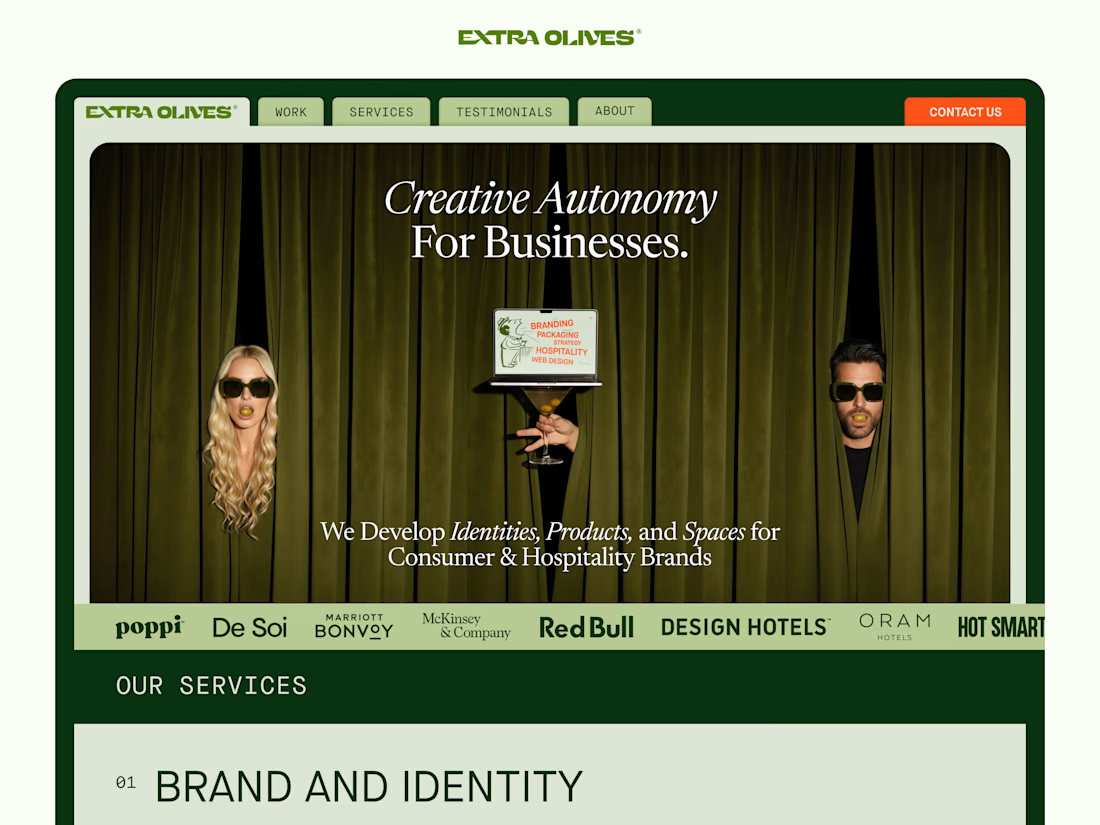
Extra Olives needed a pixel-accurate, fully responsive Framer site built from their existing Figma designs.
The goal: translate their brand identity into a fast, polished, and visually consistent website, without compromising a single detail from the design vision.
Figma + Framer

How close did the final build end up matching the Figma file pixel for pixel? With that footer row of client logos I'd guess something always needs to flex a little between design and a live responsive build, curious if that held true here.