The network for creativity
Join 1.25M professional creatives like you
Connect with clients, get discovered, and run your business 100% commission-free
Creatives on Contra have earned over $150M and we are just getting started
Back to feedPost

Most agencies I talk to have the same problem: leads come in, and nobody follows up for 2 days.
I've spent 15+ years in recruitment and 4+ years building GoHighLevel automations for US and UK businesses. Here's what I keep seeing:
The issue is rarely lead volume. It's speed and consistency after the lead lands.
A simple GHL setup fixes most of it:
1) Instant SMS + email reply within 60 seconds
2) Auto-tagging by service or source
3) A 7-day nurture sequence that stops the moment they reply
4) Pipeline stages that tell your team exactly who to call today
Nothing fancy. It just works.
If you're a freelancer or agency owner on Contra, what does your follow-up look like right now?
The network for creativity
Join 1.25M professional creatives like you
Connect with clients, get discovered, and run your business 100% commission-free
Creatives on Contra have earned over $150M and we are just getting started
Related posts

Built myself a little command center for my freelance work this week. It’s called Bench.
Contra handles the contracts and payments, but my day-to-day was scattered across Contra chats, Gmail, my calendar, Notion, and a notes app. So I pulled it all into one place:
• A dashboard showing what needs me today: unread messages, overdue tasks, past-due invoices, leads that have gone quiet
• Each project gets its own page with scope, deliveries, tasks, links, and the full message thread from Contra and email
• A pipeline for leads, including a “Ghosted” column, because we’ve all been there
• A time tracker for the hourly stuff
• It syncs with my Contra projects and invoices every morning
Curious how other freelancers here keep track of everything. Spreadsheets? Notion? Pure chaos?

Hey, Mr. @Chris Luniewicz This is honestly impressive! I'm also curious to know what tech stack you used to build 👍

What happens when 1,000 people follow a one-person studio? 🎉
1K on Contra, 13 clients hired, a clean 5.0, and zero shortcuts on taste.
Thank you for watching the work.
Brand identity, web and code keep coming. If yours is next, my DMs are open.


amazing work!!

Clients often start with the same request: "Let's build an AI agent."
My counter-question is always: which manual process actually costs you time, errors, or money right now?
My selection rule: remove it first. If it can't be removed, simplify it. If it's still needed, automate it with a plain script. Only then add an integration or an agent. Often the best result is the process that no longer exists.
Safe automation means real scenarios, error handling, and alerts. Without alerts, a workflow can silently lose data for weeks. I always define what stays with a human and what goes to the system.
Question for you: which process would you automate first, and why is it still manual?
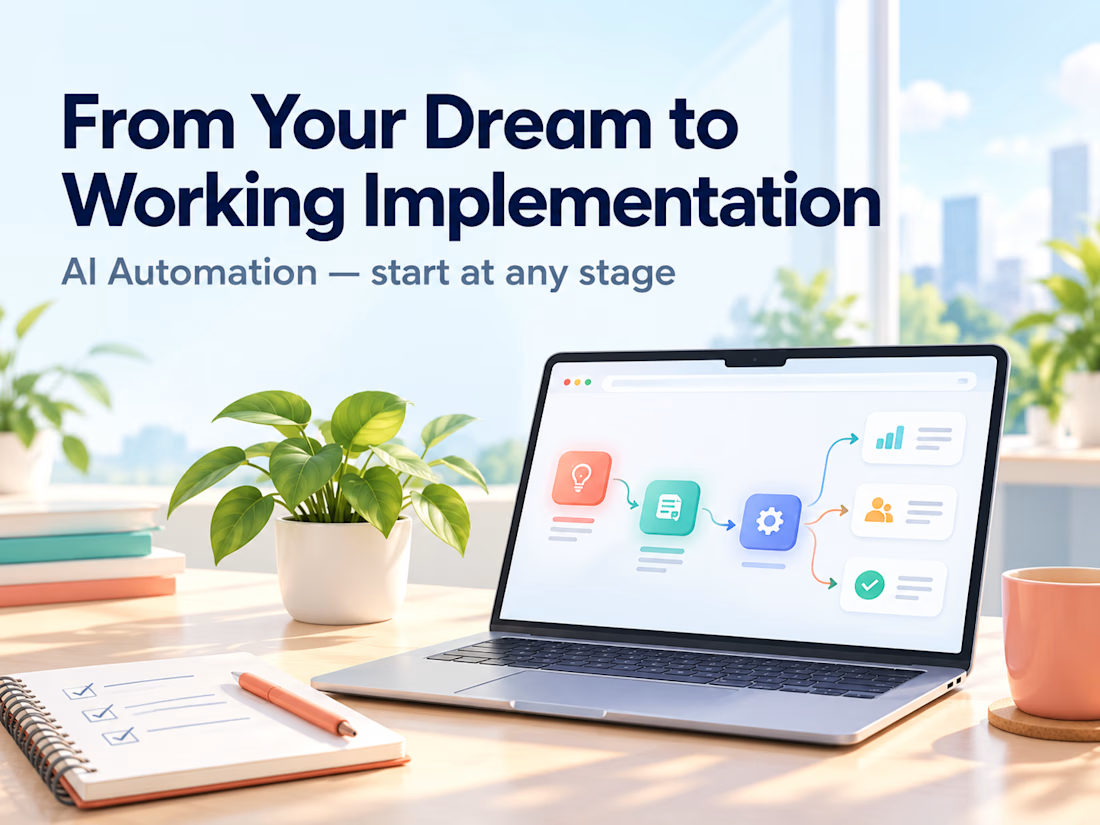
Service for audit and implementation: https://contra.com/s/BmWLbgFU-ai-automation-from-your-dream-to-working-implementation?r=auto_booster