The network for creativity
Join 1.25M professional creatives like you
Connect with clients, get discovered, and run your business 100% commission-free
Creatives on Contra have earned over $150M and we are just getting started
Back to feedPost

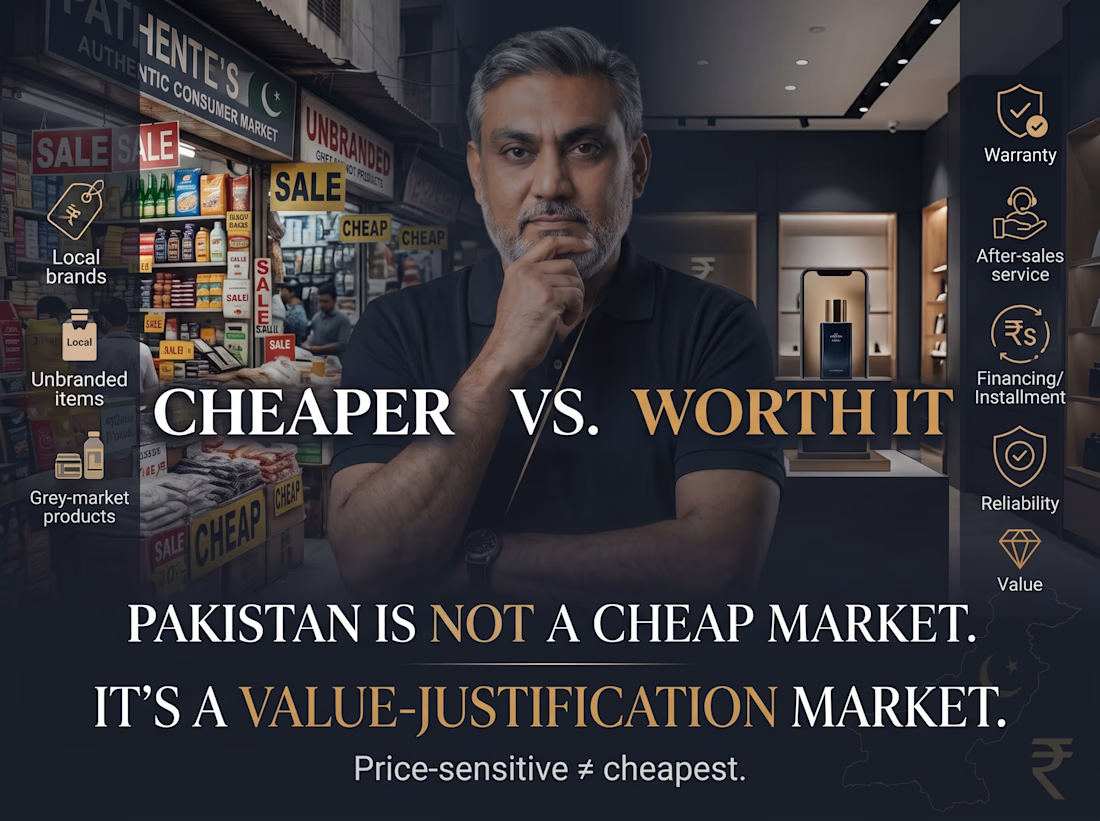
Pakistan Is Not a Cheap Market. It’s a “Make Me Believe” Market.
One of the first things I hear from international brands looking at Pakistan is:
“Pakistan is a very price-sensitive market.”
True.
But that statement can become dangerous when it turns into a pricing strategy.
Because price-sensitive doesn't automatically mean “sell cheaper.”
It means the customer is asking:
“Why should I pay more?”
And that's a very different question.
A customer may compare your product against:
→ A local brand
→ An unbranded alternative
→ A grey-market product
→ A used product
→ A cheaper model with fewer features
→ Or simply a different monthly installment
So before changing your price, ask:
What is the customer's real reference price?
Then ask:
What justifies our premium?
Warranty?
After-sales service?
Reliability?
Energy efficiency?
Spare-parts availability?
Brand trust?
If the customer can't see a meaningful reason to pay more, you may not have a pricing problem.
You may have a value problem.
And there's another layer.
Your factory or distributor price isn't the price the consumer sees.
By the time your product reaches the shelf, distributor margins, retailer margins, taxes, logistics, financing and promotions can completely change your competitive position.
So when a distributor says:
“The market is too price-sensitive.”
Don't immediately ask for a discount.
Ask them to explain the customer's decision.
Compared to what?
What is the real alternative?
What does the customer pay per month?
Why should they pay more for us?
And does the retailer have a reason to sell us?
A price-sensitive market doesn't necessarily want the cheapest product.
It wants a product whose price makes sense.
That's the difference between competing on price and competing on value.
Personal analysis based on market experience. Not a formal research report.
The network for creativity
Join 1.25M professional creatives like you
Connect with clients, get discovered, and run your business 100% commission-free
Creatives on Contra have earned over $150M and we are just getting started





Related posts

Wholesale Margin, Supplier Pricing & Commercial Review
Reviewed supplier costs, selling prices, customer-specific discounts and margins across a large wholesale product catalogue.
Focused on identifying pricing inconsistencies, protecting commercial margin and creating clear rules around supplier increases, minimum margins, customer pricing and automated price changes.

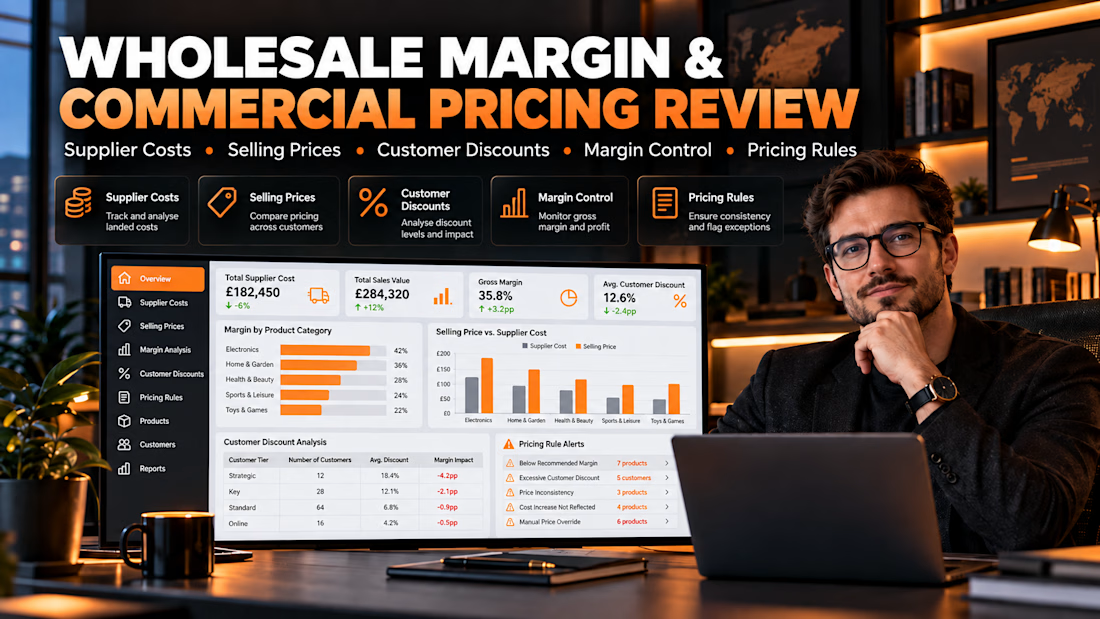

Great attention to detail. Clear pricing rules can make a big difference in protecting margins.


What do you think of when you say, “this design doesn't feel premium”?
I've heard this kind of feedback from clients countless times. You know that “premium” can mean different things depending on the person, the product, and what they are comparing it against.
Recently, though, I found myself on the other side of a very similar conversation.
We've been developing a brand identity for one of our own projects, and I caught myself giving exactly the kind of feedback I've spent years receiving from clients.
“This doesn't feel right.”
“This isn't quite what I had in mind.”
There was a very specific image in my head. I just didn't have a neat explanation for it.
I was comparing what I was seeing against a pre-existing perception of what the brand should be. The gap was obvious to me because I could see both things at once: the design in front of me and the image in my head.
And that made me think back to all those conversations about making something feel more like “premium”, or trustworthy, sophisticated, playful, serious, whatever the brief happens to call for.
A client may have a very specific perception in mind that doesn't necessarily match what a designer would know to associate with that quality. They may be comparing the design against something the designer can't see yet.
The designer is checking against something too: years of seeing how visual choices, combinations and conventions tend to communicate, plus the context of the product, audience and brand.
The client is checking against the idea in their head. They may not always be able to articulate it, but they can still tell when what they're seeing doesn't match it.
So what are you actually checking against when you decide a design feels premium?

To me this would mean one thing - there was no strategic work done before touching visuals. Hence it's shooting in the dark and trying to magically match the client taste.
Strategy makes decisions informed, and put both parties on the same page way before the design work starts.

"HomeFix" Home repairs, without the hassle.
Business: HomeFix
Location: Dhaka, Bangladesh
Business scenario: A small home-repair service handling AC, plumbing, electrical, appliance, and general maintenance jobs. The owner spends too much time answering availability questions and coordinating booking changes while managing a busy schedule.
The problem we solved: Customers had to contact the business to ask about services and appointment times, creating avoidable back-and-forth for both the customer and the owner.
The experience: HomeFix gives customers one place to choose a service, describe the issue, enter their location, see available appointment times, and review their booking before confirming. Customers can also manage an existing booking online. The owner portal provides a central view for managing appointments and service operations.
What this improves: Customers can move from “Can I book?” to a reviewed appointment request without waiting for a reply just to check availability. The owner has less manual coordination to handle.
Messaging note: Customer email and SMS delivery require provider setup and are not currently active. The booking flow and in-app experience can be demonstrated without claiming external messages are being sent.
#lovablechallenge #Lovable #HomeFix #HomeServices #HomeRepair #Dhaka #SmallBusiness #BookingExperience #NoCode #ProductDesign