The network for creativity
Join 1.25M professional creatives like you
Connect with clients, get discovered, and run your business 100% commission-free
Creatives on Contra have earned over $150M and we are just getting started
Back to feedPost

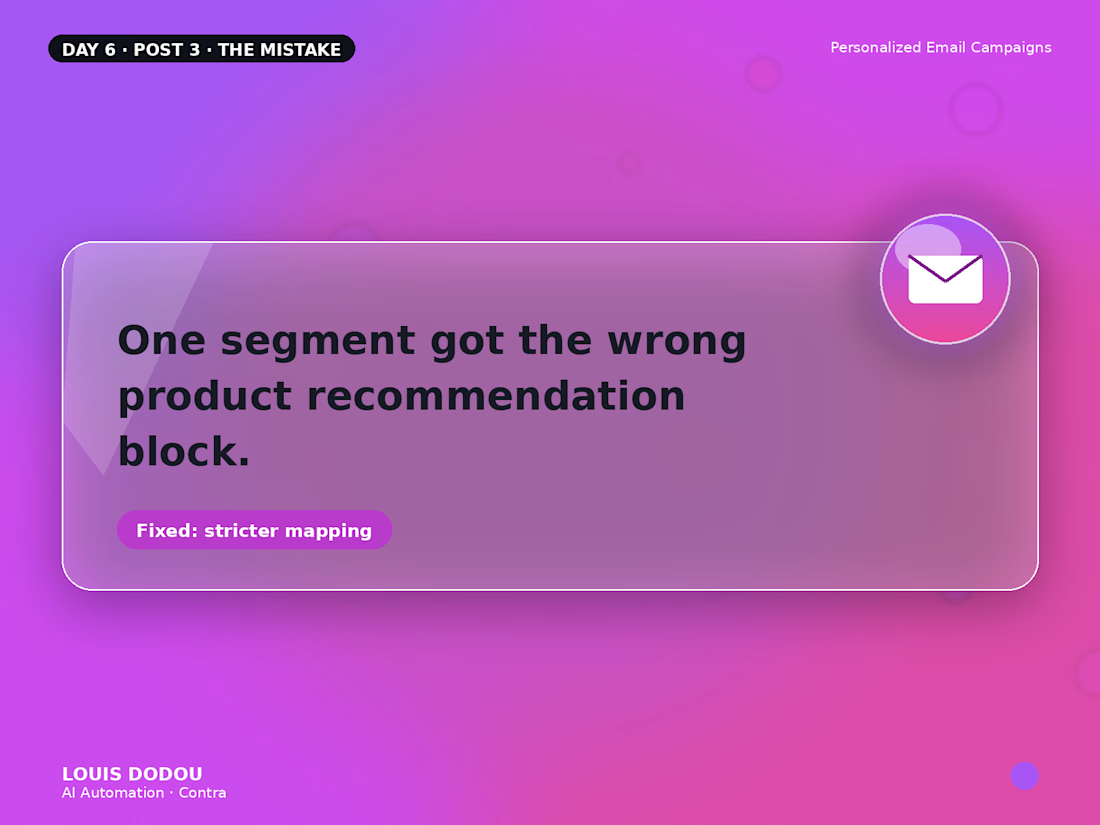
One segment got the wrong product recommendation block.
A tagging mismatch sent one segment content meant for another. Caught it fast, fixed the mapping logic between segment tags and content blocks to be far stricter.
→ More personalization means more places a small mapping error can hide.



The mapping problem compounds as segmentation gets more granular. At 50 segments and 200 content blocks, no one's manually reviewing every combination. The approach that scales: treat segment-content assignments as a typed contract. Define what each content block expects —...

Catching that tag mismatch and tightening the mapping logic shrinks the room for wrong content to appear.
The network for creativity
Join 1.25M professional creatives like you
Connect with clients, get discovered, and run your business 100% commission-free
Creatives on Contra have earned over $150M and we are just getting started



Related posts


Home A wins, its clarity suits a consultancy.

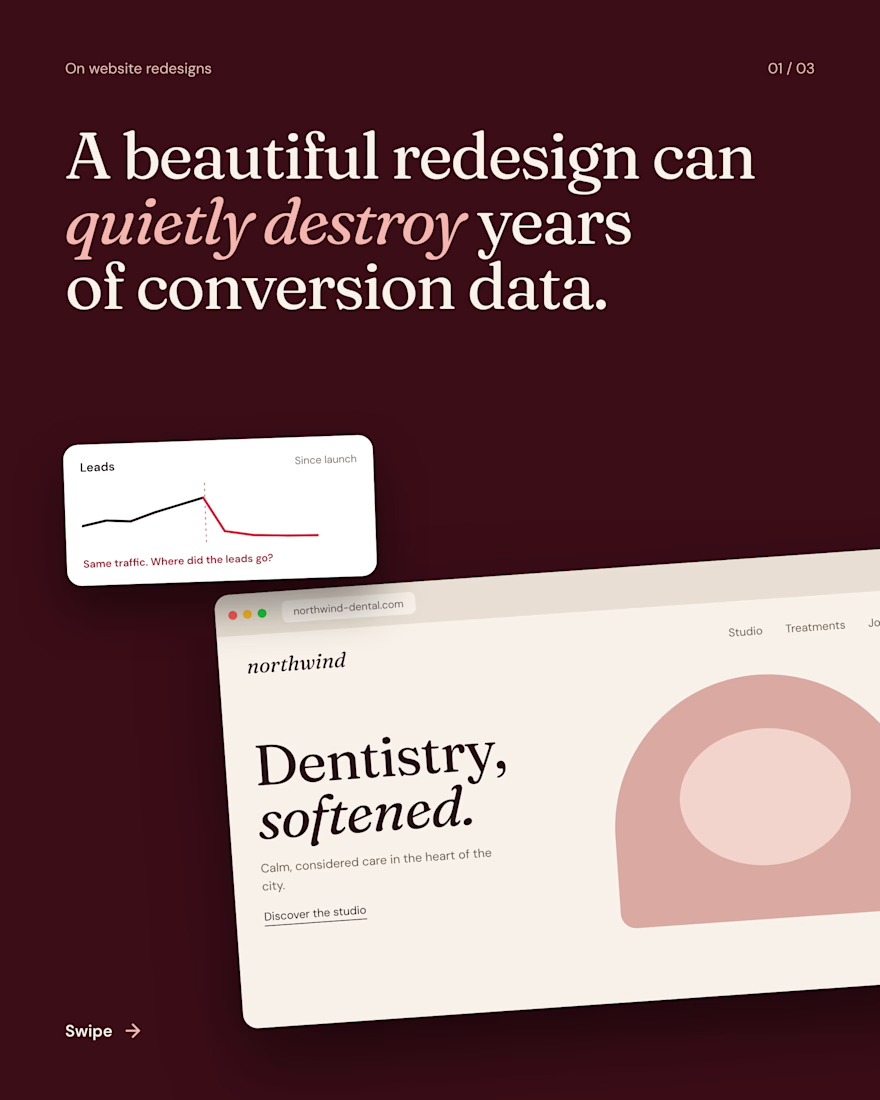
A beautiful redesign can quietly destroy years of conversion data.
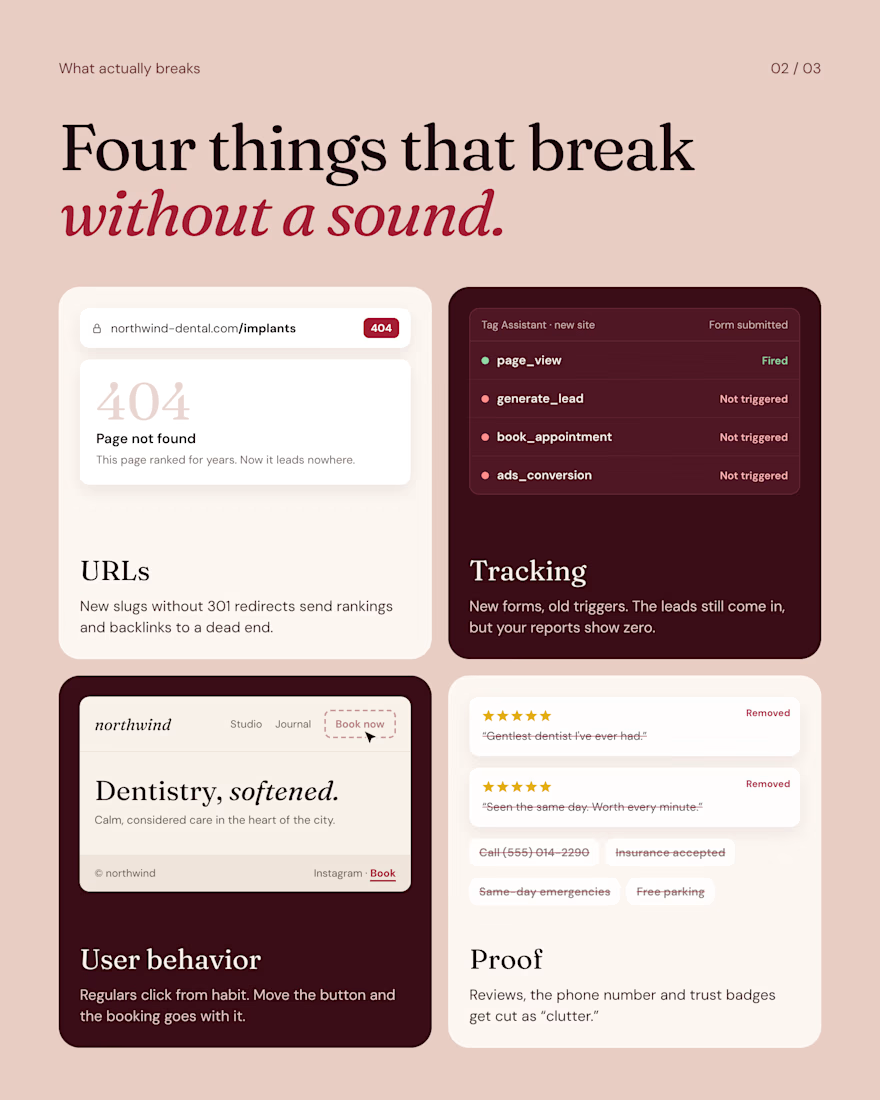
The new site launches, traffic holds, and leads seem to disappear. Usually nothing changed with demand. Four things broke without a sound:
URLs changed with no redirects.
Lead events stopped firing on the new forms.
The booking button moved where regulars never look.
Reviews and the phone number were cut as clutter.
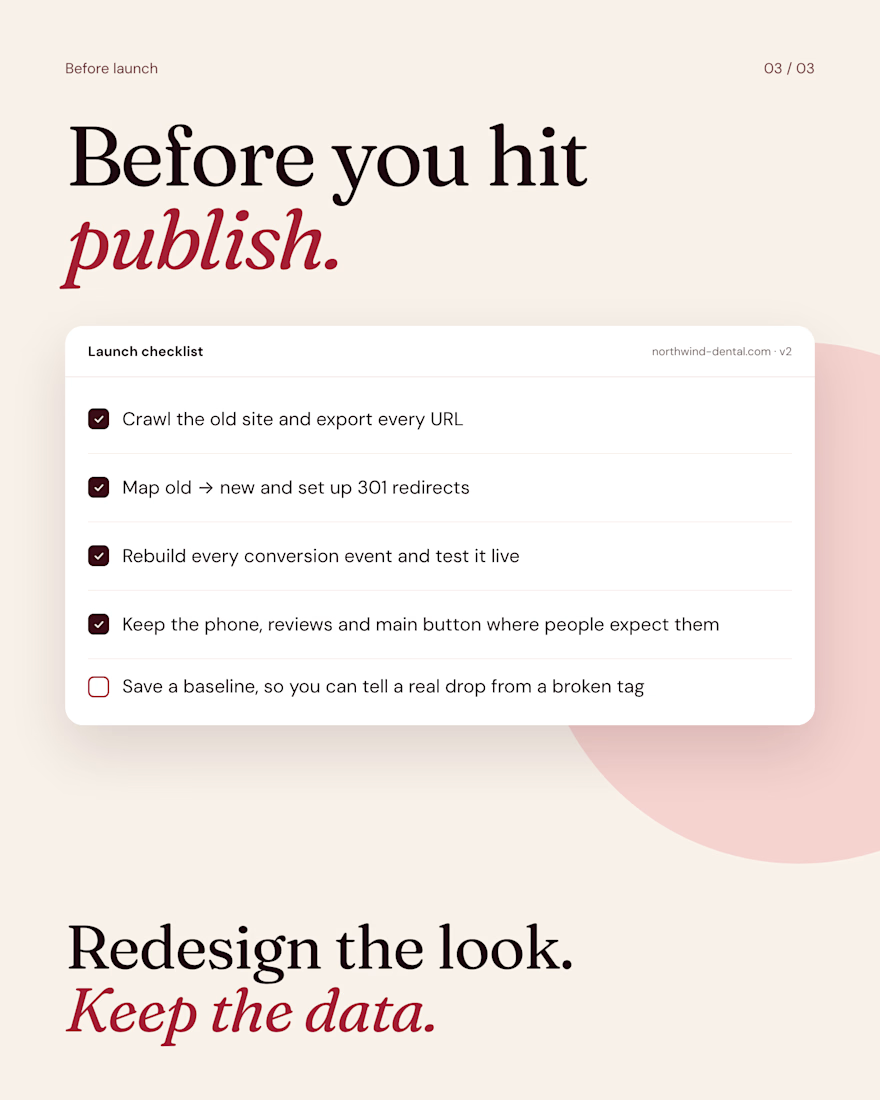
Before you hit publish, map every URL, test every event, and keep what was converting.

Lead events going silent is the one that hurts longest, because the site still looks fine. The same thing happens on the email side when a new form isn't connected to the list: signups drop to zero and nobody notices until a campaign goes out to fewer people. One test submission before launch catches both.

What if your finance dashboard caught the money you paid twice? 👀
This is Plug, a product I designed and built.
It scans every vendor payment, flags duplicates and overpayments, and shows exactly why: same invoice, same amount, paid 2 days apart. One click starts the recovery, with approvals and an audit trail.
The design rule I followed: never let AI act without showing its evidence first.
Would you trust an AI to flag your payments? 👇

Showing why it was flagged is smart.