The network for creativity
Join 1.25M professional creatives like you
Connect with clients, get discovered, and run your business 100% commission-free
Creatives on Contra have earned over $150M and we are just getting started
Back to feedPost

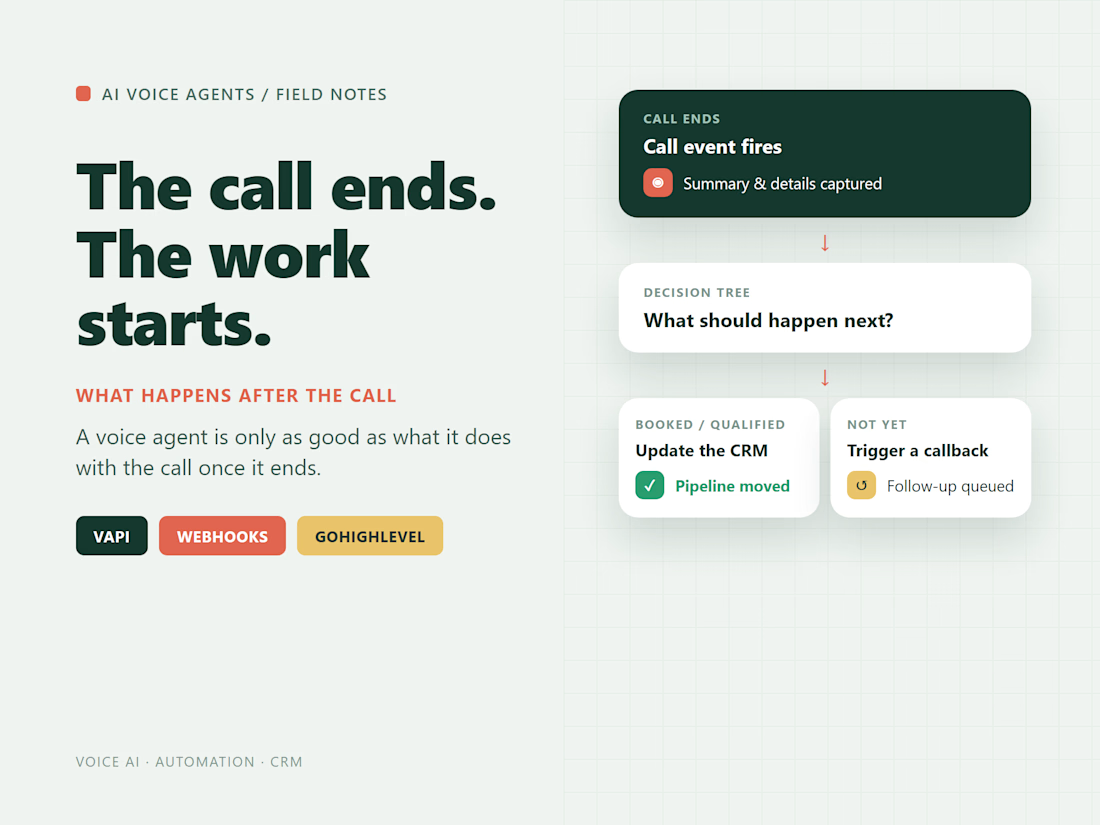
Most voice agent demos stop when the call ends. That's where the real work starts.
In my Vapi → GoHighLevel build, every call event goes to a webhook. Then a decision tree picks what happens next: update the CRM, or trigger a callback.
That step is the difference between "the AI answered" and "the lead actually got followed up."
What do your voice agents do with calls that don't end in a booking?


The network for creativity
Join 1.25M professional creatives like you
Connect with clients, get discovered, and run your business 100% commission-free
Creatives on Contra have earned over $150M and we are just getting started



Related posts

Healthcare AI Agent – Reschedule Appointments by Voice
AI Healthcare Assistant — Turn On Sound for the Best Experience.
Movexa AI Assistant helps physiotherapy clinics reschedule patient appointments in seconds, by text or by voice, without leaving the dashboard.
THE PROBLEM
Rescheduling a single session in a busy clinic means checking the therapist's calendar, finding a free slot, updating the booking and remembering to notify the patient. Front desk staff and therapists repeat this many times a day across different tools, and missed reminders lead to no-shows.
THE SOLUTION – THE FLOW
Ask – Open the AI search (⌘K) or tap the mic and say: "Reschedule Tezah's session tomorrow to 4 PM and remind her."
Understand – Voice mode transcribes live and shows exactly what the AI understood.
Check – Movexa checks the therapist's calendar and finds that 4:00 PM is free.
Confirm – The AI never acts silently. It shows a clear action card (patient, old time, new time, therapist, reminder) to confirm, edit or cancel.
Done – The appointment moves, the patient gets an SMS + app reminder, and the change is logged with one-tap Undo.
THE RESULT
A task that took several clicks and calls now takes one sentence, while the clinic team stays in full control of every action.


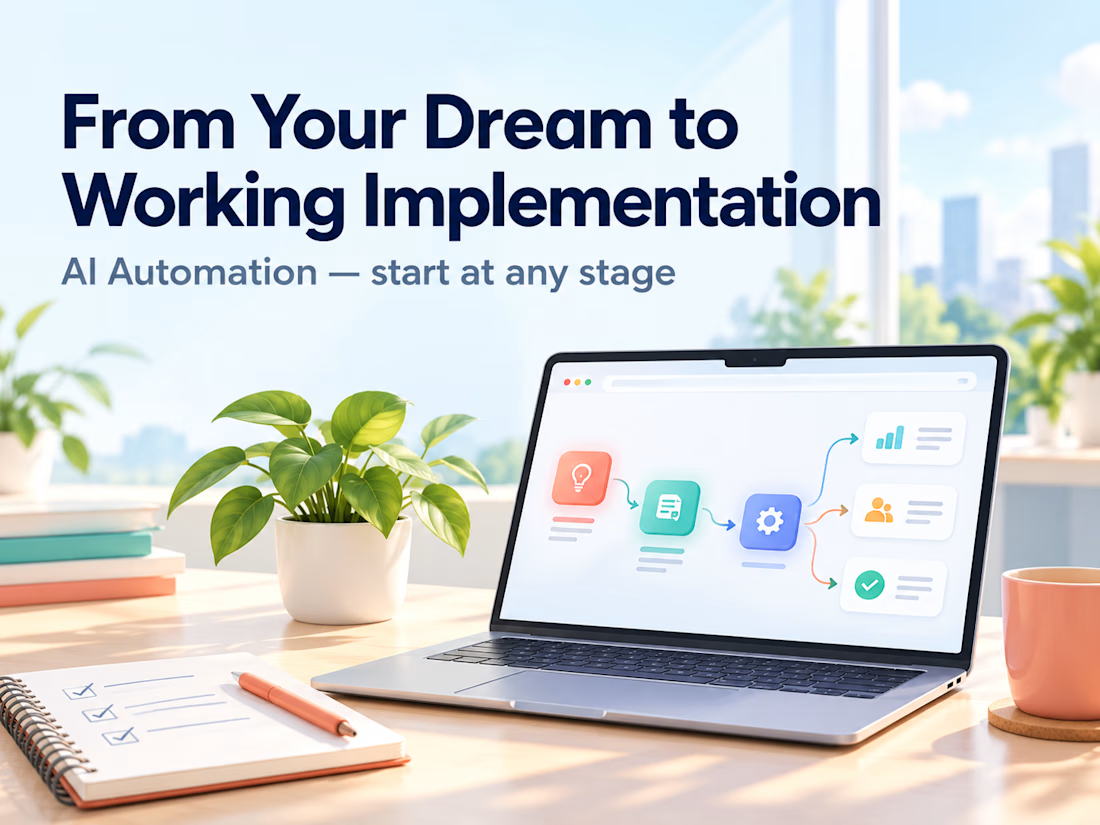
Clients often start with the same request: "Let's build an AI agent."
My counter-question is always: which manual process actually costs you time, errors, or money right now?
My selection rule: remove it first. If it can't be removed, simplify it. If it's still needed, automate it with a plain script. Only then add an integration or an agent. Often the best result is the process that no longer exists.
Safe automation means real scenarios, error handling, and alerts. Without alerts, a workflow can silently lose data for weeks. I always define what stays with a human and what goes to the system.
Question for you: which process would you automate first, and why is it still manual?
Service for audit and implementation: https://contra.com/s/BmWLbgFU-ai-automation-from-your-dream-to-working-implementation?r=auto_booster



Two concepts. Two different first impressions.
Exploring two visual directions for a finance and AI platform.
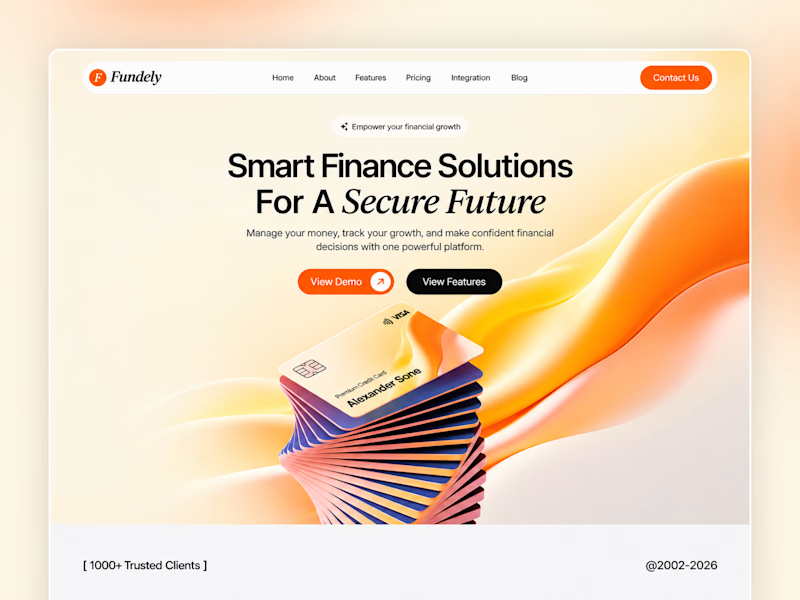
Option A | Fundely
Warm gradients, soft curves, and a clean layout. Designed to make finance feel simple, approachable, and easy to trust.
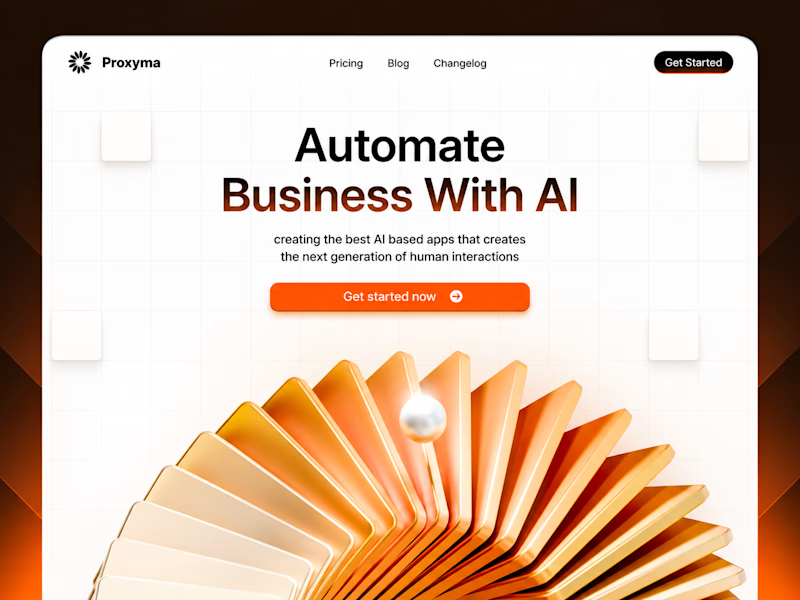
Option B | Proxyma
Bold typography, a structured grid, and a striking 3D visual. Designed to make AI feel confident, modern, and forward-thinking.
Both share the same goal: create a strong first impression through design.
But which direction communicates better?
A or B? I'd love to hear your perspective.
5 voted
50%
5 voted
50%
10 votes
Closed

Adorable
Thumbs up